Washington State Phylloxera Risk Map
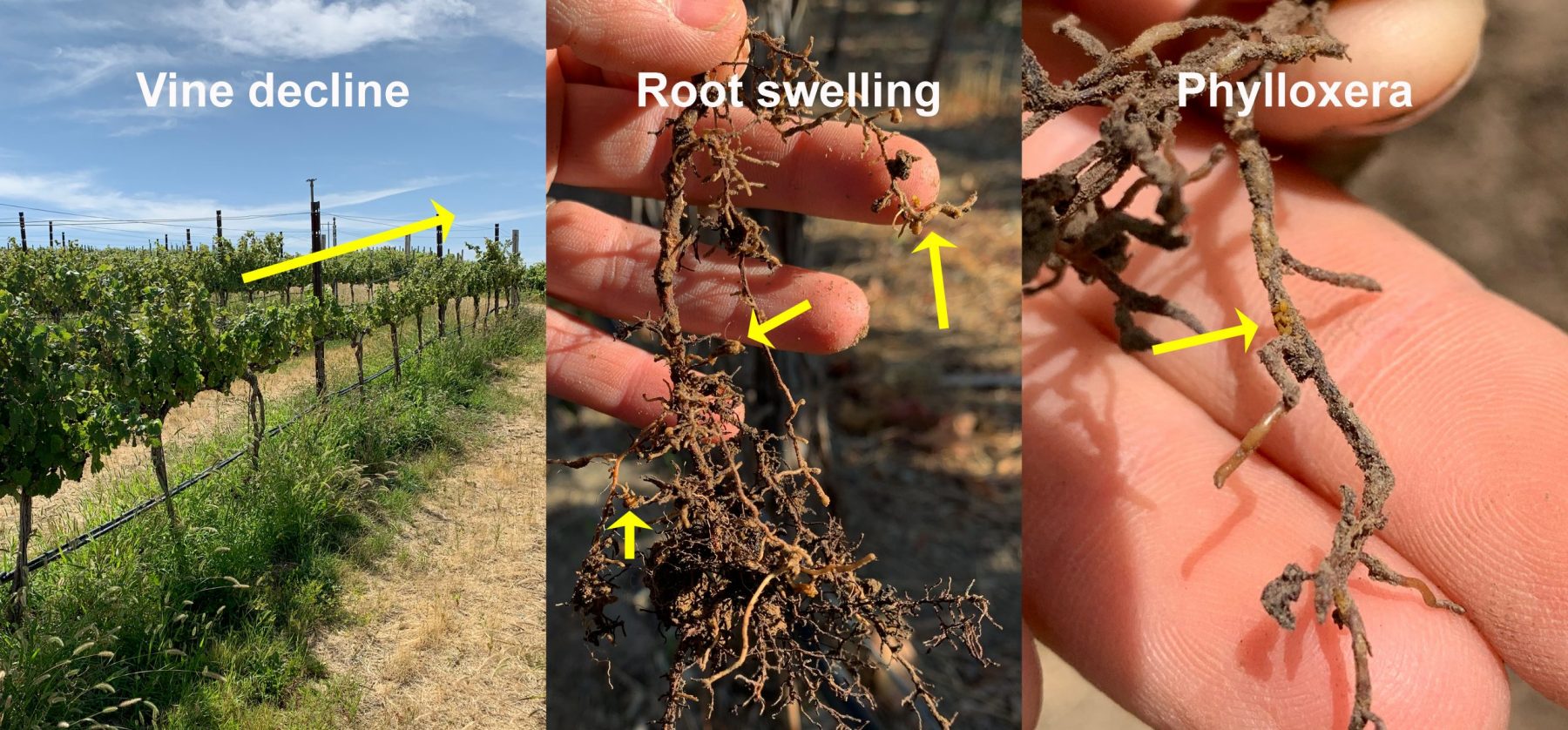
Phylloxera is a quarantine pest for Washington State.
Risk of establishment and survival described below only applies once the pest is introduced to the site. If you are growing grapes at a site that has soil conditions that are rated as moderate to high risk, and you currently do not have phylloxera, your best course of action will be following practices to avoid its introduction, such as:
- Continue to follow state quarantine restrictions on grapevine out-of-state imports (certified vines only)
- Consider only importing certified, bare-root planting materials (for easier root inspection)
- Reduce the movement of soil between vineyard locations
See the Grape Decision Aid – Phylloxera Risk Map to determine if your site is at risk for phylloxera growth and development should the insect be introduced to your location.
A full article on the map development process can be read at: Chandel, A.K., G.A. Hoheisel, M.M. Moyer, M. Keller and L. Khot. 2022. Soil and Climate GIS Data-Derived Risk Mapping for Grape Phylloxera in Washington State. Frontiers in Plant Science. DOI: 10.3389/fpls.2022.827393
Sand-based
Low risk = sand content greater than 80%
Moderate risk = sand content between 65 and 80%
High Risk = sand content less than 65%
Temperature-based
Low risk = soil temperatures below 65oF or above 84oF
High risk = soil temperatures between 65 and 84oF
(Average soil temperature at 8″ depth between June and August)
Overall
Considers that sand soil content is the most important risk factor for survival of phylloxera, but that survival can be moderated by temperature.
This mapping effort was possible by a grant from the Washington State Grape and Wine Research Program and funded by Washington State University, Auction of Washington Wines and all Washington State wine grape growers and wineries through the Washington State Wine Commission.