VEEN is curated by WSU Viticulture Extension. For questions on articles, or to request to submit an article in future issues, reach out to Michelle Moyer.
Table of Contents
Connect With Us
V&E Certificate Program
Vineyard Idling: Part 2
Author: Michelle Moyer, Washington State University
As promised in the Fall 2025 Issue of VEEN, we have created additional recommendations on how to plan for vineyard idling during the growing season. The information below is a quick summary of things to consider — full recommendations and details on how to approach idling can now be found in our official WSU Extension publication titled Idling Vineyards in the Pacific Northwest.
Irrigation and Nutrition in the Growing Season
If a vine is not being managed for crop production, than irrigation can be reduced accordingly. While it is still important to maintain vine water access for long-term survival, irrigation can be significantly reduced. Current recommendations include refilling the soil moisture profile in the spring, but then witholding water through fruit set. This will help reduce berry set and limit crop size. It will also help limit canopy growth. After fruit set, a modified irrigation schedule can be adopted to help keep the canopy functional.
Only minimal nutrient regimes are needed in idled vineyards. This includes nitrogen at low rates to help replace what was removed during vineyard pruning. Other nutrients are not needed in an idled program unless foliar deficiency symptoms are seen.
Canopy and Pest Management
With minimal irrigation and fertilization, canopy growth should be naturally reduced in an idled vineyard. If canopy management is still needed, mechanical approaches will assist in labor cost-savings.
Pest management approaches can also be reduced, especially for diseases like grapevine powdery mildew. Reduced fruit set and a smaller canopy will naturally reduce disease pressure. Maintenance programs, such as sulfur, can be used to help keep canopy disease development at a minimum. However, some powdery mildew should be expected in an idled block.
Diseases like grapevine leafroll and red blotch, and their associated insect vectors, should still be actively managed in an idled vineyard. This will help ensure the long-term health of the vineyard, and any neighboring vineyards. Trunk diseases should also be addressed through aggressive pruning tactics in an idled vineyard to allow for a successful return-to-production.
Insect (leafhoppers, cutworms) and mite pests may not need active management, as a reduced spray program will likely allow the build-up of beneficial insects. Management should only be considered if there are concerns of insect movement to adjacent, non-idled blocks.
Weed management in an idled vineyard block an be significantly reduced. Reduction in irrigation will naturally reduce weed growth. Sucker management might also be naturally reduced in an idled vineyard scenario due to lack of irrigation, however, sucker development may still occur. The vineyard manager can choose whether to spend money during the vineyard idle period to manage suckers, thus making return-to-productivity easier when that comes, or to delay the incursion of those costs until the vineyard is back under contract.
Summary
There are many different ways to approach vineyard idling, just as there are many ways to approach active vineyard management. The information provided here, and in Idling Vineyards in the Pacific Northwest, are designed to provide the tools necessary for your to make your own farm-tailored decision during periods of low grape sales.
After an Extreme Drought, Vineyard Recovery is a Long Haul
Authors: Charles Obiero and Markus Keller, Washington State University
Winegrape growers in the Pacific Northwest are increasingly affected by more frequent droughts. These weather extremes threaten not only the current season’s crop but also the long-term health, productivity, and winter survival of the grapevine [1,2]. To cope with this condition, many growers have adopted one common practice: removing fruit during severe drought to reduce stress on the vine and improve long-term survivability. However, this practice has largely been guided by experience rather than by robust scientific evidence. The approach also introduces an important tradeoff. Removing fruit reduces immediate crop value and requires additional labor, creating high economic costs. Thus, there is a clear need for science-based information to help growers make informed, cost-effective, and water-efficient decisions that will enable vineyards to remain productive and sustainable amid increasing weather extremes.
In 2025, at a WSU research vineyard in Prosser, we assessed shoot growth, yield, and fruit composition in Cabernet Sauvignon and Riesling vines that had previously experienced three consecutive years (2022–2024) of drought stress. Stress was imposed annually in those years from either fruit set or veraison (no irrigation until post-harvest), combined with 0%, 50%, or 100% fruit removal. All vines received full irrigation through bloom to support early-season vine vigor and fruit set, and again after harvest to protect roots from winter injury. These treatments were compared with a standard industry practice that did not include fruit removal.
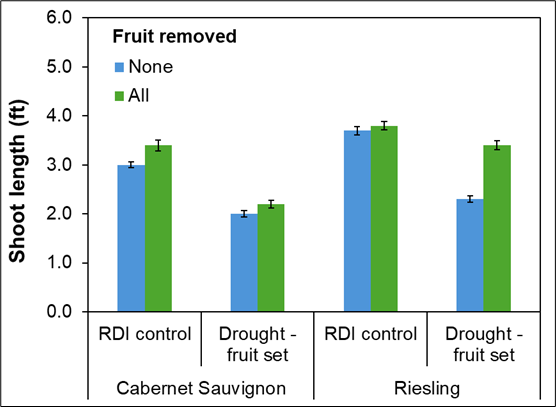
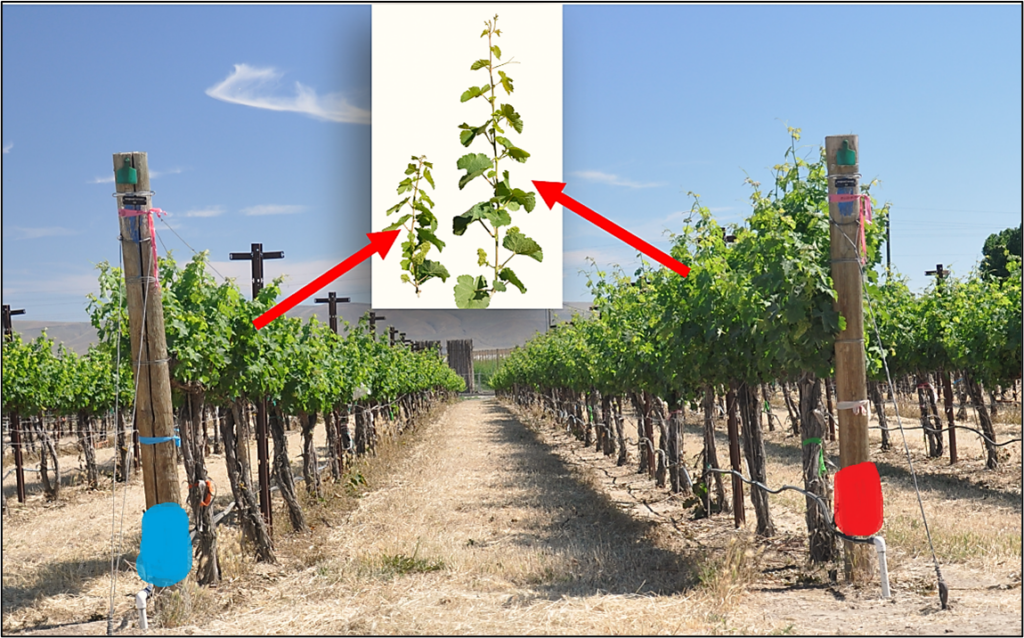
Relative to the regulated deficit irrigation (RDI) control, post-fruit-set shoot length in the recovery year declined by one-third in Cabernet Sauvignon and one-quarter in Riesling following drought initiated at fruit set in each of the preceding three years (Figures 1 and 2). Fruit removal improved shoot growth only in Riesling, where vines with complete fruit removal matched the RDI control (Figure 1).
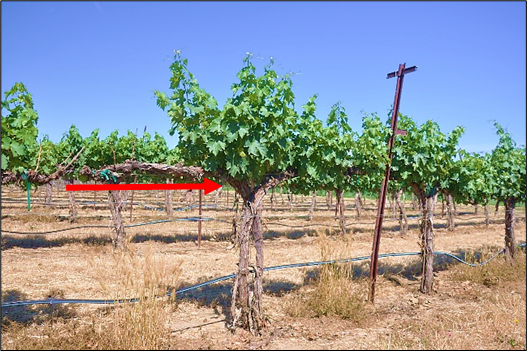
In Cabernet Sauvignon, up to 10% cordon dieback occurred in vines stressed from fruit set, and fruit removal did not mitigate this structural damage (Figure 3).
Berry weight was largely the same across treatments, but yield losses remained severe: yields were halved in vines previously stressed from fruit set and reduced by one-fifth in those stressed from veraison (Table 1). Complete fruit removal restored the yield in both varieties, but this yield was still 23–39% numerically lower than the RDI control (Table 1). Fruit composition (TSS, TA, and pH) remained largely unchanged. Surprisingly, however, Cabernet Sauvignon vines that had previously experienced a three‑year consecutive drought imposed at fruit set produced fruit with 27% higher YAN (158 mg/L) compared with the RDI control. Riesling showed no change in YAN. After the recovery year, vines previously exposed to drought from fruit set still had 58% lower pruning weight than the RDI control in both varieties (Table 1). Fruit removal improved pruning weight only in Riesling, where previously stressed vines with complete fruit removal matched the RDI control. In contrast, vines stressed from veraison had pruning weights similar to the RDI control in both varieties.
| Irrigation | Fruit removed | Cabernet Sauvignon Yield (tons / acre) | Cabernet Sauvignon Pruning Weight (lb / plant) | Riesling Yield (tons / acre) | Riesling Pruning Weight (lb / plant) |
|---|---|---|---|---|---|
| RDI control | 0% | 4.8 a | 1.88 ab | 7.1 a | 1.48 a |
| Drought Fruit Set | 0% | 2.8 bc | 0.93 cd | 3.0 d | 0.56 b |
| Drought Fruit Set | 50% | 1.5 c | 0.53 d | 3.6 cd | 0.66 b |
| Drought Fruit Set | 100% | 2.9 abc | 0.97 cd | 5.5 abc | 0.93 ab |
| Drought Veraison | 0% | 3.1 abc | 1.30 bcd | 4.3 bcd | 0.77 b |
| Drought Veraison | 50% | 3.9 ab | 1.44 abc | 5.9 ab | 0.89 ab |
| Drought Veraison | 100% | 4.9 a | 2.18 a | 6.5 ab | 1.37 a |
These results show that both drought itself and fruit dropping during drought years have major economic implications for Washington’s wine industry. With about 50,000 irrigated acres statewide and a cost of $350 per acre to reduce crop load, say from 6 to 3 tons per acre in Riesling vines, not dropping fruit saves growers approximately $17.5 million in a single season. In addition to avoiding this direct cost, retaining the 3 tons per acre that would otherwise be dropped and selling it at about $1,000 per ton generates substantial income, whereas fruit removed during drought years cannot be sold at all. Following a severe drought, vines perform poorly during the subsequent recovery year regardless of fruit removal. Although complete fruit removal can restore yield after drought, it does not prevent the long‑term physiological and structural damage caused by drought, and crop thinning only marginally alleviates these impacts. This suggests that, in many drought scenarios, the economic cost of fruit removal is not offset by meaningful gains in vine recovery. Strategic water management, especially protecting vines through veraison and ensuring post‑harvest irrigation, is a far more impactful lever than crop thinning alone. When water supply is restricted, withholding irrigation after veraison is much less destructive to grapevines than withholding it during the entire berry development period.
Key Takeways
- Fruit removal is not an effective drought‑mitigation strategy. Even though complete fruit removal can restore yield, it does not prevent the long‑term structural and physiological damage caused by drought.
- Drought starting at fruit set is much more damaging than drought starting at veraison. Protecting vines early in the season should be a top priority when water is limited.
- Recovery from severe drought is slow and incomplete. Expect reduced shoot growth and yield losses even after irrigation is restored.
- Fruit composition is quite stable under drought. Quality is not the main concern; vine health and future productivity are.
- Economic costs of fruit removal outweigh benefits. Avoiding crop thinning during drought can save Washington growers more than $17 million per year without compromising vine recovery.
- Water timing matters more than crop load. Maintain some level of irrigation through veraison and after harvest; use deficit irrigation strategically rather than relying on fruit removal.
Funding and Acknowledgements
This work is supported by the USDA Northwest Center for Small Fruits Research, the Washington State Grape and Wine Research Program, and the Chateau Ste. Michelle Distinguished Professorship. We thank Alan Kawakami and Zilia Khaliullina for their technical support
References
- Keller M. 2023. Climate change impacts on vineyards in warm and dry areas: challenges and opportunities. American Journal of Enology and Viticulture 74:0740033.
- Hochberg U, Perry A, Rachmilevitch S, Ben-Gal A, Sperling O. 2023. Instantaneous and lasting effects of drought on grapevine water use. Agricultural and Forest Meteorology 338:109521.
From Probes to Pixels: Evaluating Tools for Measuring Grape Heat Stress
Authors: Nipun Thennakoon, Dattatray Bhalekar, Joshua Oliver, Lav Khot, Washington State University
Introduction
Heat stress is a significant challenge in grape production, with some regions experiencing up to 40% crop damage. In extreme heat events, direct solar exposure can elevate the temperature on the sun-exposed side of a berry by as much as 22°F (12°C) above the ambient air temperature (Smart and Sinclair, 1976; Spayd et al., 2002). Once temperatures rise above 113°F (45°C), berries are highly prone to shriveling due to sunburn injury (Keller, 2023).Such damage leads to substantial reductions in both grape yield and wine quality (Gambetta et al., 2021). Berry surface temperature (BST) serves as a reliable indicator of sunburn and heat stress susceptibility.
Accurately measuring BST is essential for timely management decisions. Traditional contact-type sensors, like bead thermocouples or temperature probes, require physical contact with the berry. This is an invasive approach and can damage the berries by puncturing the skin, leading to juice leakage and increased disease incidence in the cluster and adjacent vines. As it is a laborious point-sampling approach, scaling across a commercial vineyard would be an additional challenge (Li et al., 2014). Non-contact sensors, such as infrared thermometers (IRTs) and thermal infrared cameras, offer a faster, non-destructive alternative. While these tools can be influenced by environmental factors like humidity and air temperature, they allow rapid monitoring. A major advantage of thermal imaging over single-point sensors is the ability to capture spatial temperature patterns across clusters, allowing growers to identify specific risk areas.
Overall, for better heat stress management decisions, selecting the right BST measurement tool is critical. We evaluated thermocouples, infrared thermometers, and thermal infrared cameras for their effectiveness and accuracy in berry temperature quantification. Those results are described below.
Experimental Design
The study was conducted at the WSU Roza experimental vineyard (Prosser, WA) for two Vitis vinifera cultivars, ‘Chardonnay’ and ‘Cabernet Sauvignon’. Measurements were taken during peak heat hours (2:00 p.m. and 4:00 p.m., Pacific Time) over two distinct high-heat days when ambient air temperatures exceeded 95°F (35°C). There were four vineyard locations within each variety, four vines within each vineyard location, and on each vinemm an eastern and western-facing cluster was monitored.
Both surface and internal temperature measurements were taken from each of the selected grape clusters using four different sensors (Figure 1). Internal berry temperatures were recorded using a K-Type temperature probe (Thermapen One Blue, ThermoWorks, American Fork, UT, USA; Figure 1b) inserted approximately 0.25 inches under the berry skin.
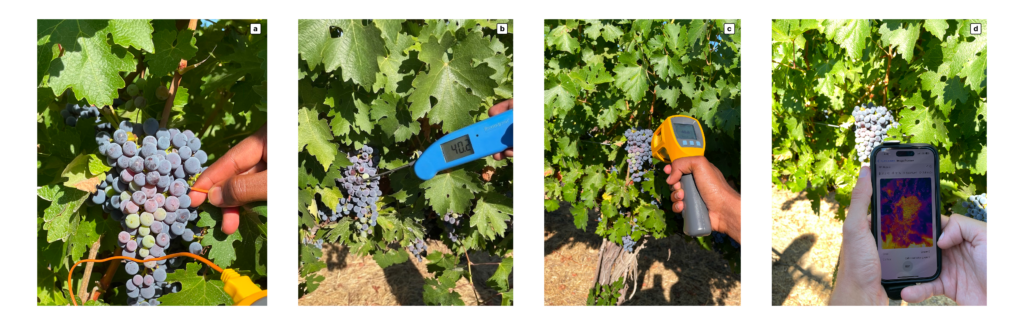
For berry surface measurements, a combination of contact and non-contact sensing tools were used. To ensure scientific accuracy, all instruments were calibrated across an operating range of 77°F (25°C) to 140°F (60°C). A dual-purpose handheld unit (Fluke 568-2, Fluke Corporation, Everett, WA, USA) provided both the infrared and bead thermocouple readings. The bead thermocouple was the reference measurement for BST as it provides a direct measurement of the berry surface without being influenced by environmental factors. Additionally, a wireless thermal IR camera (FLIR One Edge Pro; Teledyne FLIR LLC, Wilsonville, OR, USA) was used in conjunction with the AWN CropAI mobile application (AgWeatherNet, Washington State University, WA, USA). The app segments the berry clusters from the canopy background and estimates the BST using the hottest 20% of pixels in the image. For all “spot” sensors, measurements were taken on the same randomly selected berry within the cluster to ensure a direct comparison.
Results
As expected, the trial results demonstrated that solar exposure is the primary driver of changes in BST. Across all surface-sensing instruments, clusters on the sun-exposed west side of the canopy consistently measured 12°F (6.7°C) to 14°F (7.8°C) hotter than those on the east side. Both the thermocouple and the AWN CropAI app recorded peak temperatures exceeding the 113°F (45°C) threshold, at which point sunburn damage and shriveling become imminent. In contrast, the maximum temperatures recorded by the handheld infrared thermometer remained approximately 3°F (1.7°C) below this critical threshold (Figure 2).
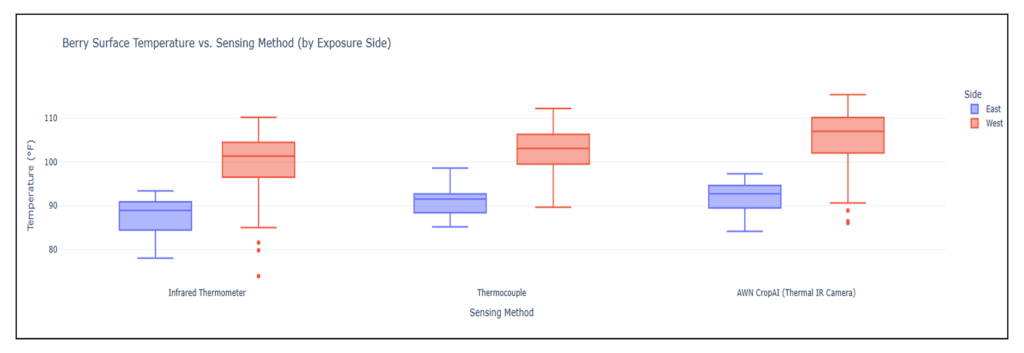
There was a strong linear relationship between BST measurements using the thermal IR camera (connected to AWN CropAI app) and the reference thermocouple. Overall, AWN CropAI consistently provided a more conservative estimate by reporting slightly higher temperatures than the thermocouple. The results also showed that under extreme temperatures (>100°F [37.8°C]), the temperatures across the cluster become more variable, and the thermal IR camera is able to capture cluster-specific “hot spots.” This will assist grape growers in identifying specific “sunburn zones” during heat events.
A strong linear relationship between BST surface temperature measurements using the handheld infrared thermometer and the reference thermocouple was also seen. However, it consistently recorded temperatures below what was measured by the reference thermocouple. This consistent underestimation likely stems from the infrared thermometer’s fixed field of view. Unlike the AI-driven segmentation used by the AWN CropAI app, the infrared thermometer averages all thermal energy within its circular measurement area. By including relatively cooler background elements, such as shaded stems, leaves, or the gaps between berries, the device essentially “dilutes” the true heat of the berry surface. For a grower, this is a critical distinction: relying on an infrared thermometer might suggest a “safe” temperature of 110°F (43.3°C), while the most exposed berries may have already crossed the 113°F (45°C) critical threshold.
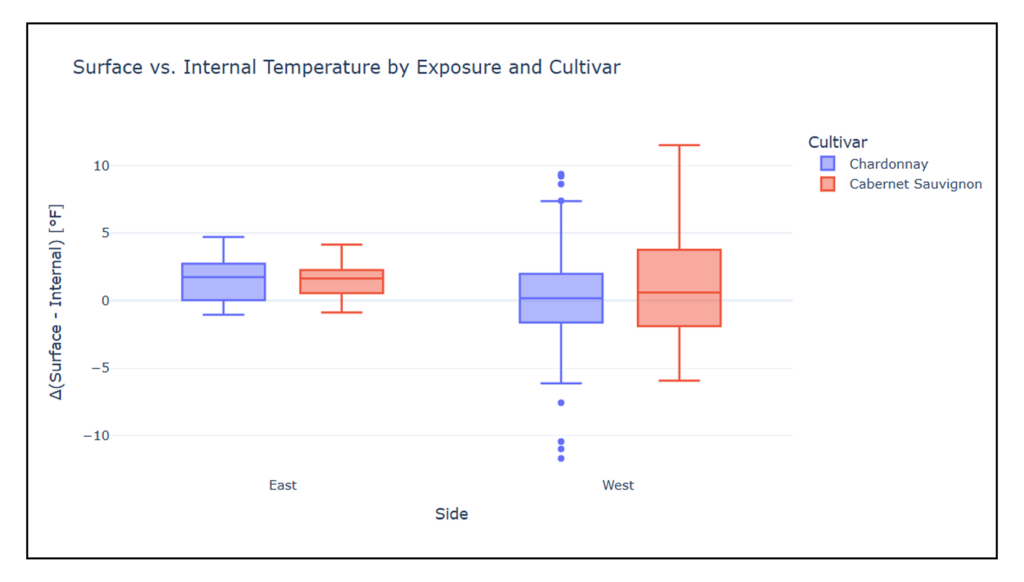
A comparison of internal and surface temperature (Figure 3) shows that on the shaded east side of the canopy, the berry surface temperature remained 2.0°F (1.1°C) warmer than the internal temperature in both cultivars. However, this relationship becomes volatile on the sun-exposed west side. Cabernet Sauvignon showed extreme surface spikes, with surface temperatures measuring as much as 10 to 12°F (5.6 to 6.7°C) hotter than the internal berry temperature. Interestingly, both cultivars (Chardonnay and Cabernet Sauvignon) also exhibited instances where the internal berry temperature was higher than the berry surface temperature.
Summary
- While non-invasive infrared thermometers are easier to use compared to contact-type tools, they often can underestimate the surface temperature in grape clusters.
- Thermal-RGB imagers used along with AWN CropAI smartphone application provides estimates that do not underestimate BST. It can effectively capture localized “hot spots” prone to sunburn.
- Berry surface temperature can differ by as much as 10 to 12°F (5.6 to 6.7°C) compared to the internal berry temperature depending on the sun exposure / canopy side.
Funding and Acknowledgements
This research was conducted in WSU PrecisionAg Laboratory with support from NSF/USDA NIFA Cyber–Physical Systems (Award No: 2021–67021–34336), NIFA project #0745, and Washington State Wine Commission. Authors thank Dr. Markus Keller for allowing to access his research block for this study.
References
- Keller, M. (2023). Climate Change Impacts on Vineyards in Warm and Dry Areas: Challenges and Opportunities. American Journal of Enology and Viticulture 74: 0740033.
- Li, L., Peters, T., Zhang, Q., Zhang, J., & Huang, D. (2014). Modeling Apple Surface Temperature Dynamics Based on Weather Data. Sensors 14: 20217–20234.
- Gambetta, J. M., Holzapfel, B. P., Stoll, M., & Friedel, M. (2021). Sunburn in Grapes: A Review. Frontiers in Plant Science, 11: 604691.
- Smart, R. E., & Sinclair, T. R. (1976). Solar heating of grape berries and other spherical fruits. Agricultural Meteorology 17: 241–259.
- Spayd, S. E., Tarara, J. M., Mee, D. L., & Ferguson, J. C. (2002). Separation of Sunlight and Temperature Effects on the Composition of Vitis vinifera cv. Merlot Berries. American Journal of Enology and Viticulture 53: 171–182.
AWN CropAI: AI-Powered Heat Stress Assessment and Fruit Color Tracking App
Authors: Nipun Thennakoon, Lav R. Khot, Markus Keller, and Gwen-Alyn Hoheisel, Washington State University
Introduction
Heat stress is becoming a significant challenge in grape production, with some regions experiencing up to 40% crop damage. In wine grapes, this damage leads to substantial reductions in both quality and yield (Gambetta et al., 2021).
Berry surface temperature (BST) serves as a reliable indicator of sunburn and associated heat stress susceptibility in grapes. Direct solar exposure can elevate the temperature on the sun-exposed side of a berry by as much as 22°F (12°C) above the ambient air temperature (Smart & Sinclair, 1976; Spayd et al., 2002), and berries heated above 113°F (45°C) are prone to shriveling due to sunburn injury (Keller, 2023). Although traditional measurement methods—such as thermocouples or bulb thermometers—are available, they are invasive and impractical for broad commercial applications (Li et al., 2014). Thermal infrared (IR) imaging provides a non-destructive alternative, and the integration of IR cameras with smartphones offers a portable, real-time solution for monitoring BST and canopy stress directly within vineyard blocks.
Beyond BST, berry color is a key quality attribute that influences harvest timing and, particularly in wine grapes, the eventual color profile of the finished wine (Underhill et al., 2020). Integrating the monitoring of both BST and color development into a mobile application can empower growers to make data-driven management decisions throughout the growing season.
AWN CropAI
AgWeatherNet’s AWN CropAI is a specialized smartphone platform built to help growers manage environmental stressors through AI-driven insights. To assist with berry and canopy heat mitigation and fruit quality management, the platform features tools that pair radiometric thermal imaging with artificial intelligence (AI) for real-time assessments of berry surface temperature and canopy temperature. These features, along with weather-guided BST forecasts for the next seven days at one-hour intervals, allow for immediate identification of sunburn risk and canopy stress. This helps growers make on-site management decisions and plan resource allocation in advance. Such foresight is critical, as reduced winter mountain snowpacks and associated water shortages during the summer months in eastern Washington create a heat stress mitigation dilemma with constrained resources.
Beyond monitoring BST and canopy health, AWN CropAI also quantifies color development (e.g., % red, % green, % yellow) instantly. The application is available for free on both Android® and iOS® devices. Join our growing community of growers, researchers, and industry professionals by downloading and making use of the app. The app can be downloaded from the Apple App Store or the Google Play Store.
Weather-Guided Berry Surface Temperature Forecasting.
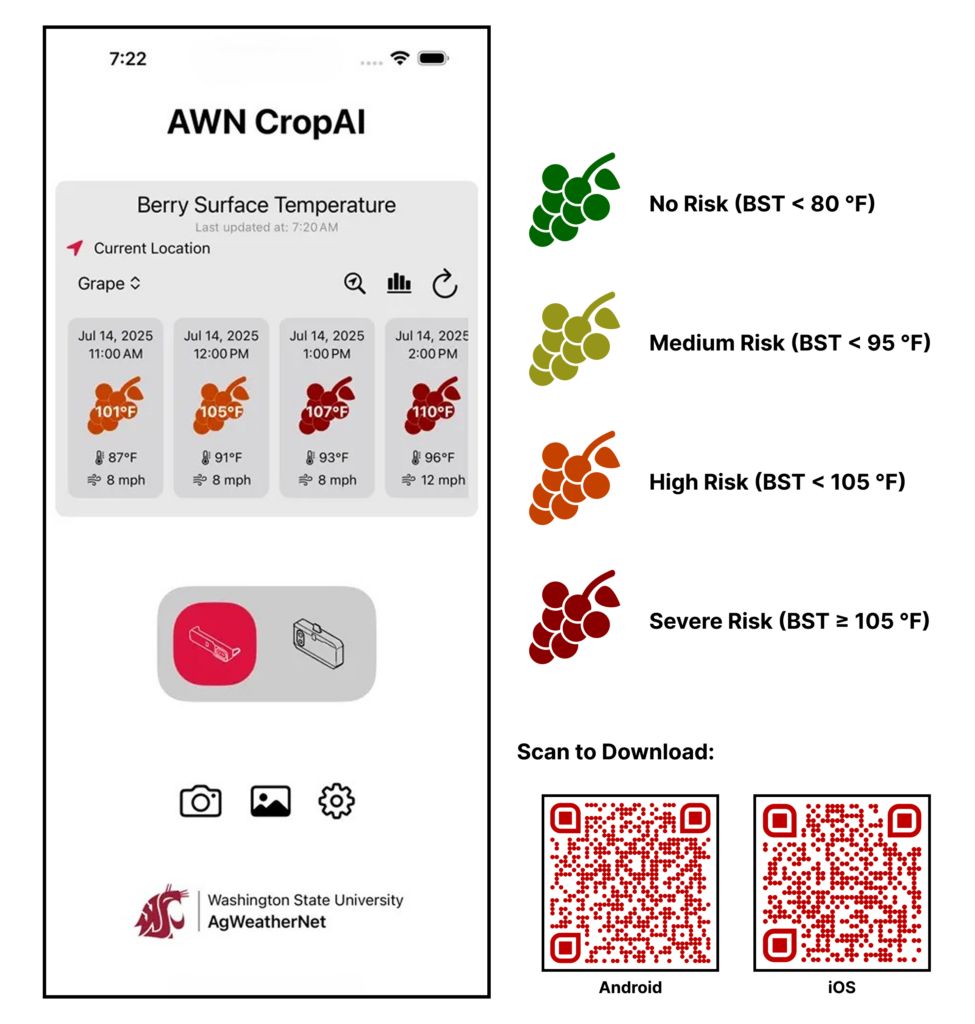
AWN CropAI delivers accurate, location-specific weather-guided hourly forecasts (Figure 1) of berry surface temperature for the next seven days. This feature leverages data from nearby AgWeatherNet stations, station-specific forecasts, and a machine learning model to help growers anticipate heat stress events in advance. The forecast model is currently calibrated specifically for Chardonnay and Cabernet Sauvignon. The sunburn risk is visualized through color-coded indicators ranging from green (no risk) to red (severe risk). These insights allow growers to optimize the timing of critical mitigation strategies, such as irrigation, shade deployment, or evaporative cooling, to effectively safeguard berry quality. To use this feature, users simply need to share the location information or specify a custom location; a thermal-RGB imager is not required to access these forecasts.
Seamless Thermal Infrared Imager Connectivity
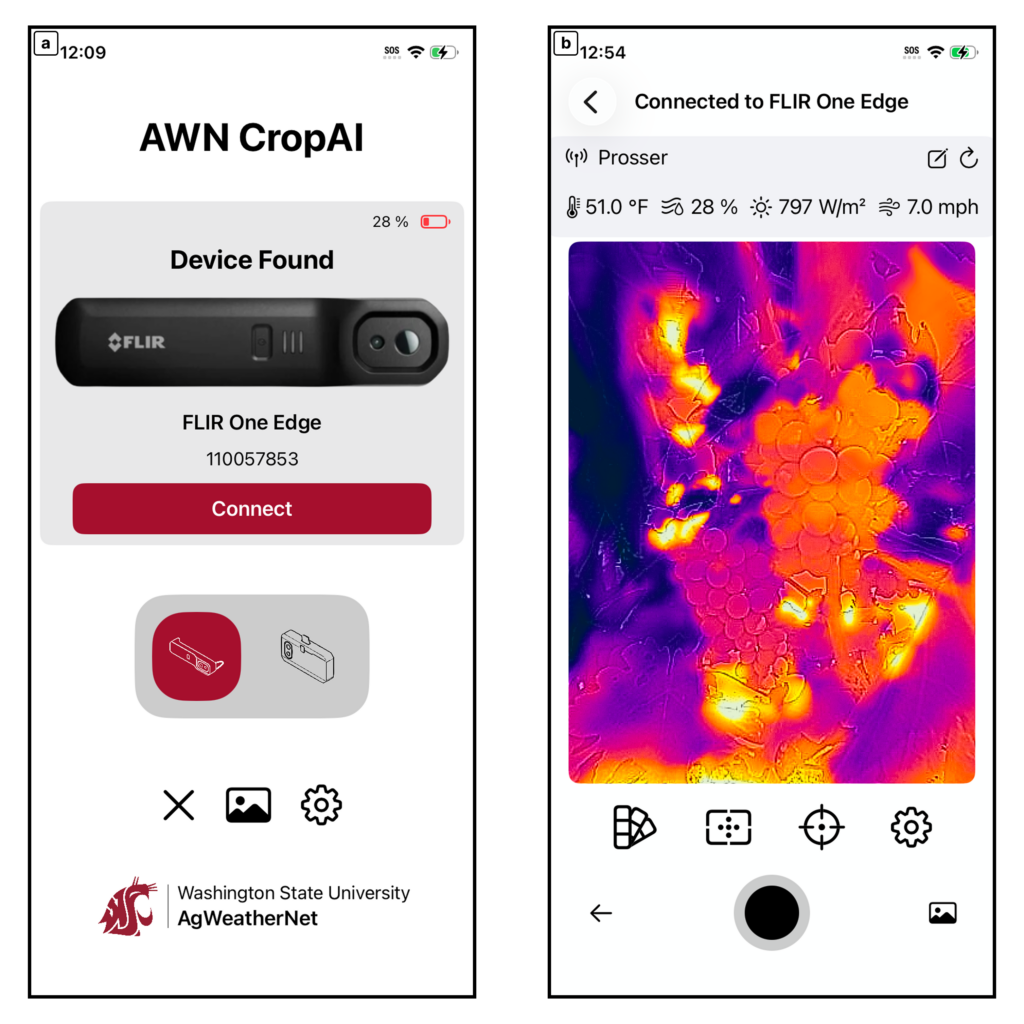
Many factors, like cooling and canopy management, can affect berry surface temperature. The BST model indicates a risk, but true berry surface temperature can vary based on production practices. For a direct measurement of berry surface temperature on your farm, AWN CropAI features seamless connectivity with supported thermal-RGB cameras, including the FLIR ONE® Pro (USB) and the wireless FLIR ONE® Edge Pro (Figure 2). This integration allows for the direct capture of thermal images within the app, simplifying data collection by eliminating the need to switch between different camera applications. The application also supports in-app Non-Uniformity Correction (NUC) calibration to ensure consistent temperature accuracy across various environmental conditions.
Thermal-RGB Imagery-Driven Berry Surface Temperature Estimation
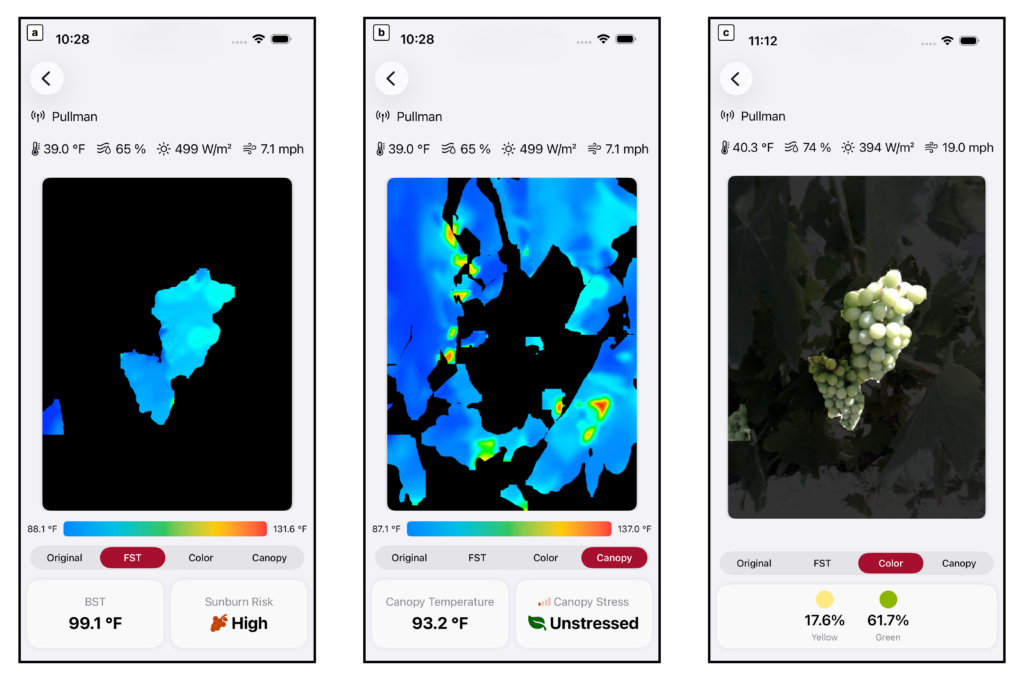
Once the user captures a thermal-RGB image of grape clusters, the application uses a machine learning-based model to detect and segment the clusters and calculate the average BST using the hottest 20% of pixels. This data is then used to assess the sunburn risk level. To help visualize temperature distribution across the fruit, the app also provides a spatial heatmap of the identified clusters (Figure 3a).
Thermal-RGB Imagery-Driven Canopy Temperature and Stress Estimation.
Similarly, the captured thermal-RGB image is used by AWN CropAI to identify and segment the leaf canopy and calculate the median canopy temperature. This data is used to assess real-time canopy stress levels. The application also generates a spatial heatmap of the canopy to help growers understand how the canopy temperature is distributed across the vine (Figure 3b).
Berry Color Analysis
AWN CropAI also incorporates CIELAB (L*a*b) color analysis to provide a detailed breakdown of berry development (Figure 3c). The application is designed to support various cultivars. It quantifies green and yellow proportions for white-berried grapes, while tracking green, red, and purple for red-berried varieties. This real-time data helps growers monitor veraison and ripening more accurately, allowing them to optimize harvest schedules and consistently meet quality standards.
Application Knowledge Center
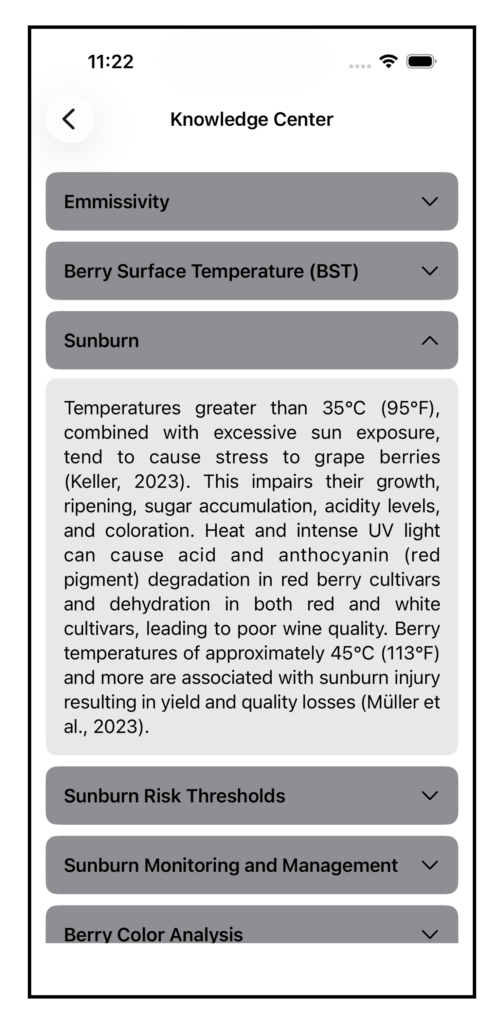
AWN CropAI also includes an integrated Knowledge Center (Figure 4) to ensure growers can interpret AI-driven data with confidence. This section serves as a quick-reference guide for the core principles behind BST, sunburn risk, and berry color development. By providing essential background and practical usage tips, the knowledge center empowers them to make informed, science-based decisions directly in the vineyard.
Crowdsourced Data Collection for Additional Research
By opting to share captured imagery and metadata, AWN CropAI enables growers to directly contribute to the robust BST estimation. This multi crop, cultivar and spatiotemporal fused data drives robust berry segmentation models and BST forecasting. Data-sharing is entirely optional, and the users can opt in or out at any time through the application’s settings. This collaborative approach has already made a significant impact. During the 2025 growing season, participating growers successfully contributed approximately 800 data points to help refine these specialized models.
The FUTURE
We are actively working on scaling AWN CropAI to support a more diverse range of crops, cultivars and use cases.
At present, the weather-guided BST forecast model is calibrated specifically for Chardonnay and Cabernet Sauvignon. To broaden support for additional cultivars, we are leveraging the crowdsourced thermal-RGB imagery and metadata shared by growers. This field data is essential for training and validating models across different cultivars and growing regions.
Additionally, we are refining our berry and canopy segmentation models to ensure they perform reliably under diverse vineyard conditions. We also plan to add other berry crops in the near future. If you are interested in beta testing or assisting with these model improvement efforts, please reach out to us at weather@wsu.edu.
Funding and Acknowledgements
This application is a byproduct of the research conducted in WSU PrecisionAg Laboratory with support from NSF/USDA NIFA (Cyber–Physical Systems Award No: 2021–67021–34336, 2021-67021-35344 [WSU-led AgAID AI Institute], project #0745) and projects funded by Washington State Wine and Tree Fruit Research Commissions. Dheeraj Vurukuti and Dr. Basavaraj Amogi contributed towards application development and refinement. We thank our grower cooperators Kade Casciato, Kyle Ferrera, Patrick Rowan, and Todd Chapman for their assistance with beta testing during the 2025 growing season.
References
- Keller, M. 2023. Climate Change Impacts on Vineyards in Warm and Dry Areas: Challenges and Opportunities. American Journal of Enology and Viticulture 74: 0740033.
- Li, L., Peters, T., Zhang, Q., Zhang, J., & Huang, D. 2014. Modeling Apple Surface Temperature Dynamics Based on Weather Data. Sensors 14:20217–20234.
- Gambetta, J. M., Holzapfel, B. P., Stoll, M., & Friedel, M. 2021. Sunburn in Grapes: A Review. Frontiers in Plant Science 11: 604691.
- Smart, R. E., & Sinclair, T. R. 1976. Solar heating of grape berries and other spherical fruits. Agricultural Meteorology 17:241–259.
- Spayd, S. E., Tarara, J. M., Mee, D. L., & Ferguson, J. C. 2002. Separation of Sunlight and Temperature Effects on the Composition of Vitis vinifera cv. Merlot Berries. American Journal of Enology and Viticulture 53:171–182.
- Underhill, A. N., Hirsch, C. D., & Clark, M. D. 2020. Evaluating and Mapping Grape Color Using Image-Based Phenotyping. Plant Phenomics 2020:1–11.
Update from the Washington State Wine Commission
Author: Julie Tarara, Research Program Manager, Washington State Wine Commission
Washington Grape and Wine Research Program Question & Answer
QUESTION: What is the Washington Grape and Wine Research Program?
ANSWER: Washington’s wine research program is one of a few in the world funded by all wine grape growers and all wineries in the state. It is an industry-driven, industry-guided source of funding for wine grape and wine scientific projects. Results are accessible to all vintners and wine grape growers. Most projects are submitted by WSU professors. Funding may support other scientists with industry-relevant projects, for example researchers from the USDA-Agricultural Research Service.
QUESTION: What do you mean “industry driven, industry guided”?
ANSWER: Research funded by the program is expected to address the Washington wine industry’s needs. The ultimate goal of the program is to produce scientific results that ultimately lead to higher quality grapes and wine. The wine industry sets research priorities and then recommends to WSU which projects should be approved for funding.
QUESTION: Who decides what the research priorities are?
ANSWER: Every winter, the Wine Commission in conjunction with the Washington Wine Technical Group sends out a survey of research priorities to all growers and wineries. Participants are encouraged also to submit new ideas for potential inclusion. In June of each year, a committee of industry representatives, the Wine Research Advisory Committee (WRAC), reviews the survey results and creates the list of research priorities for the upcoming project cycle. To see the most recent priorities, scroll down.
QUESTION: Who is on WRAC and can I get involved?
ANSWER: WRAC members are growers and winemakers who have a keen interest in research. Each member serves a three-year term, which can be renewed.
QUESTION: How are projects decided on?
ANSWER: In the fall, researchers submit short “pre-proposals” to WRAC, which reviews and approves them for submission of a full-length proposal. In February, the full proposals are reviewed by WRAC members before each researcher “pitches” his or her project at the WRAC Research Review. The Committee decides which projects to recommend for funding to the Wine Commission Board. In April, the Board votes on those recommendations, after which they are submitted to WSU for processing and release of official award letters to the successful researchers.
QUESTION: Interesting. Can I attend the Research Review?
ANSWER: All Washington wine industry members are welcome to attend the open portion of the Research Review either in person in Prosser, or virtually. The open portion of the meeting consists of the researchers pitching their projects and answering questions from the committee. Think of it as an episode of Shark Tank for science nerds. The Executive Session of WRAC is a closed meeting.
QUESTION: What sort of projects are funded?
ANSWER: Currently funded projects in enology include smoke exposure and tannin management in the winery. Viticulture projects include mealybug and leafroll virus management; mitigating the deleterious effects of heat waves on the vines and fruit; development of online decision aids; defining soil health in Washington vineyards; and modeling cold hardiness.
QUESTION: Cool. Who funds the research program?
ANSWER: There are four sources of funding: 1) industry assessments from all wine grape growers and wineries in Washington state; 2) a line item in the state budget that is directed to WSU for grape and wine research; 3) contributions from the Auction of Washington Wines; and 4) a portion of the state liter tax that is collected on all wines sold in Washington
QUESTION: Research is expensive, no? Are we able to fully support competitive projects?
ANSWER: Yes, scientific research is expensive. The Washington Grape and Wine Research Program gets research topics off the ground, sees some to fruition, and acts as a launch pad for others. Consider it seed money to allow the researchers to start new lines of inquiry, gather data, and then leverage those results into bigger regional and national grants from other sources–for example the USDA’s Specialty Crop Research Initiative.
QUESTION: What is our return on investment?
ANSWER: First, ROI is a big picture, long-term question. Rather than focus on the outcome of a single project, we need to consider the whole body of work over the years. Nonetheless, let’s consider a few examples. Work on cutworm management by WSU resulted in reduced pesticide use and highly targeted applications of cutworm deterrents. Long-term irrigation research by WSU resulted in up to 40% water savings over old methods. The standard ‘Regulated Deficit Irrigation’ of today was developed right here in Washington. Cooperative research between WSU and USDA uncovered the difference between sunlight exposure and heat exposure on berry phenolics, which directly affects wine quality. Seed funding from the Washington Grape and Wine Research program has been parlayed into multi-million dollar grants from federal sources like the Specialty Crop Research Initiative.
QUESTION: If research results are accessible to all, how do I learn about them?
ANSWER: We have a number of outlets for disseminating results and recommendations for Best Practices: bi-monthly Washington Wine Commission WAVE Research Reports; monthly Wine Commission newsletters; WSU Viticulture and Enology semi-annual newsletter that you are reading now (VEEN newsletter); WAVEx webinars; WAVE in-person seminars; field days; presentations and workshops hosted at WineVit; Good Fruit Grower magazine. In addition, check out the Research section of the Washington State Wine Commission website for reports and webinar recordings.
QUESTION: What is WAVE?
ANSWER: WAVE stands for Washington Advancements in Viticulture and Enology. These seminars are co-hosted by the Wine Commission and WSU. WAVEx is the short-format edition via webinars. The next WAVEx will cover heat mitigation strategies and AgWeatherNet tools. WAVEx webinars are free. Register for the May 20th webinar here. On June 10th, there will be a WAVEx webinar on sulfur fungicide phytotoxicity. Stay tuned for registration.
QUESTION: Where can I find a list of current research priorities?
ANSWER: Right here!
Washington State Viticulture and Enology Research Priorities
The Washington State Viticulture and Enology Research Priorities for July 2025-June 2026 are:
Enology
- Wine Aroma and Flavor Compounds – Optimize sensory compounds in wine; management of environmental issues impacting wine quality (smoke exposure, frost exposure); management of vineyard derived sulfur off aromas.
- Winery Sustainability – Reduce winery energy usage. Develop methods for large and small wineries to recycle, reuse, reduce, and repurpose harvest biomass, winery wastewater and winery waste, including glass wine bottles.
- Fermentation Management – Yeast and bacteria effects on fermentation, sensory properties; control of microbiological spoilage; nutrient management practices; management at winery of diseased/disordered fruit; fermentation monitoring practices (cap extraction, process control, real- time monitoring methods), phenolic management, rapid analysis of juice, must, wine chemistries.
- Wine Maturation and Stabilization – Improve protein and cold stabilization to minimize flavor scalping, color loss and reduce energy use; microbial stabilization, impact of filtration options on wine sensory qualities, fining methods, calcium instability, sulfur dioxide minimalization and management.
Viticulture
- Vineyard Sustainability — Improve vineyard floor management practices; soil fertility and carbon sequestration in vineyard soils, nutrient management, biochar for optimal vine and soil health; grafting and rootstock management and selection.
- Pest Management – Detect and manage grapevine viruses and vectors; sustainable management strategies for all pests of economic importance (grape mealybug, spider mites, phylloxera, fungal diseases, nematodes, crown gall, weeds, vertebrate); management of trunk diseases.
- Vineyard Production, Efficiency and Profitability – Improve water use efficiency/water savings and water quality to optimize wine quality; canopy management for mechanization; management of berry/sour shrivel.
- Climate Impacts on Site/Viticulture – Develop optimum guidelines for light and heat exposure on fruit; understand impact of climate variability on viticulture (phenology, ripening, pest and diseases); winter trunk injury and secondary infections (crown gall); develop decision support system for inversion, frost protection.
- Mechanization/Precision – Develop, evaluate mechanized/precision tools that reduce reliance on hand labor in vineyard or winery (crop estimation tool, canopy and crop management, pest management, sorting, MOG removal, cellar tasks).
Emerging Issues
- Unforeseen viticulture and enology threats, problems, or research opportunities
- Industry education needs (extension bulletins, etc.)
- Comparative analysis of Washington State viticulture practices to other regions
We strive to make it as easy as possible to stay informed with the latest innovations. If you aren’t receiving research news, what are you waiting for? You could be missing valuable information! Send an email to: jtarara@washingtonwine.org to get on the research email list.