VEEN is curated by WSU Viticulture Extension. For questions on articles, or to request to submit an article in future issues, reach out to Michelle Moyer.
This issue of VEEN was originally published as a .PDF in April 2021, and posted online. Some content here will differ from that original issue. The issue is archived, but accessible on the VEEN Archive webpage.
A Note from the Editor
Spring is always a great time to start fresh… and I think everyone is looking forward to a reset in 2021. But we’ve learned a lot in the last year, including ways to use and engage with new technology that have expanded our ability to access information and resources with greater ease than ever before.
That’s the theme to this Spring 2021 VEEN – Resources and Learning. We have updates from FRAME including new decision-aid tools, a quick overview of common attributes to vineyard sprayers, tips and tricks for cooling vineyards during heat waves, and drone-based mapping of vineyard water status.
The support and resilience of the Washington Wine Industry is also clear with the available educational sabbatical for current industry members, and scholarships for future industry members. We also have a great overview (with access links) from WineVit 2021, and an update of the projects currently supported by the Washington State Grape and Wine Research Program.
So happy reading — and fingers crossed the frost is done for the spring!
Michelle M. Moyer
Viticulture Extension Specialist
Professor of Viticulture
WSU Prosser IAREC
Table of Contents
- New FRAME networks Resources for Growers
- Any Scribbling on Your Grape Leaves?
- Understanding Sprayer Technologies
- Vineyard Heat Management: Acclimation and Mitigation
- Drone-based Grapevine Water Use Mapping
- Powers Sabbatical and WWIF Student Scholarships
- First Virtual WineVit™ A Huge Success
- WA Wine Commission funds $1M+ for Leading-Edge Research Projects
Connect With Us
V&E Certificate Program
New FRAMEnetworks Resources for Growers
Author: Charlotte Oliver, FRAME Project Manager, WSU Prosser IAREC
Fungicide resistance has been a troubling issue for many years. A lot of fungicide resistance research focuses on understanding where resistance occurs but what can growers do about it? Since 2019, the FRAME networks team has been working to develop a series of tools to assist grape growers with understanding fungicide resistance issues. These resources are currently available for free and are highlighted below.
FRAME Website
The FRAMEnetworks website serves as the hub of all the FRAME networks resources as well as project updates. It’s a handy one-stop shop for accessing all of the available information, including links to local pest management guides and the additional resources below.
Powdery Mildew Sampling for Fungicide Resistance
The backbone of the FRAME networks research is providing free grape powdery mildew fungicide resistance testing for growers. A part of this research has been the development of a new, rapid canopy sampling method using gloves, all kinds, and sterile cotton swabs. This method can detect the presence of powdery mildew well before visual symptoms can be observed and can be completed while doing normal vineyard canopy management. Information on who to contact to obtain a testing kit is available on our Grower Information page on the FRAMEwebsite.
How to Use Test Results (Decision Tree)
After samples have been submitted to the participating FRAME testing labs, an email containing the sample results will be sent back. Well, now what? What does having a sample come back with resistance mean? Luckily, FRAME networks has developed a helpful decision tree to assist with spray program product decisions based on testing results. This color-coded table breaks down testing results and time in the growing season to provide guidelines for fungicide application choices.
Fungicide Resistance Dashboard
Knowing the fungicide resistance presence in your own vineyard is important, but how does that compare to the rest of the nation? Since 2017, FRAME networks has been accepting powdery mildew samples for fungicide resistance testing from across the country. Our team has compiled this information into a real-time dashboard where results from across the country can be compared by year, state, grape-type, and more.
Virtual Spray Program Design Workshops
Fungicide resistance development is assumed to be influenced by application practices and developing a sustainable fungicide spray program is a difficult task. The FRAME networks team has developed a virtual fungicide spray program design workshop to help demystify the process. This workshop can be provided on demand to interested grower groups by contacting Dr. Michelle Moyer.

Any Scribbling on Your Grape Leaves?
Author: David James, WSU Prosser IAREC
Do you have any ‘scribbling’ or weird-looking lines on your grape leaves? If so, we want to hear from you! There is a new potential pest in our vineyards, called the grape leafminer (yes it ‘mines’ through the inside of grape leaves making ‘scribbles’). It was first spotted in eastern Washington in September 2020 but now we need to know how far it has spread and how large its populations are.
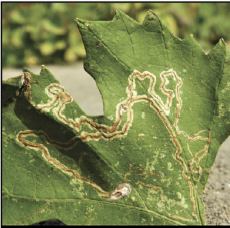
So if you see, this distinctive scribbling on your leaves please take a photo and email to David James or Allyson Leonhard and we will come out, take a look and take some samples.
Understanding Sprayer Technologies
Author: Margaret McCoy, PhD Candidate, WSU Prosser IAREC
Exchangeable Nozzle Sprayers
Sprayers with exchangeable nozzles include airblast and multi-head fan technologies. The nozzles used for these sprayers are hydraulic with rate (gallons per minute, GPM) regulated by pressure and nozzle orifice. The spray shape, droplet size, and flow rate are not created by the air from the fan, but rather the nozzle itself. These nozzles also produce spray shape, droplet size, and flow rate independent of air handling. Spray droplets produced with this type of nozzle range in size, from ultra-course to very fine. Common strengths of these sprayers include: being able to change nozzles as needed to better accommodate the spray goals. Common considerations of this type of sprayer technology are: broken, warped, or altered fan blades or air intake areas can alter the air output pattern. Nozzles also wear and need to be replaced.
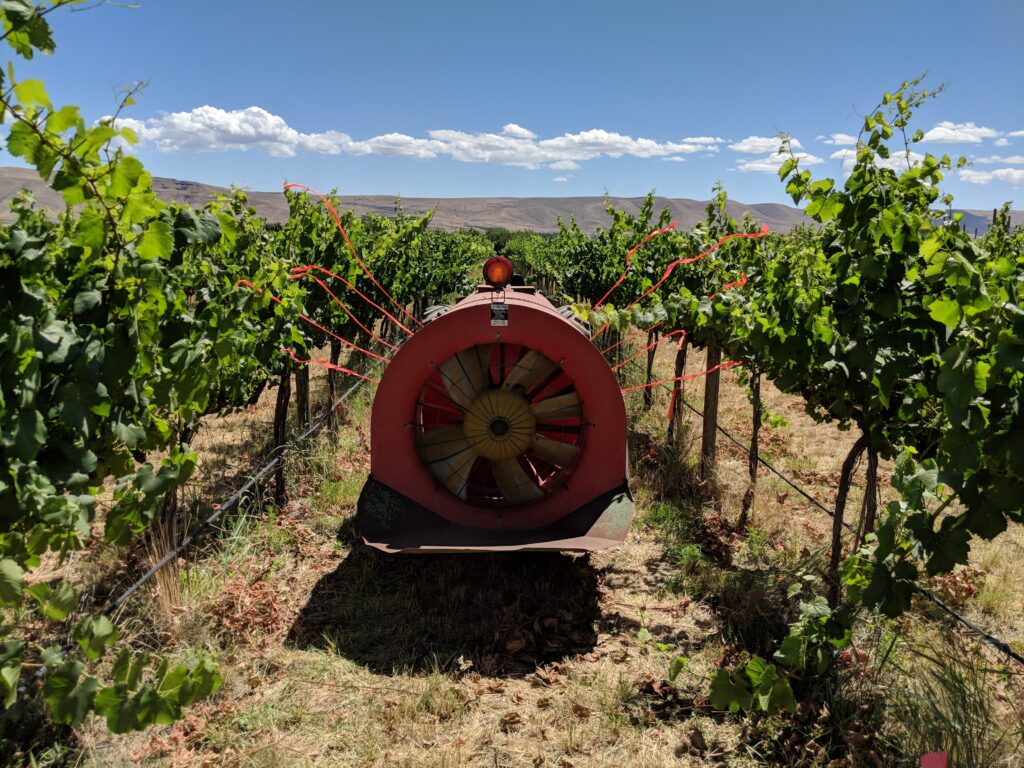
Axial Fan / Low Profile Radial
Axial Fan Strengths
- Can accommodate almost any standard nozzle, including ceramic which last longer
- Can adjust air volume output and number of nozzle positions that are open to better match the vine canopy
- Technology is simple and robust: easy to maintain and obtain parts
Axial Fan Considerations
- Only two half rows (“1 row”) is sprayed in a single pass
- Often used with too much air for vineyard canopies
- The air pattern produced with axial fans has an upward air output on one side, and a downward air output on the other that can cause uneven distribution without air straighteners
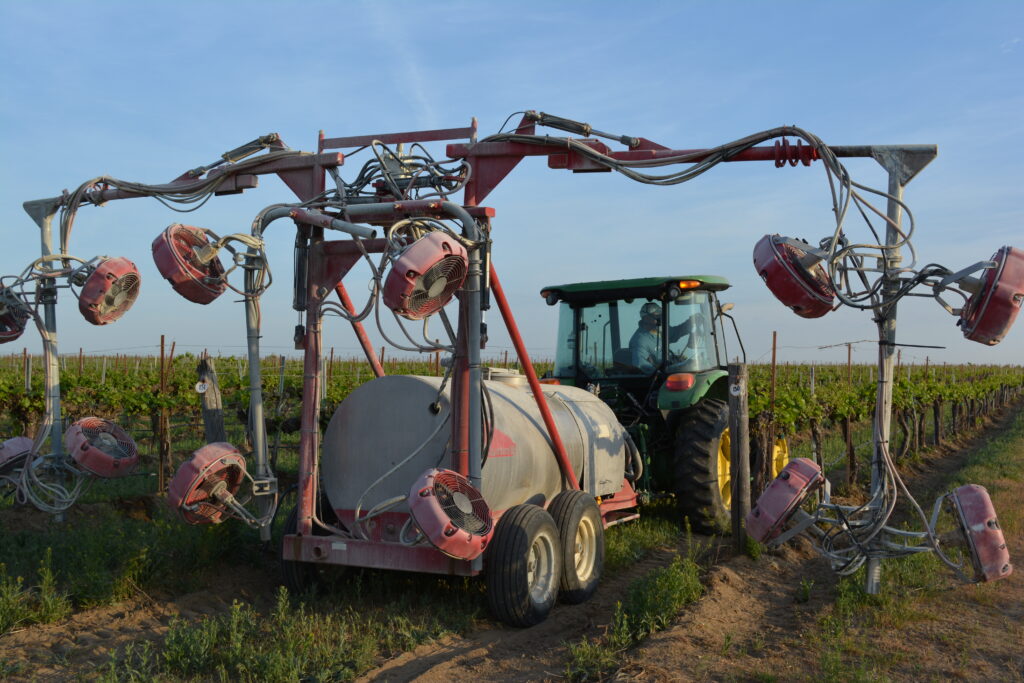
Multi-head Axial Fan
Strengths
- Adjustable fan heads on opposite sides of canopy target air into grapes
- Less total air volume output is better matched with the grape canopy
- Arms adjust to accommodate varied row width and canopy size
- Can spray multiple rows
Considerations
- Improper placement of nozzles in non-symmetrical pattern can cause spray banding
- Fan heads can move during application / transport, and need to be checked for adjustments throughout spray applications
Stationary (Pneumatic) Nozzle Sprayers
Sprayers with stationary nozzles include air shear and electrostatic technologies. Pneumatic nozzles have a narrow range of flow rates (GPM) regulated by pressure. Droplet formation and size is dependent on pressure and the air; a pneumatic nozzle produces fine to very fine droplets, smaller than a human hair. Common strengths of these sprayers include: less nozzle components to replace because they are stationary, low volume applications, air is directed into the canopy with the ability to adjust the arms to accommodate varied row width and canopy size. Common considerations with these sprayers include: the droplet size is fixed, high power take off (PTO) speed is needed to create droplets during applications, smaller droplets can evaporate readily under high temperature and lower humidity conditions, and GPM from each nozzle may vary.
Air Shear
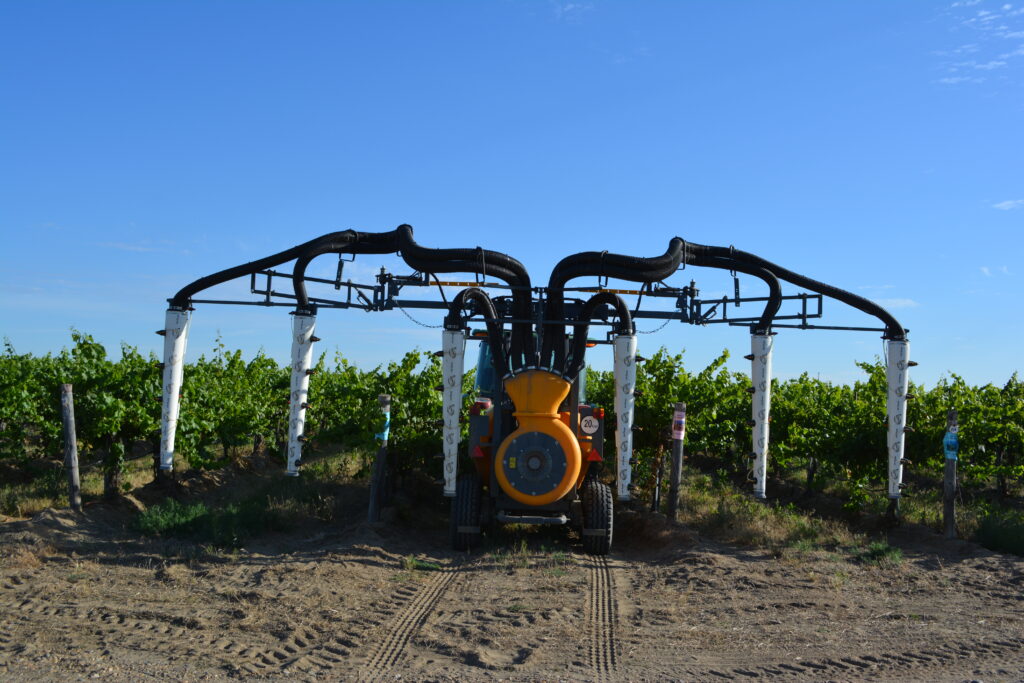
Strengths
- Nozzles less likely to clog since the orifice is larger
- Depending on design, can spray multiple rows in a single pass saving significantly on time and expense
Considerations
- Nozzles can’t be turned off individually, but rather 2, 3, or 5 on at a time
- Nozzle parts and bolts can become loose during application and should be checked at each tank fill
- Generally maximum rate is 50 GPA
Electrostatic
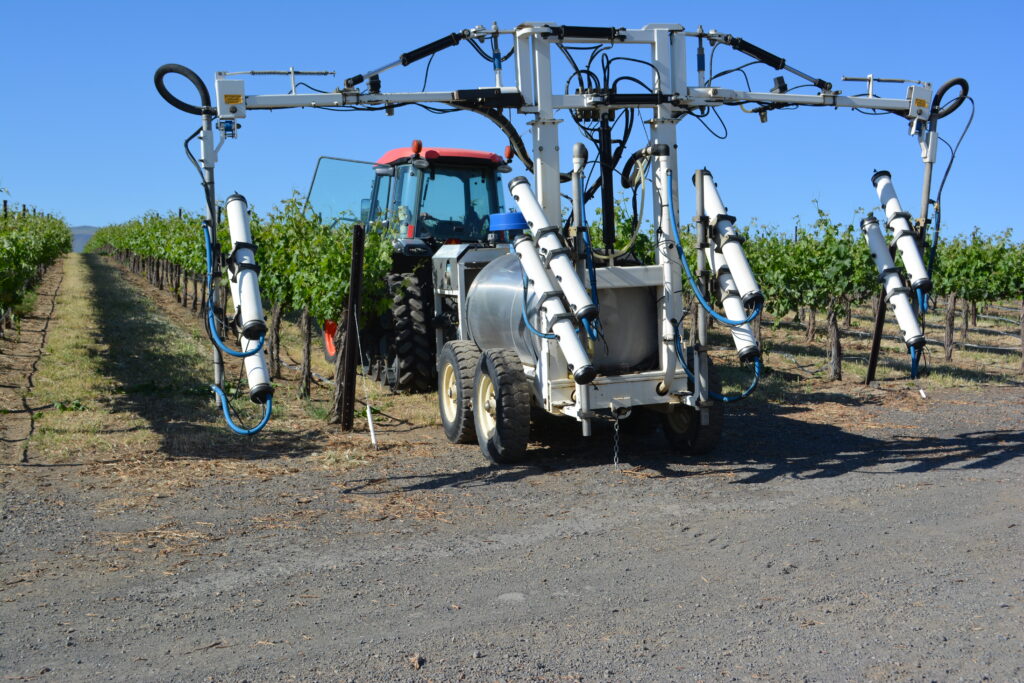
Strengths
- Movable arms to direct spray into the canopy, where the charge is most effective within a few cm
- Smaller droplets hold a stronger charge
- Depending on design, can spray multiple rows in a single pass
Considerations
- Voltage must be checked to ensure that electrostatic charge is applied to the outside of the droplet
- Generally, 20 GPA is maximum rate
- Winds can overpower droplet charge strength
References
J. Deveau and M, Ledebuhr. 2020. “Airblast Sprayer Categories – A Proposal”
Vineyard Heat Management: Acclimation and Mitigation
Author: Ben-Min Chang, WSU Prosser IAREC
Summer is right around the corner. Heat waves make many people stay in the shade or hide in air-conditioned spaces because of uncomfortable temperatures. As we are dodging the hot air and bright sunlight, grapevines can only acclimate. But sometimes acclimation is not enough, and cultural practices are needed to mitigate the heat stress.
Temperature Acclimation
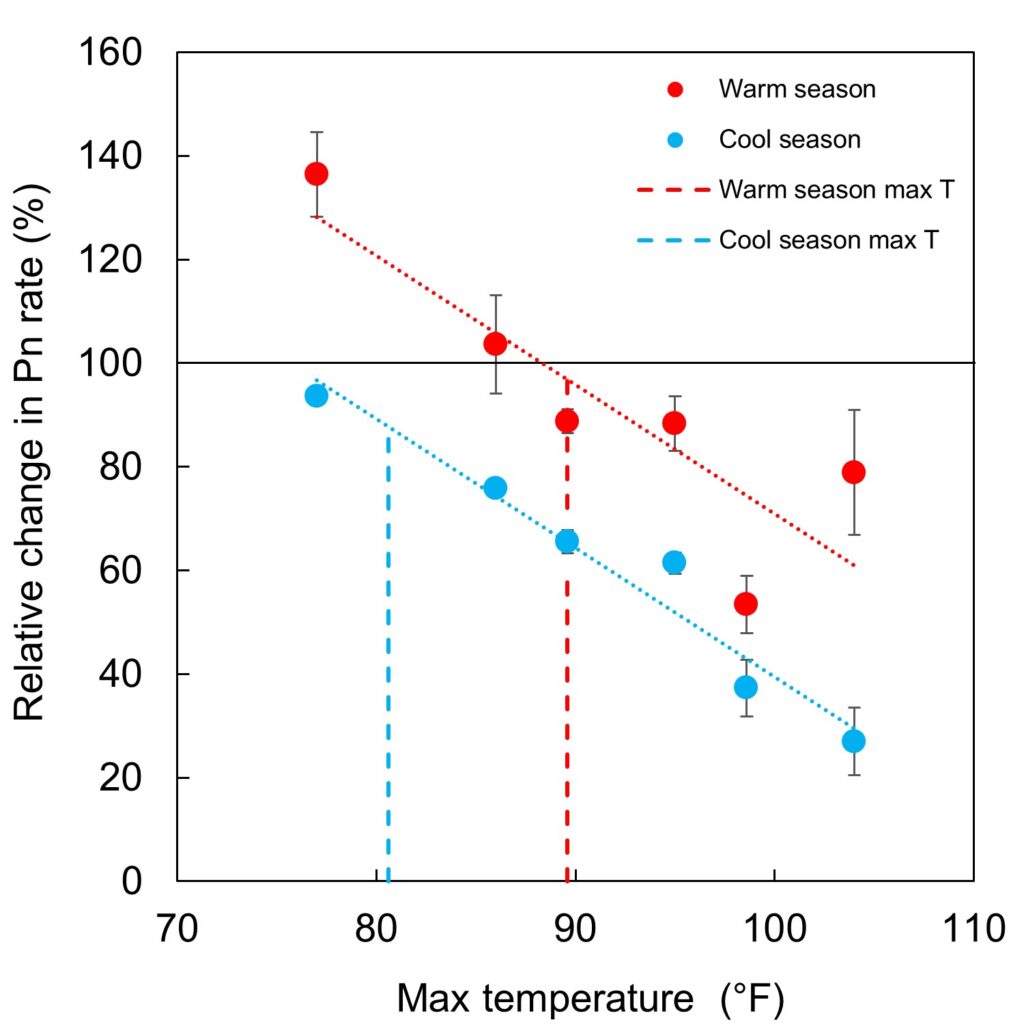
A study in growth chambers showed that grape leaves that are acclimated to warm temperatures can tolerate even higher temperatures. In the controlled environment, we can simulate environmental shocks, like heat waves, or stable weather patterns for days. In this experiment, 2-yr old potted Cabernet Sauvignon cuttings were studied. When they were at full canopy, the potted vines were moved to two growth chambers with temperature regimes programmed to simulate warm and cool seasons in eastern Washington state. The daily maximum and minimum temperatures were 90°F/59°F in the warm regime and 81°F/50°F in the cool regime. The vines were acclimated to these two temperature regimes for 10 days. The acclimated vines were then challenged with heat waves on day 11. The maximum temperature during these heat waves ranged from 104°F to 77°F in 7 levels. The rate of leaf photosynthesis on day 10 was compared with that on day 11 to quantify the influence of the heat waves. Less change in photosynthesis means greater acclimation potential for the grapevines.
The highest temperature (104°F) reduced the photosynthesis rate by 20% in the warm temperature acclimated vines, while the same shock caused the rate to drop by 73% in the cool temperature acclimated vines (Figure 1). The results also showed every 10°F increment in air temperature will decrease the photosynthesis rate by 25%. This finding suggested the temperature threshold causing heat stress is dynamic for grapevines, unlike in humans. As a homeotherm, our body temperature is constant, so the threshold temperature making us uncomfortable is also constant. Grapevines can acclimate to a stable weather pattern but suffer from a sudden shock. Perhaps counterintuitively, they seem to be more vulnerable to heat stress during a cool rather than a warm growing season. Therefore, grape growers might be cautious that the grapevines’ standard of “heat waves” might be different from ours.
Heat Mitigation
Though grapevines do not sweat, they transpire water. Transforming liquid water to vapor removes heat from the leaves. This evaporative cooling is the natural way to manage heat in a plant. However, transpiration is limited under regulated deficit irrigation (RDI), the widely adopted irrigation practice in Washington. When soil water is not available, the leaves will close their stomata to control their transpiration rate, which reduces water loss but restricts their capability to manage heat. With limited transpiration, the solar energy increases the leaf temperature.
Can we prepare for heat waves without sacrificing the RDI regime? In the past, growers tried spraying water on the vines with sprinklers to cool the canopy. However, without proper control, this approach often compromises the regulated drought stress and encourages excessive shoot and berry growth. Fortunately, we can overcome this problem with a little help from modern technology.
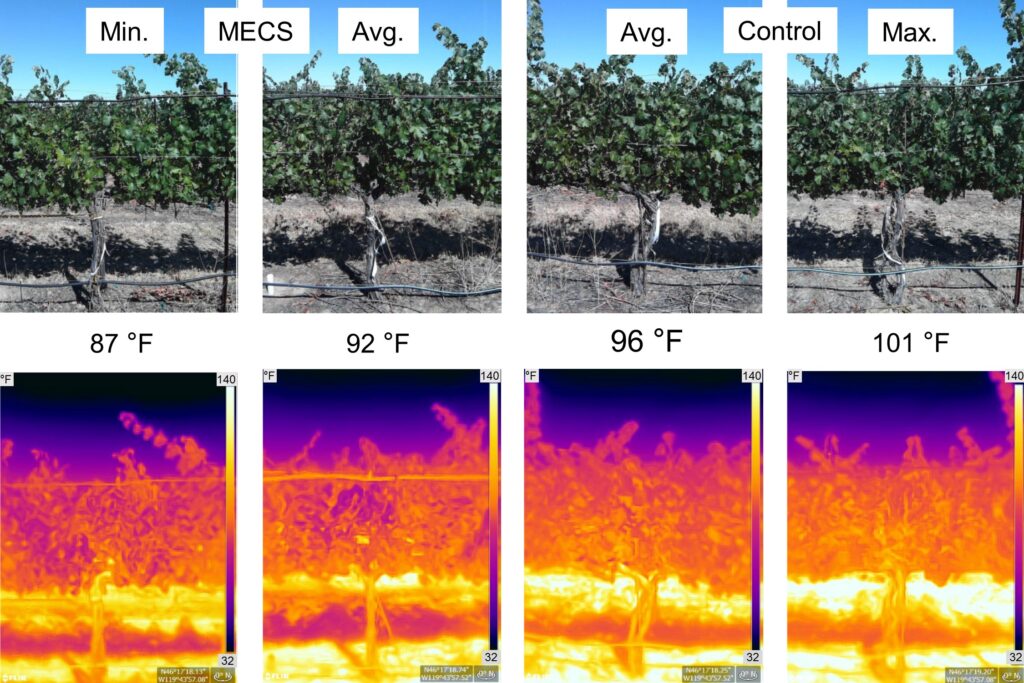
The mist-type evaporative cooling system (MECS) was developed to cool the vineyard with the right amount of water. Misting nozzles create fine droplets that evaporate from the leaf surface without running off. The spraying will be activated only if the canopy temperature is above the set-point. To prevent excessive spraying, a leaf wetness sensor will stop the spraying when the leaves are wet. In our trial with Cabernet Sauvignon in the WSU research vineyard the system activates at 95°F, cooling the canopy to 92°F while the control vines had canopy temperature at 96°F (Figure 2). During heat waves, the midday stem water potential was higher in the cooled vines. We found no differences in shoot growth, disease incidence, yield, and juice and wine composition between treatment and control. Consequently, the MECS can modify the environment and vine physiological performance during heat waves but do not introduce detrimental effects in the fruit.
Grapevines acclimate to their environments, but sometimes they may need help from growers to mitigate heat waves. Growers can use MECS to dampen temperature fluctuations experienced by the vine. The MECS will make vineyards prepared for the summer heat.
This project is funded by the USDA Northwest Center for Small Fruits Research and the Washington State Grape and Wine Research Program.
Drone-based Grapevine Water Use Mapping
Authors: Lav Khot, Abhilash Chandel, R. Troy Peters, Claudio Stöckle and Pete Jacoby, Washington State University
Wine grape production quantity and quality is significantly influenced by in-season irrigation management. Adequate irrigation during initial growth stages is critical for yield enhancement while deficit irrigation at later stages holds a key to enhanced berry quality (1). Washington vineyards are typically irrigated with surface drip systems. Such irrigation allows flexibility of growth stage-specific irrigation control (2). However, actual vine water use may vary significantly within a vineyard depending on edaphic, climatic, and plant root growth and physiological conditions. As a result, not all vines within a block or in a row may have similar water requirements or respond the same to irrigation. To achieve optimal site-specific irrigation within the vineyard (3), it is critical to map the spatial and temporal crop water use and requirement rates.
To determine crop water requirements, growers often use season-average crop coefficient adjusted to local weather-derived reference evapotranspiration (ET) to approximate a single irrigation rate (4). Weather data is often obtained from a field station (e.g., WSU AgWeatherNet station) that is not always located at the site, and therefore observed weather variables can departe from the vineyard microclimate. Thus, estimated water needs of a vineyard represent an approximation of actual water requirements, without consideration of the local heterogeneity in crop and weather.
In regard to weather, the Internet-of-Things (IoT) enabled, miniaturized and low-cost weather sensors (e.g. ATMOS 41 from Meter Group Inc., Pullman WA; Mark 2, Arable Labs, San Francisco, CA) are now available to monitor site-specific weather and may produce more reliable estimates of crop water requirement. Growers can also use point scale sap-flow, soil moisture, and eddy covariance based estimates of water use. However, such methods may be limited by the sampling accuracy, mapping scale, installation, and maintenance costs (3) while providing data from a limited fraction of fields.
As an alternative, satellite imagery (Landsat 7/8 multispectral and thermal infrared imagery) has been explored for spatial crop water use estimation (5). However, low spatial resolution (~100 ft/pixel) is often unable to isolate vine rows from the non-irrigated inter-row soil. Satellite imaging is also limited by temporal resolution (14-16 days revisit times) and cloud cover, leading to poor or no water use estimation within the critical stages. Fortunately, newer low orbiting satellites and drone-based imagery mapping will allow obtaining the needed spatial and temporal resolution to map grapevine water requirements at vine or block level (6), opening the door for the development of tools for site-specific irrigation management.
Benefits
Drone based aerial imagery, with required metadata, can achieve high spatial resolution (0.01 inches). Imagery quality can be enhanced by timing flights during favorable atmosphere conditions to minimize issues such as cloud cover. The high-resolution aerial multispectral (up to 10 optical bands in 380 to 1000 nm range) and thermal infrared imagery data can be used in energy balance models (7) that estimate crop transpiration (water loss via stomata). This will give growers more information which may allow for improved decision making on how much and when to irrigate at the block level, and if the irrigation system is designed appropriately, even at the individual-vine level. This information can also be used for determining deficit irrigation. In addition, the same multispectral and thermal imagery can be used to map canopy vigor variations and mediate issues (if any) in the irrigation system and management to achieve greater uniformity of vine physiology and productivity.
On-Going Efforts
Plant transpiration (loss of water from the stomata) can be mapped using a combination of in-field and aerial sensing technologies. In our on-going efforts, drone imagery has been used as input to a modified energy balance model (Figure 1; more details in (3) and (7)) to quantify the energy exchange between the crop and the atmosphere, where transpiration (latent heat exchange) is determined as the residual of the energy balance. Using three field seasons (2018–2020) aerial imaging data collected in cooperating commercial Kiona vineyards, at Red Mountain near Benton City, WA, we have successfully validated the crop water use (i.e., transpiration) mapping approach.
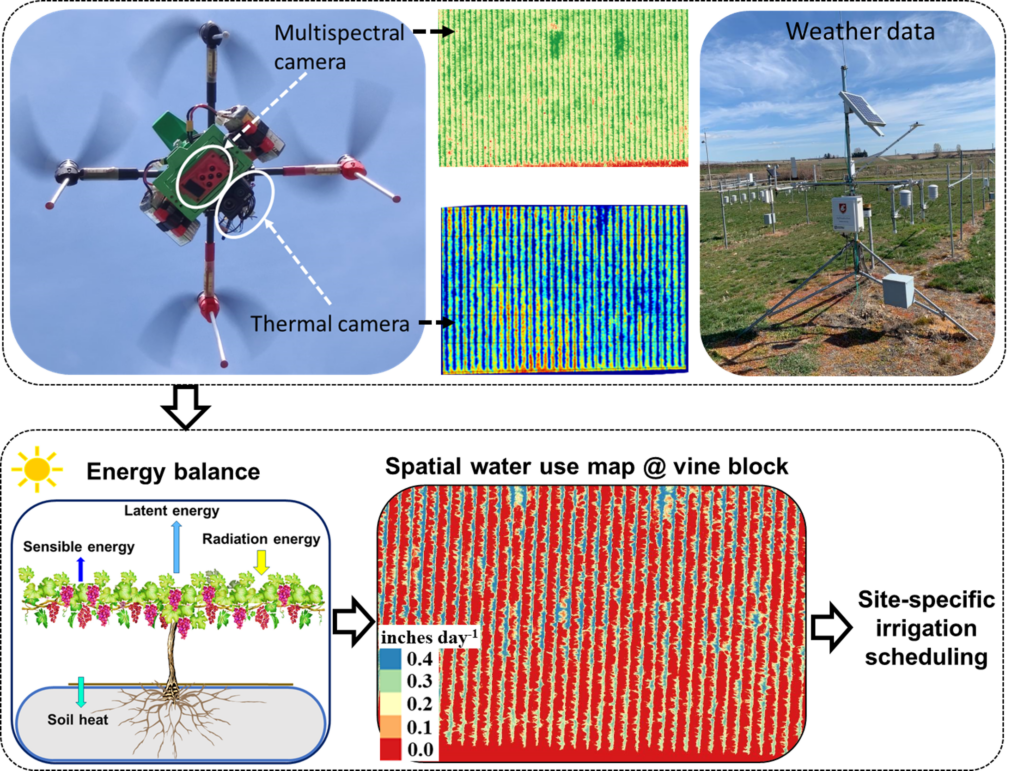
Initially, we evaluated the suitability of aerial multispectral and thermal imagery to map crop water use and related variability, at about 2.8 in /pixel. We used an existing trial that had direct-root-zone irrigation treatments applied at 0, 1, 2, and 3 ft below ground and at 80, 60, and 40% of the commercial irrigation rate (CR). The full CR was applied as a control (using surface drip irrigation). Multiple aerial imaging missions at key growth stages were conducted to capture the changes in crop condition. The imagery data was stitched into a mapping software program to generate spatial data layers or maps of thermal and five multispectral bands. Those maps were processed through a modified energy balance model (3). Weather data from a nearby WSU-AgWeatherNet station (~0.6 miles) was also used as a model input for the days imaging took place.
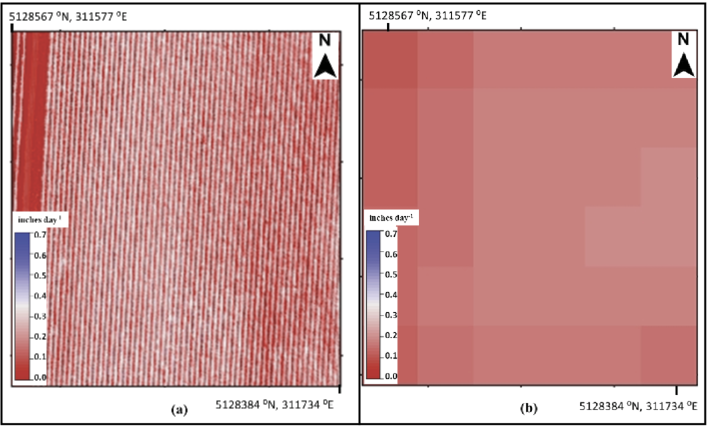
Our drone mapping efforts revealed that deviations did not exceed 5%, 14% and 20% for ET estimations using standard satellite imagery approach, standard crop-coefficient-reference ET approach, and soil moisture depletion measurements, respectively. Drone mapped water use had high correlations (r= 0.64 to 0.95) with other standard approaches. Drone imagery also outperformed all standard approaches for estimating spatial water use heterogeneities, in the ranges of 50–70%, that existed in the vineyard. The crop-coefficient-reference ET approach did not reveal any such variations, and the satellite-approach was only able to map those variations up to a maximum of 13% (Figure 2).
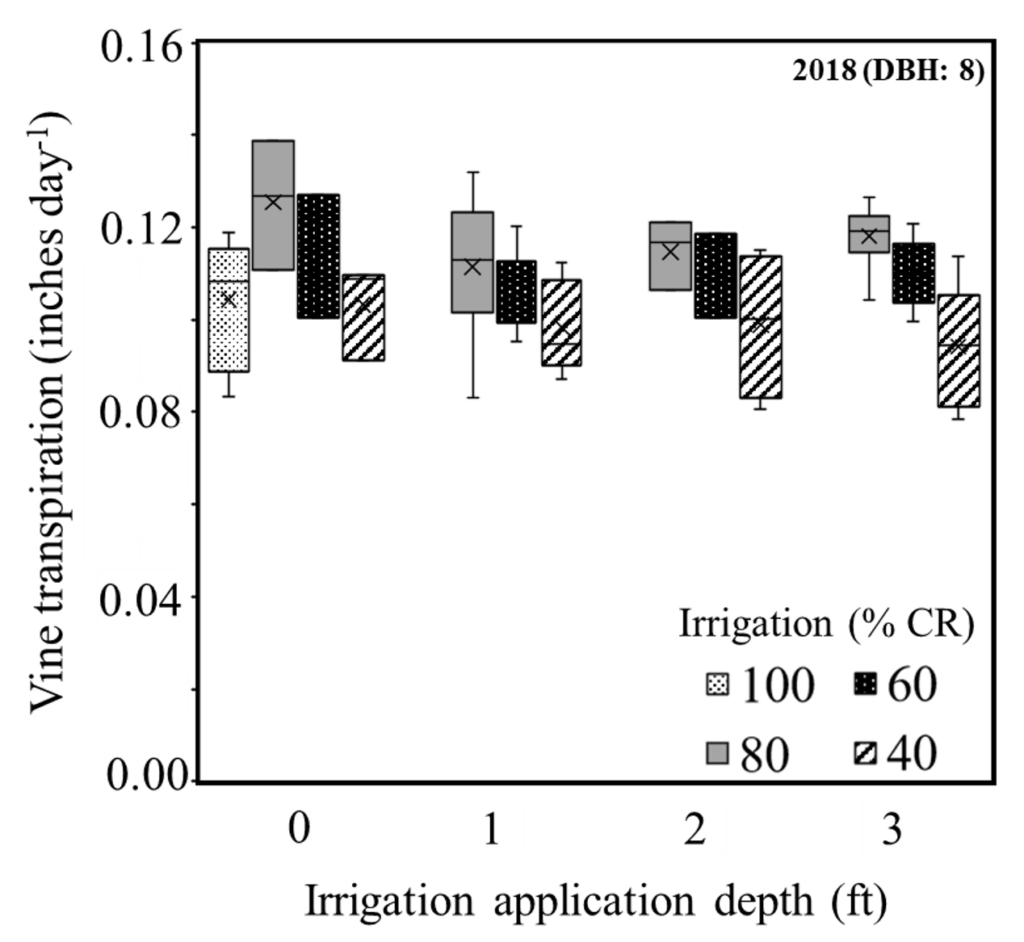
Drone based imagery also successfully mapped the variations in vine water use attributed to different direct-root-zone irrigation treatments. The vines irrigated at 100% or 80% of CR transpired consistently higher than the vines irrigated at 60% and 40% of CR (Figure 3). The transpiration estimates suggest that the irrigation application depth did not affect the water use rates. It was also observed that the deficit irrigated vines transpired more water than the actual applied amount of irrigation, which is often the case because the plants use water stored in the soil profile during winter and early spring. Additional study details are in (3).
Future Research Direction
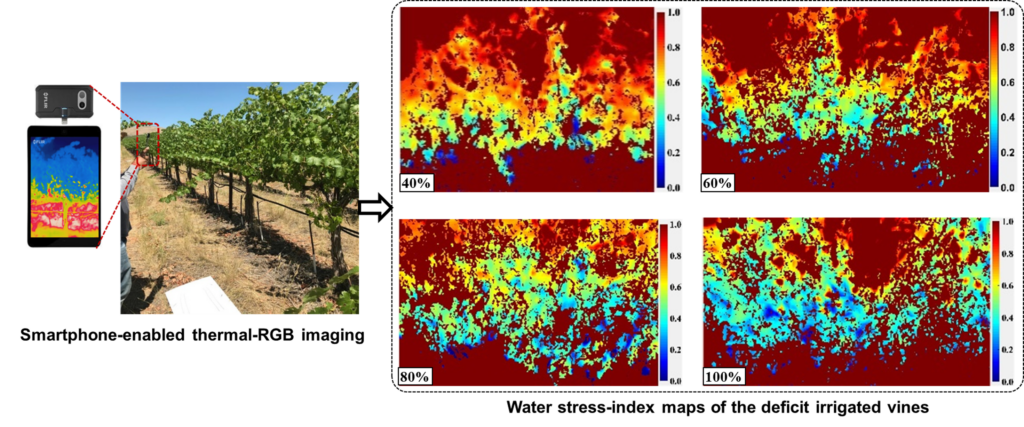
Drone-based multispectral and thermal imagery can successfully map vine water use at either block or vine level of resolution. The next logical step is to make this approach available as a web tool for site-specific irrigation scheduling (Figure 1), which would be beneficial for optimal irrigation management. The data products are independent of imaging platform and can be applied to low-orbiting satellite-based imagery data (e.g., Plant Labs Inc., CA), as they become available in coming years. We, WSU-CPAAS Precision Ag Lab, have also developed a handheld tool to quantify and map vine specific water stress in real-time (more details in reference #8; Figure 4). This tool uses a prototype smartphone application to capture data from connected thermal-RGB imaging sensor. The prototype tool was successful in mapping the significant variation in crop water stress index pertinent to direct-root-zone irrigation treatments in the 2020 season. We are improving this tool for grower use in adjusting block specific irrigation frequencies. The existing irrigation-scheduler app could also be explored to include drone imagery derived vine water use maps as a complementary tool to crop-coefficient-reference ET estimates.
Acknowledgements
This research was funded, in parts by the United States Department of Agriculture-National Institute of Food and Agriculture projects 1016467, WNP0745, and WNP0839 and the Washington State University—CAHNRS Office of Research Emerging Research Issues Internal Competitive Grant Program. We would also like to extend our gratitude towards the cooperating Kiona vineyards for providing the site for data collection and implementing irrigation treatments as well as to Behnaz Molaei and Basavaraj Amogi for their help with research activities.
References
- Santesteban, L.G., et al. 2011. Ag Water Mgmt 98, 1171–1179.
- Jacoby, P.W., et al. 2015. Conference Proceedings, ASABE, pp. 1–6.
- Chandel, A.K., et al. 2021. Remote Sensing, 13(5), p.954.
- WSU Viticulture and Enology. Evapotranspiration webpage.
- Allen, R., et al. 2011. Hydrological Processes, 25, 4011–4027.
- Chávez, J.L., et al. 2020. Applied Engineering in Ag., ASABE, 36, 423–436.
- Chandel, A.K., et al. 2020. Drones, 4, p.52.
- Amogi, B.R., et al. 2020. In: 2020 IEEE International Workshop on Metrology for Agriculture and Forestry, IEEE, pp. 293–297.
Powers Sabbatical and WWIF Student Scholarships
Author: Washington Wine Industry Foundation
2021 Powers Sabbatical
In honor of Bill Powers, employees of Badger Mountain Vineyard and Powers Winery developed the Bill Powers Sabbatical Fund with the Washington Wine Industry Foundation. This fund annually awards a Washington wine industry professional up to $5,000 to undertake a sabbatical now or in the near future to an established wine-producing region of the world and learn about an aspect of wine grape growing or winemaking.
The deadline to apply for the Sabbatical is July 30, 2021. Information can be found at the WWIF Powers Sabbatical webpage.
Student Scholarships
The Washington Wine Industry Foundation facilitates scholarships on behalf of industry leaders for students pursuing wine-related studies, including the Foundation Fund Scholarship, Walter J. Clore Scholarship, Horse Heaven Hills Scholarship, and George & Susan Carter Scholarship.
The deadline to apply for 2021 scholarships is May 31, 2021. Information can be found at the WWIF Scholarships webpage.
First Virtual WineVit™ A Huge Success
Author: Katlyn Straub, Washington Winegrowers Association
The Washington Winegrowers virtual 2021 WineVit™ included 11 different sessions on a range of topics, as well as a virtual trade show, and networking opportunities.
Serving as a platform for students, educators, and researchers to present cutting-edge information and discuss research with grape and wine industry stakeholders, the WineVit™ Poster Session was a highlight! Each virtual poster display showcased information on a wide variety of research topics and trends. Posters were judged by industry members and prizes were awarded in three categories: Graduate, Undergraduate and Professional. Continuing the popular opportunity, graduate students presented their research findings in an oral presentation which was judged with prizes awarded. Congratulations to all who participated and to our winners!
Thanks to incredible support and flexibility from industry members, service and supply providers, speakers, and session managers, Winegrowers was able to proceed with every session. This included a virtual filtration tasting made possible by WSU and some key wineries that helped with the filtration, itself, as well as TTB compliance and tasting kit distribution.
COVID emphasized what is possible when we work together. Nearly 400 people participated in WineVit™, and while was lower than an in-person convention, the association was pleased with the turn-out. The ability to make available recordings of all sessions and seminar is another bonus this year.
With 2021 WineVit™ barely in the rearview mirror, Winegrowers is already turning its attention to 2022. An education committee and a number of sub-committees, made up of industry members, are responsible for all educational programming and are looking forward to planning WineVit™ 2022!
Save-the-Date: WineVit™: Feb 7 – 10, 2022.
Want to help design Winegrowers educational programming? Contact Washington Winegrowers.
WA Wine Commission funds $1M+ for Leading-Edge Research Projects
Author: Melissa Hansen, Research Program Director, Washington State Wine Commission
he Washington State Wine Commission awarded more than $1 million in research grants through the statewide grape and wine research program and its own grant program.
The Washington State Wine Commission board of directors approved the research funding recommendations of the Wine Research Advisory Committee (WRAC) during its April 2 Board meeting for the upcoming fiscal year, which runs July 2021 to June 2022. WRAC, a subcommittee of the Wine Commission, works to keep viticulture and enology research projects focused on needs specific to the Washington wine industry.
By the Numbers
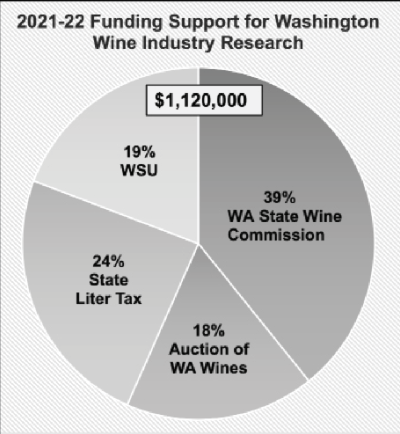
- $1,119,530 awarded to 25 projects, covering a diverse mix of cutting-edge, sustainable and traditional research;
- 30% growth of research grants since 2015;
- Money is allocated between two research grant programs:
- The Washington State Grape and Wine Research Program funds WSU projects. Contributors include the Auction of Washington Wines, WSU, Washington State Wine Commission and State Liter tax collected on all wines sold.
- The Washington State Wine Commission Research Grant Program funds short-term projects at community colleges and non WSU projects.
Viticulture Research
Irrigation is a key component of wine grape production in Eastern Washington’s arid climate, which makes it a high research priority each year. This year’s irrigation projects include evaluating wine grape variety response to water deficit, developing management strategies to deal with heat stress effects of climate change, and evaluating deep root zone, subsurface irrigation to enhance establishment of replacement grapevines.
Vineyard pest management projects are focused on fungicide resistance monitoring for grape powdery mildew and evaluation of innovative UV-C light technology for mildew control, developing innovative strategies for grapevine leafroll virus and sustainable management strategies to control nematodes, managing phylloxera, and establishing economic thresholds for a new grape leaffolder insect. Two nutrition projects are working to optimize sampling protocols for efficient vineyard management and studying the effects of using mycorrhizal inoculants on grapevine growth and nutrient uptake.
Enology Research
Winery research projects deal with mitigating smoke exposure effects in grapes and wine, understanding the impacts of smoke exposure on grape berry development and metabolism and evaluating freeze exposure effects in wine. Also, assessing the impact of yeast and malolactic bacteria on wine flavor precursors, modeling phenolic analysis and evaluating the impact of grape ripening and alcohol on sensory profiles of wines.
New Projects
Of the 25 research grants awarded funding, 8 are new projects, including:
- Enological applications of non-Saccharomyces yeast on fermentation and sensory properties
- Use of non-traditional lactic acid bacteria to induce malolactic fermentation
- Advancing condensed tannin analysis
- Mobile app for crop estimation, lag-phase detection and viral detection
- Optimizing irrigation efficiency with soil water sensor-based systems
- Survey and monitoring of new leaf-mining insect
- Developing new control measures for grape mealybug: novel insecticides, quantify imidacloprid resistance; and develop sustainable mealybug management program
- Verifying effectiveness of winery sanitization protocols with adenosine triphosphate luminometer (demonstration project)
| Researcher | Project Title | New /Cont. | Awarded |
|---|---|---|---|
| Cheeke, Tanya | Effect of Mycorrhizal Inoculants on Grapevine Growth – Extension Request | C (3 of 2 yrs) | $12,848 |
| Collins, Tom | Assessment of Smoke Taint Risk and Mitigation of Smoke Affected Wines | C (2 of 3 yrs) | $112,178 |
| Collins, Tom | Smoke exposure effects on grape berry development and metabolism | C (2 of 3 yrs) | (USDA) |
| Edwards, Charles | Enological Application of non-Saccharomyces Yeasts | N (1 of 3 yrs) | $24,712 |
| Edwards, Charles | Use of Non-traditional Lactic Acid Bacteria to Induce Malolactic Fermentation in Grape Musts and Wines | N (1 of 3 yrs) | $21,228 |
| Harbertson, Jim | Evaluation of Freeze Taint in Cabernet Sauvignon | C (3 of 3 yrs) | $3,119 |
| Harbertson, Jim | Research Winemaking | C (3 of 3 yrs) | $90,211 |
| Harbertson, Jim | Management of Phenolic Compounds in Vineyard and Winery: Investigation of Mechanical Pruning, Grape Maturity, Raman Spectroscopy | C (4 of 3 yrs) | $46,055 |
| Jacoby, Pete | Use of DRZ Subsurface Irrigation to Enhance Establishment of Replacement Vines | C (2 of 3 yrs) | $21,555 |
| Jacoby, Pete | Optimizing Irrigation Efficiency with Soil Water Sensor-based Systems | N (1 of 3 yrs) | $20,000 |
| James, David | Grape Leaffolders: Determining Economic Impact Levels and Action Thresholds | C (2 of 3 yrs) | $8,160 |
| James, David | Survey and Monitoring of new Leafmining pest of Wine Grapes in Eastern WA | N (1 of 1 yr) | $6,780 |
| Karkee, Manoj | Mobile App for Crop Estimation, Lag Phase Detection and Viral Symptom Detection | N (1 of 2 yrs) | $24,423 |
| Keller, Markus | Dissecting the Relative Importance of Grape Variety vs. Environment for Irrigation Management | C (3 of 3 yrs) | $8,000 |
| Keller, Markus | Optimizing Sampling Protocols for Efficient Vineyard Nutrient Management | C (2 of 3 yrs) | $197,793 |
| Keller, Markus | Grape Ripening Under a Double Whammy of Heat Stress and Water Deficit | C (3 of 3 yrs) | $74,154 |
| Keller, Markus | Support for Vineyard Maintenance for Wine Grape Research | C (3 of 3 yrs) | $5,000 |
| Moyer, Michelle | Fungicide Resistance Monitoring and Alternative Management Strategies for Grape Powdery Mildew | C (2 of 3 yrs) | $36,259 |
| Moyer, Michelle | Alternative Preplant Strategies for Nematode Management in Washington Wine Grape Vineyards | C (2 of 3 yrs) | $47,149 |
| Piao, Hailan | Impact of Yeast and Malolactic Bacteria on Wine Flavor Precursors | C (2 of 3 yrs) | $64,072 |
| Rayapati, Naidu | Innovative Strategies for Management of Grapevine Leafroll Disease | C (2 of 3 yrs) | $125,123 |
| Walsh, Doug | Grape mealybug management: new control measures | N (1 of 2 yrs) | $42,534 |
| Walsh, Doug | Monitoring and Managing Grape Phylloxera in Washington State Vineyards | C (2 of 3 yrs) | $38,496 |
| Waterhouse, A. (UC-Davis) Harbertson, J. | Advancing Condensed Tannin Analysis | N (1 of 3 yrs) | $84,607 |
| Bill Snyder (South Seattle College) | Verifying Effectiveness of Common Winery Sanitization Protocols with ATP Luminometer Testing | 1 yr | $5,074 |
| Total | $1,119,530 |
Research Results
Research results are accessible to all Washington wine grape growers and wineries in the state. These findings are shared with the Washington wine industry in many ways, from research articles published in trade magazines, to research summaries in newsletters, WAVE (Washington Advancements in Viticulture and Enology) research seminars and webinars, and WAVE Wine Minute radio interviews with scientists.
Additionally, Research Reports can be downloaded from the Washington State Wine Commission’s website.
Contact Melissa Hansen if you have any questions about the research program.
2021 WAVEx Webinars
Mark your calendars for these upcoming WAVEx webinars, the industry’s signature research seminars named Washington Advancements in Viticulture and Enology. WAVE is co-sponsored by the Washington State Wine Commission and Washington State University. WAVEx is the condensed version of WAVE.
- May 27 Innovative Strategies for Powdery Mildew Management – Drs. Michelle Moyer, WSU & David Gadoury, Cornell University
- July 14 Working with High pH Wines – Dr. Thomas Henick-Kling, WSU
- August 5 Tools to Control Brett in the Winery – Dr. Charles Edwards, WSU