VEEN is curated by WSU Viticulture Extension. For questions on articles, or to request to submit an article in future issues, reach out to Michelle Moyer.
This issue of VEEN was originally published as a .PDF in September 2016, and posted online. Some content here will differ from that original issue. The issue is archived, but accessible on the VEEN Archive webpage.
A Note from the Editor
With every issue of VEEN, one thing has become increasingly clear: AgWeatherNet is an invaluable asset to Washington State. From their annual weather reviews, to their forecasts, to the data and models they host on their website, they should be a bookmark saved in everyone’s browser.
Remember when they shared the NOAA forecasts about cooler weather setting in for late 2016 to early 2017? Well, so far they are nailing it like Simone Biles’ Olympic floor routine. So if you haven’t looked at AgWeatherNet in a while, I highly recommend it.
Weather aside, this issue of VEEN has a great overview of drip irrigation system maintenance, a report on a recent leafhopper pesticide evaluation experiment, and an update on the Washington State Grape and Wine Research Program just to name a few of the articles.
Happy reading, and happy harvest!
Michelle M. Moyer
Viticulture Extension Specialist
Assistant Professor of Viticulture
WSU Prosser IAREC
Table of Contents
Connect With Us
V&E Certificate Program
2016: Another Very Warm Year – At Least So Far
By Nic Loyd, Meteorologist, WSU AgWeatherNet
And this, too, shall pass away. For better or worse, this historic sentiment, revived by Abraham Lincoln a century and a half ago, holds as true today as ever. Even as we reflect on the recent August heat, we can take comfort in the knowledge that the global atmospheric circulation anomaly that has been largely responsible for the unprecedented heat of the last two years, is likely poised to pass away in the coming months.
The first order of business, however, is to place Washington’s recent climate history into the proper context; for only by understanding where we have been can we truly appreciate where we are going. The 2 year period from July 2014 to June 2016 was by far the warmest on record for central Washington, out of 120 possible (overlapping) two year periods.
This recent interval was 4.0 degrees (°F) above normal, which is extraordinary since temperatures over longer time intervals tend to trend toward average. In fact, the second-most recent two year interval (July 2013 to June 2015) was the second warmest on record at 2.8 degrees above normal. An amazing testament to the recent abnormal warmth is that there were two arctic air outbreaks (one each in December and February) during the first winter of this mid 2013 to mid 2015 biennium, which illustrates that the latter part of this biennium was incredibly warm to balance out the early periods of below normal temperatures. Prior to 2013, no such biennium (since records began in 1895) was more than 2.1 degrees above normal.
During the first half of 2016, the monster ridge was still very much present in various forms. The early summer heat wave that sent temperatures climbing to 103 °F at the Tri-Cities on 6 June was quite similar to the early season hot spells from the record warm 2015. However, just a few days later, the weather proved that 2016 would not be a repeat of the previous summer after all. The low at Naches dropped to 31°F on the 15th, which marked a drastic course correction in a brief time period. Overall, central Washington experienced its fourth-warmest six month start to a year (January to June) on record (since 1895), and then slipped to fifth-warmest after a slightly cooler than normal July.
It appears that 2016 will end up being a very warm year relative to normal, but thankfully not at the level of last year. The 2016 accumulated Growing Degree Day (GDD) value for the Tri-Cities (April 1 to August 29; base temperature 50°F) was 2957 units, which is above the 2008-2015 average of 2594 units. Precipitation for central Washington was generally slightly below normal during the April to August time period, which is a significant shift from the wet conditions of last winter.
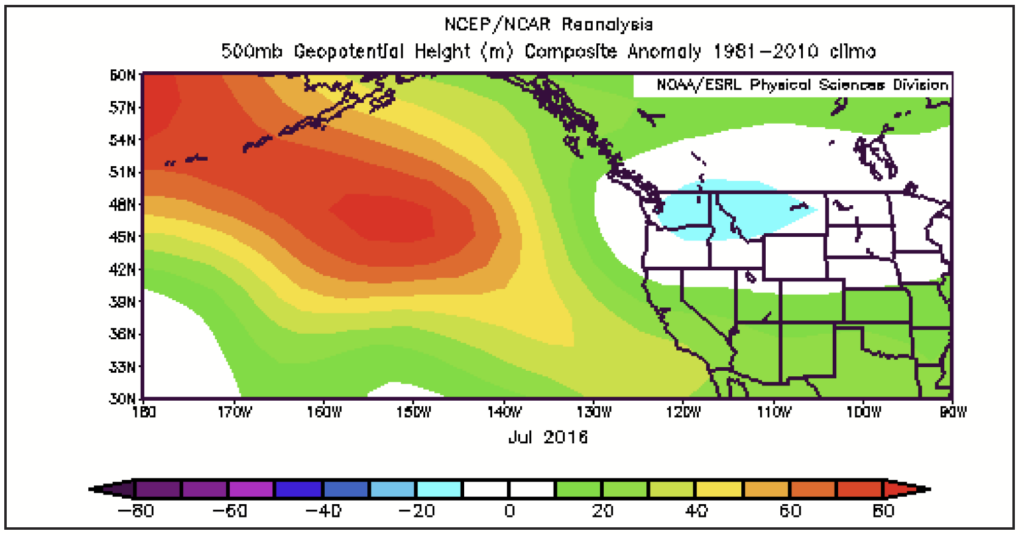
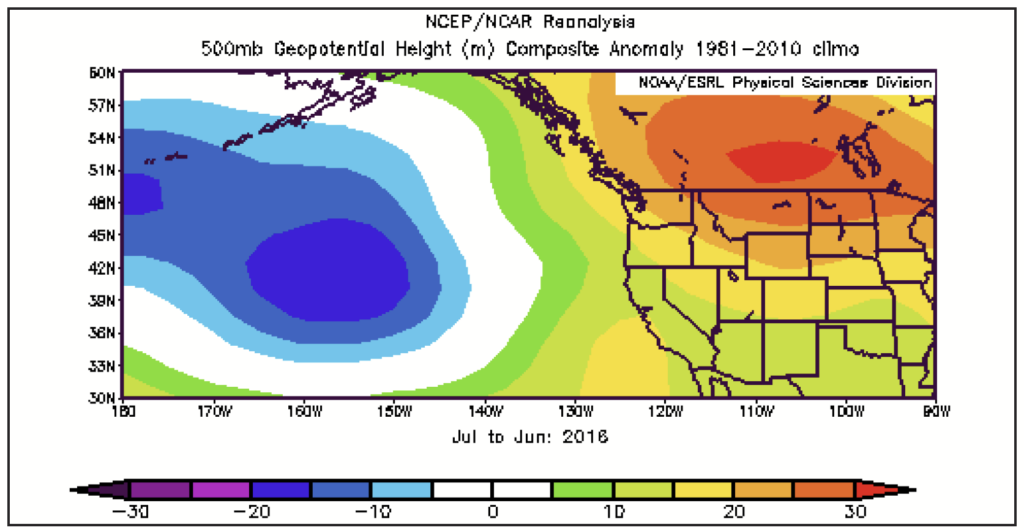
Figure 1 shows the overall weather pattern anomaly (500 millibar geopotential height anomalies) for July 2016, while Fig. 2 shows the same pattern for the 12 months prior to July. The ridge of high pressure (red/orange color) in Figure 2 is absent in 1, which explains the relatively cool temperatures of this July compared to recent months. Although one month does not a trend make, it is a positive sign that the monster ridge is apparently weakening.
Thus, the passing of this persistent atmospheric anomaly may not be drastic or permanent, but pass it shall. Hints of its destruction have already surfaced. Following the very warm start to 2016, increasingly variable and seasonal weather followed from mid June through July. Although the mid-summer conditions were hardly cool, July nonetheless represented a notable and beneficial disruption in the string of abnormally warm months. More recently, the episodes of unusually cool weather in early September constitute additional circumstantial evidence of the waning influence of the monster ridge.
Furthermore, the underlying climate fundamentals have begun to change, as the strong El Niño of last winter has shifted to ENSO (El Niño Southern Oscillation) neutral conditions. There is some suggestion that a La Niña episode will begin during the autumn, although its development is much less certain than before, and it would likely be a weak or borderline event in any case. Still, another El Niño remains a vanishingly small possibility for this coming winter. Given that ENSO can significantly influence the global atmospheric circulation pattern, and thus Washington’s winter weather, the odds do not favor a winter as warm as the last two cold seasons.
Precipitation is a tougher call, as La Niña winters can be wet, while neutral years can be relatively dry. Overall, the climate outlook calls for modest probabilities of warmer than normal conditions through this autumn, and then near or possibly slightly below normal temperatures by late winter. In terms of precipitation, slightly wetter than normal conditions may develop later in the autumn, although it is very uncertain at present.
Washington finally seems to be entering a different climate regime, and although we don’t know what the future holds, it is inconceivable that the recent trends could continue indefinitely. The last two years have strongly resembled one long heat wave, and the numbers agree. We are most likely immersed in the final chapters of what has been, by almost any objective measure, the most extreme and abnormal climate period of any sort in Washington’s recorded history.
Further details about Washington’s weather and climate are available at the AgWeatherNet website. Please send questions or suggestions to Nic Loyd
Selling Grapevines: Do You Need a License?
Memo from the Washington State Department of Agriculture
Do I need a nursery license to sell grapevine cuttings?
Yes! Cuttings for propagative purposes meet the definition of a ‘horticultural plant’ and the seller must be licensed if they sell more than $100 annually.
Additionally, the sale of grape cuttings (RCW 15.13.310) is subject to a 5% assessment not to exceed $0.10 per grapevine, on the gross sale price of the wholesale market value for all grapevine propagation material produced in Washington and sold within the state or shipped from the state by any licensed nursery dealer.
Do I need a sales invoice?
Yes! Sales invoices for grapevines must show the amount of assessment collected for that sale as a separate line item. The requirement also states that any person selling grapevine, fruit tree or fruit tree-related ornamental nursery stock must maintain a set of accurate sales records to facilitate an audit and ensure that the proper assessment amount is paid to the department of agriculture. The records must be maintained for a minimum of three years from the date of sale.
At a minimum, the records must contain sequentially numbered sales invoices that clearly show the amount of assessment owed for each invoice. Sales invoices must be filed either numerically or alphabetically.
Note to Nurseries Selling Certified Vines and Growers Who are Buying Certified Vines
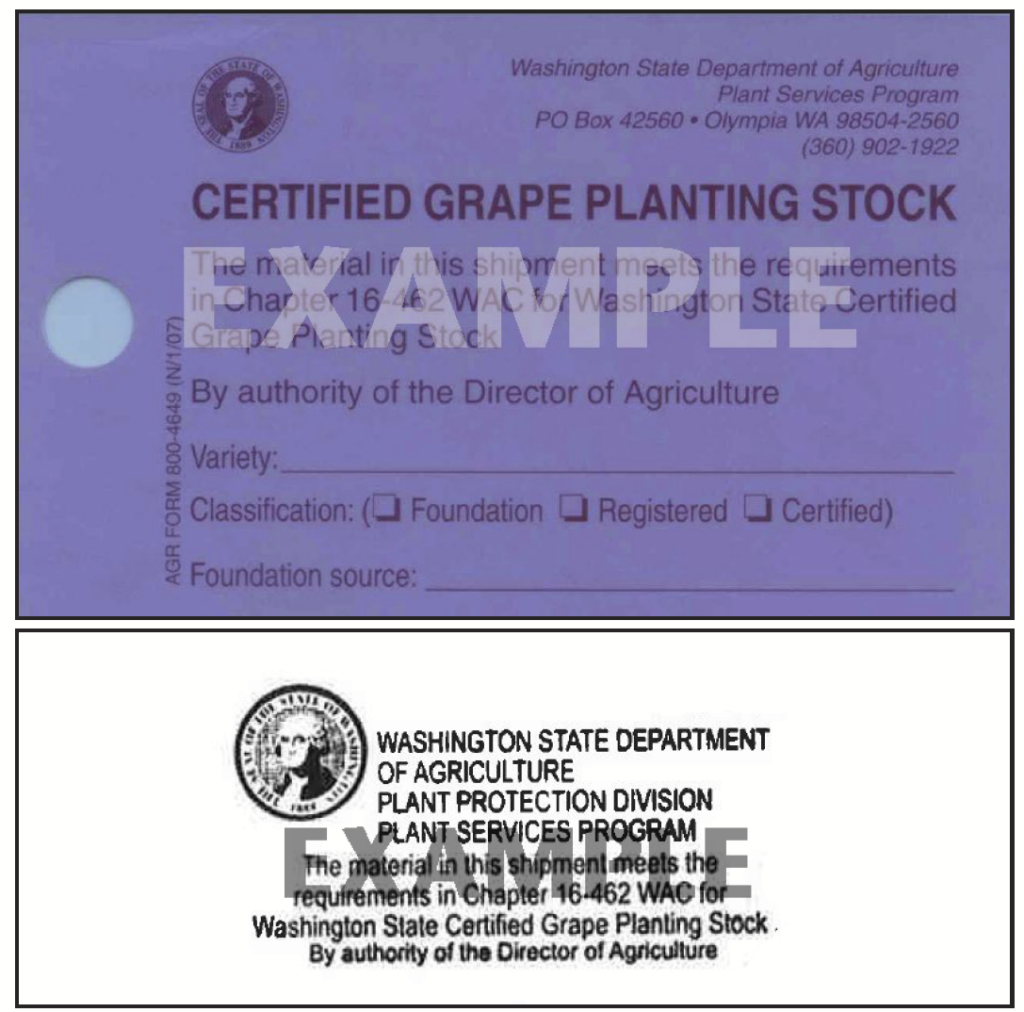
If you are buying WSDA certified vines, there should be an official certification tag on the vines or a WSDA certification stamp on the box. LOOK for it and ASK for it! (Fig. 1).
To find quarantine info, laws, inspector contact info, etc., visit the WSDA Plant Quarantines website.
Leafhopper Insecticide Evaluation
By Jonathan O’Hearn, Graduate Student, and Douglas Walsh, WSU Prosser
Western Grape Leafhopper (Erythroneura elegantula) and the Virginia Creeper Leafhopper (Erythroneura ziczac) are the two main leafhopper pests in Washington. Nymphs and adults of both species feed on the underside of leaves, piercing the epidermal cells and removing cell content, including chlorophyll [1, 2]. They overwinter as adults in plant debris in and around the vineyard [3], and emerge as adults before vine bud break. They feed on other plants before migrating back to the vines, once canopies develop, to lay eggs. There can be 2 to 3 generations per year [3].
The study presented here evaluated the toxicity of 11 organic and conventional insecticides (Table 1) to Virginia Creeper Leafhopper in 2015. Most of the insecticides were evaluated in both the vineyard and laboratory, with the exception of Movento and Sivanto, which were only tested in the vineyard. EcoRaider was tested at 3 different concentrations (Table 1). Laboratory sprays were used to calculate the lethal dose of the insecticides tested.
| Insecticides | Company | Field application rate | Active ingredient(s) |
|---|---|---|---|
| Insecticides1 | Company | Field Application Rate | Active Ingredient(s) |
| AZERA1 | Valent BioScience | 3.0 pt/a | Azadrachin, pyrethrins |
| TERSUS | Valent BioScience | 17.0 fl oz/a | Pyrethrins |
| EVERGREEN | Valent BioScience | 20.0 fl oz/a | Pyrethrins, piperonyl butoxide (PBO) |
| VENOM | Valent BioScience | 3.0 oz wt/a | Dinotefuran |
| PYGANIC1 | Valent BioScience | 15.0 fl oz/a | Pyrethrins |
| VENERATE1 | Marrone Bio Innovations | 8.0 qt/ac | Heat-killed Burkholderia sp. Strain A396 |
| GRANDEVO1 | Marrone Bio Innovations | 3.0 lbs/ac | Chromobacterium subtsugae strain PRAA4-1 |
| EcoRaider2,3 | Reneotech Inc. | 1:30, 1:50, 1:80 dilution | Geraniol, Ceder Oil, Sodium Lauryl Sulfate |
| MOVENTO | Bayer AG | 8.0 fl oz/ac | Spirotetramat |
| SIVANTO | Bayer AG | 10.5 fl oz/A | Flupyradifurone |
| VIGILANT3 | Agriphar Crop Solutions | 24 fl oz/A | Bifenazate |
1Organic Materials Review Institute (OMRI) listed and USDA’s National Organic Program (NOP) compliant.
2In the process of OMRI certification.
3 Not currently labeled on grapes in Washington.
Some of the pesticides discussed in this presentation were tested under an experimental use permit granted by WSDA. Application of a pesticide to a crop or site that is not on the label is a violation of pesticide law and may subject the applicator to civil penalties up to $7,500. In addition, such an application may also result in illegal residues that could subject the crop to seizure or embargo action by WSDA and/or the U.S. Food and Drug Administration. It is your responsibility to check the label before using the product to ensure lawful use and obtain all necessary permits in advance.
In lab assays, Azera, Pyganic, Tersus, Evergreen, Venom and Vigilant were toxic to leafhoppers at label rates (Fig. 1). Venerate failed to control leafhopper nymphs in the lab, even at 7X the label rate. Grandevo was not able to kill more than 1/3 of the nymphs, even when at 7X the label rate. EcoRaider concentration needed to be increased to 1:25 (rather than 1:30, the highest concentration tested in the field) before 100% mortality was achieved.
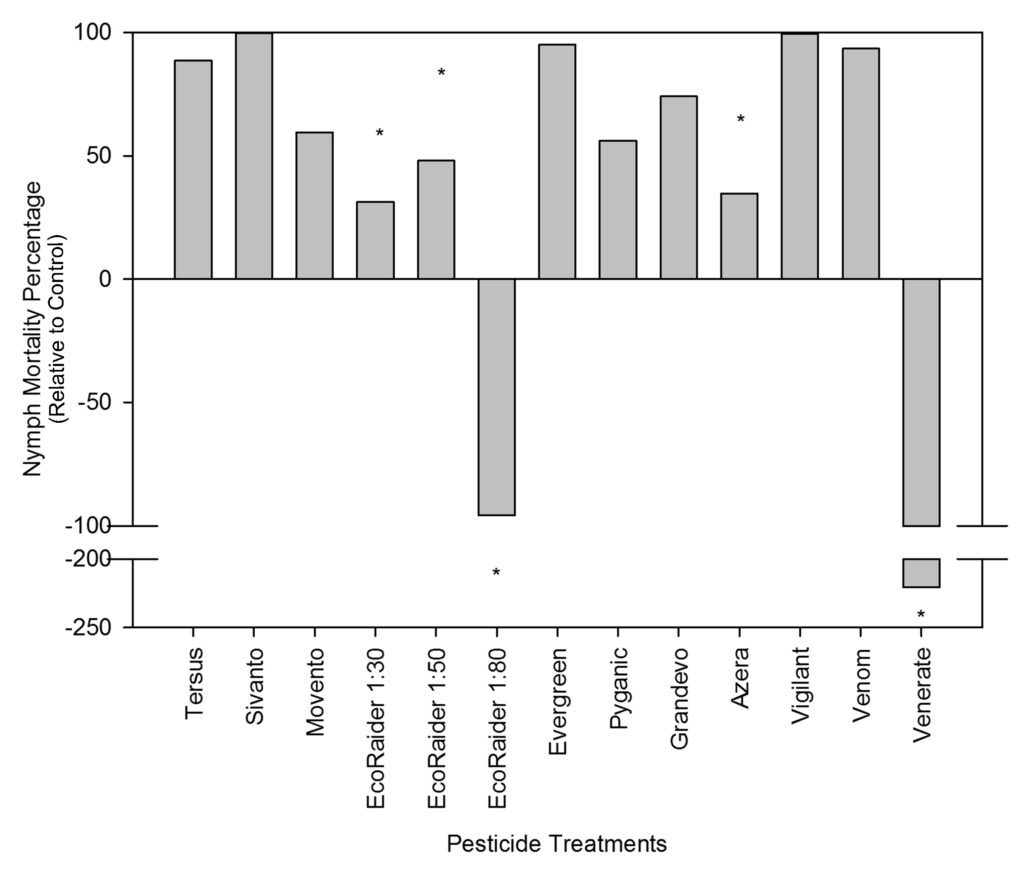
In the vineyard, Pyganic, Tersus, Evergreen, Venom, Grandevo, Movento, Sivanto, and Vigilant were effective at reducing nymph abundance. The effectiveness of Grandevo is likely related to its repellent activity, which causes nymphs to disperse when it is sprayed. Sivanto was the most effective of all the insecticides tested. It was the only insecticide to achieve 100% mortality in the vineyard. Vigilant was the second most effective insecticide.
Azera and Venerate failed to control leafhopper nymph abundance in the vineyard. None of the three concentrations of EcoRaider tested in the vineyard significantly reduced nymph populations; as noted in the laboratory assays, the dilutions tested in the vineyard were likely too low to induce a response. Unfortunately, an additional test of the higher concentration needed in the laboratory (1:25 dilution) could not be performed in the vineyard in 2016.
Pyganic was the only organic insecticide to be found effective in both the laboratory and the vineyard. All conventional insecticides tested were effective at controlling leafhopper nymphs. Depending on vineyard certification, the effective products could be incorporated into IPM programs to help prevent economically damaging leafhopper outbreaks.
References
- Olsen, K.N. and W. Cone 1997. WSU EB# 1828. Washington State University.
- Olsen, K.N., W. Cone, and L. Wright 1998. Environ Entomol 26(2): 401-405.
- Wells, J.D. and W. Cone 1989. J. Entomol Soc BC 86:26-33.
Drip Irrigation System Maintenance
By R. Troy Peters, WSU Prosser
Maintaining drip irrigation systems can be basically boiled down to two words: “prevent plugging.” Because drip irrigation emits water at very slow rates, it requires very small orifices to restrict the flow rates from each emitter. This means that very small bits of debris in the water will plug those orifices. And once the drip emitters are plugged, they are very difficult to impossible to unplug, and the vines next to that emitter will not get the water they need to be productive. Plugging is the primary limitation on the life span of drip irrigation systems. There are drip irrigation systems that have been managed properly that are over 25 years old. Although installing a drip irrigation system that keeps dirt out of the system is very important, here we will discuss the maintenance tasks that should be performed to make sure the inside of the drip system remains clean and emitters don’t plug.
Maintenance Tasks
The first and most important line of defense for drip irrigation systems is a properly functioning filtration system. These need to be serviced periodically depending on how dirty the incoming water is.
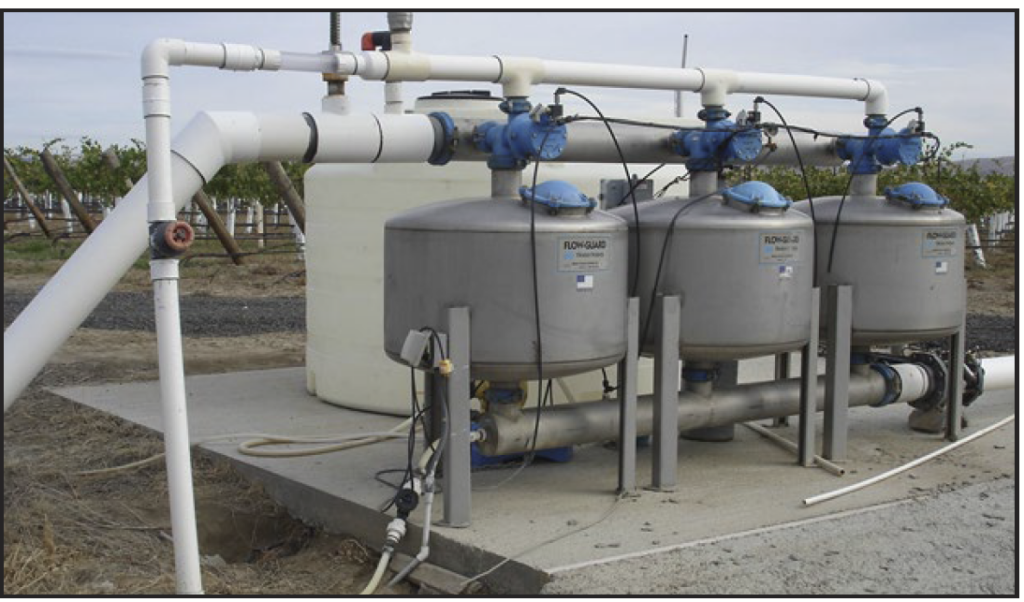
Sand Media Filters (Fig. 1).
The sand levels in sand media filters need to be checked periodically. If the backflush rate is set too high, it blows sand out of the filter during the backflush cycle and there may not be very much sand left in your filter. The sand used in these filters is a crushed sand with sharp edges for capturing small particles in the water. Over time these edges get rounded off, and mineral and organic coatings can accumulate on the sand particles. Because of this, the sand needs to be replaced depending on how dirty the incoming water is and the backflush frequency. Some people need to replace the sand in their filters every year or two, while others can go many years without replacing it. However, the sand should be inspected at least once or twice a year.
Disc Filters.
The plastic discs in disc filters can also accumulate mineral or organic coatings that reduce their effectiveness. The filter should be taken apart and the discs should be soaked for 24 hours in a cleaning solution of 10% peroxide for organics, or a 10% hydrochloric acid for iron, manganese or carbonate deposits.
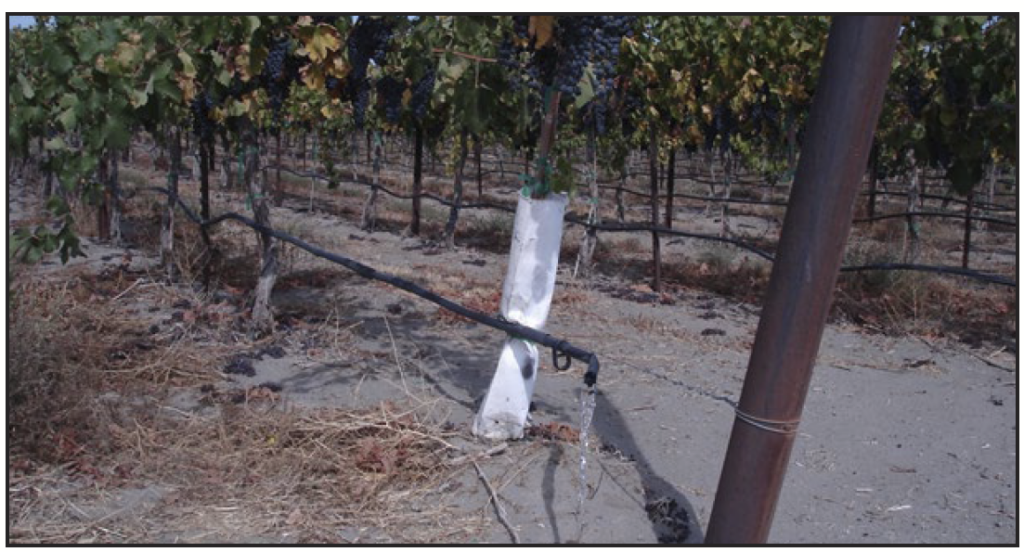
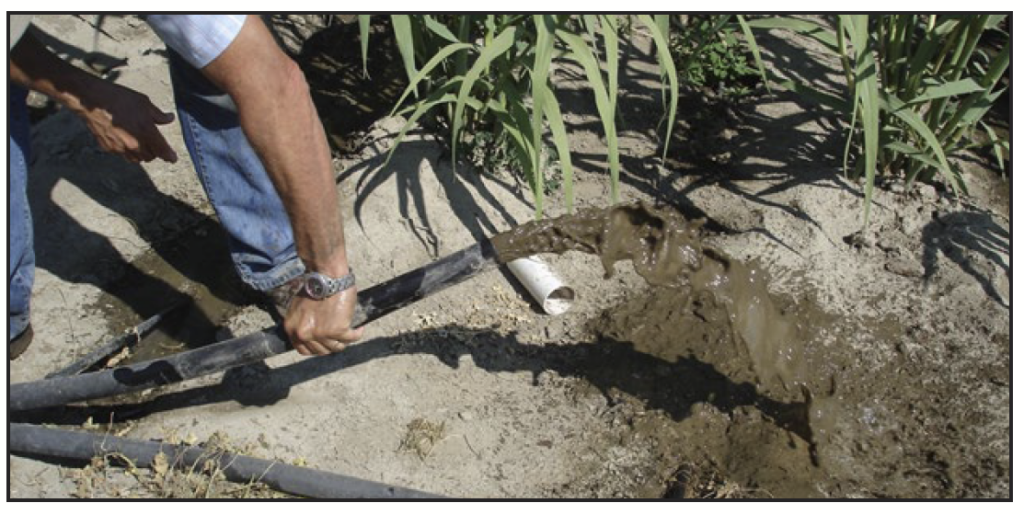
Flushing (Fig. 2 and 3)!
Small particles of silt can get past filters. Also, after the filters mineral compounds can precipitate out of the water to form particulates that can plug drip emitters. Because of this, the drip system must be flushed periodically. This usually entails just opening the end of the drip tube line and allowing water to flush out of the system for a while taking the particulates with it. Catch some of the water in your hand after you first open the tube end to learn what might be accumulating in your drip tubing. If the water is very dirty it may be beneficial to flush more often. If it is clean less frequent flushing may be required. Some growers flush their lines every week, while others only flush their lines twice a season. Definitely flush the lines before running them the first time in the spring.
Bacteria Growth
Bacteria that feeds on minerals in the water can grow in the drip tubing. Iron bacteria is the most problematic of these in the Pacific Northwest. The most common way of addressing this is to inject a chlorine solution at a rate that leaves at least 2 ppm of active chlorine at the end of the furthest drip tube. In some water, the bacteria growth is so aggressive that multiple means of controlling it must be used.
Mineral Deposition and Precipitation
Minerals can also precipitate out of the irrigation water past the filter inside the drip lines. Injecting fertilizers or other agrochemicals can make this water chemistry more complex. For example in higher pH water the phosphorus in phosphate fertilizers precipitates with calcium and magnesium already in the water. These minerals can either create precipitates that can plug emitters, or they can accumulate inside the drip lines. The most common way of controlling this is to acidify the water to reduce the pH which prevents these minerals precipitating. The recommended concentration of acid in treated water is 0.6%. Keep in mind that different acids come in different concentrations. For more information see the Calculating Chemigation Injection Rates (WSU FS035e) factsheet.
Injecting Agrochemicals
Using the drip irrigation system to distribute fertilizers and other agrochemicals to the vines throughout the fields by injecting in one location saves money and is an effective way to distribute these required chemicals. However, make sure that the agrochemicals you inject contain no particulates or won’t interact with the irrigation water to precipitate any after injecting them. An easy way to do this is to put some irrigation water into a clean glass jar and add the chemicals and mix them with the water thoroughly. If the products do not dissolve completely or if any precipitates can be observed in the jar after 24 hours then don’t inject that chemical.
Regular Inspection
Walking, or driving through the fields on a fairly regular basis while the irrigation system is operating is important to identify early problems with plugging, leaks, or obviously under or over-irrigated vines. Early detection of these problems can save lots of time, money, and effort later on. Waiting until most of the emitters are plugged before reacting to issues can require a complete replacement of the drip lines in a field. Many growers ask their employees to do this every one or two weeks.
Using Pressure Gauges and Flow Meters
Pressure gauges at key locations throughout an irrigation system can give quite a bit of information about how an irrigation system is operating. It can indicate problems with the filters, pump, and distribution system. A flow meter is also useful, especially with drip irrigation. If the flow rate is higher than normal it indicates a leak. If it is lower than normal, it indicates plugging.
For more information I recommend the “Netafim Drip Irrigation System Maintenance Handbook”.
Grapevine Cold Hardiness Resources
By Michelle Moyer, WSU Prosser
Mother Nature provided us a subtle reminder of the pending winter, with the almost instant weather pattern change on September 1. While the last several winters have been relatively mild in the Pacific Northwest, La Nina is here, and the National Oceanic and Atmospheric Administration (NOAA) Climate Prediction Center has recently released (August 2016) its predictions for the pending winter.
The 2.5 month weather forecast suggests above normal temperatures for November to January, transitioning to below-normal temperatures from January to March (2017) (Fig. 1). As for precipitation? Thus far, the entirety of the winter forecasts suggest above-normal amounts.
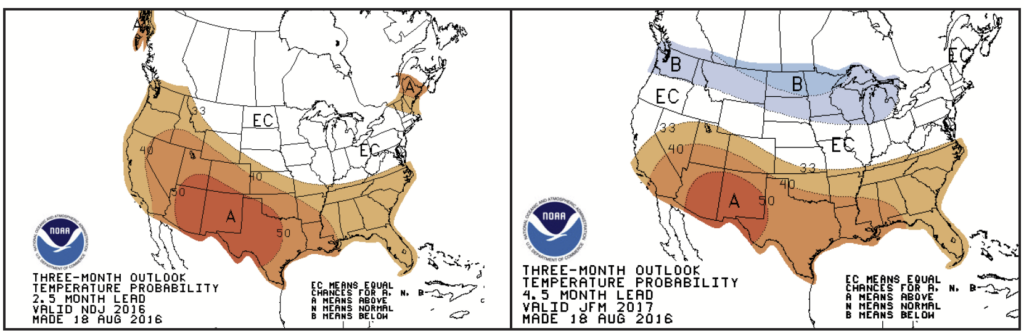
While it might seem premature to think about the winter while in the throes of harvest, this is a good time to remind ourselves that we do live in a region with cold dormant-season temperatures; November 2010 stands as one of the more recent reminders. While cold winters can be beneficial in many ways (synchronizing plant developing, suppressing overwintering populations of certain insect pests), they can also be a time of intense worry due to the relatively sensitive nature of Vitis vinifera to low temperatures.
The Washington State University Viticulture and Enology Program has a number of resources available for in-state growers to help track vine cold hardiness, select cold damage mitigation practices, and respond to damaging events. These resources are all currently available for free, and are highlighted below.
Tracking Vine Hardiness
There are two sources of information on tracking vine hardiness.
- The first is a resource provided by WSU Viticulture Research (Dr. Markus Keller’s Program), where select vineyards near WSU-IAREC (Prosser, WA) are actively monitored for their real-time cold hardiness. These values are posted online at the WSU Grape Cold Hardiness Monitoring webpage. The website it typically updated every 7 days, starting in October. CAUTION: These specific values are really only good for the areas the vines were selected from. However, you can use it as a guide (relative to your own site-temperatures) as to what vine cold hardiness might be in your area.
- The second resource is a model that is available to help you predict potential cold hardiness at your site, using site-specific weather data. This model is available on AgWeatherNet, if you are near an AgWeatherNet weather station, or as a downloadable Excel Spreadsheet where you can add data from your own weather station. The downloadable Exel sheet is available at the WSU Grape Cold Hardiness Monitoring webpage.
Damage Mitigation and Response
Assessing and Managing Cold Damage in Washington Vineyards (EM042e) is a free WSU Extension publication that walks readers through different cold damage mitigation practices (e.g., how to properly shut vines down in the fall, how wind machines work), as well as presents information on how to assess buds for cold damage and how to adjust pruning strategies after damaging events occur. The guide is available in English and Spanish.
This guide, along with other resources, are available for download at the WSU Grape Cold Hardiness Monitoring webpage
WA’s Wine Industry: A Key Research Partner to WSU
By Melissa Hansen, Research Program Manager, Washington State Wine Commission
The invaluable viticulture and enology research conducted by Washington State University doesn’t just happen. It’s the result of a strong partnership between WSU, the Washington State wine industry and the Washington State Wine Commission.
The research projects focus on a variety of topics, all aiming to improve wine quality. Current projects include irrigation studies by Dr. Markus Keller, nematode and fungal disease work by Dr. Michelle Moyer, virus disease by Dr. Naidu Rayapati, and tannin management by Dr. Jim Harbertson.
With my hire as Research Program Manager at the Washington State Wine Commission last November, Washington’s wine industry now has someone—for the first time—solely focused on research. There’s been so little communication in the past about the research process and where the money comes from to conduct the research, it’s no wonder viticulture and enology (V&E) research in Washington seemed to “just” occur. But a lot is taking place behind the cellar door to make the research program happen. My job is to spotlight the Washington wine industry’s research program and share the who, what, why, and how it is funded. Investments on behalf of grape growers and winemakers put the research to use, with the ultimate goal of making the best wine in the world that not only competes on the global stage – but wins!
Wine Commission Commitment
The Wine Commission represents every licensed winery and wine grape grower in Washington State. Guided by an appointed board, the mission of the Wine Commission is to raise positive awareness and demand for Washington State wine through marketing and education while supporting V&E research to drive industry growth. The Wine Commission runs multi-faceted awareness campaigns across the country and the world, hosts in-bound media and trade in Washington wine country, and acts as an education and resource hub for the wine industry and consumers alike.
The Wine Commission has directly funded V&E research for the last decade. However, the importance of research was elevated when research was identified as one of the organization’s four pillars in the Wine Commission’s strategic plan. Trade and media awareness, industry unity, and wine tourism development are the other three pillars.
Further proof of the Washington wine industry’s research commitment is the $7.4 million pledge from the Wine Commission on behalf of all wine grape growers and wineries to help build the Wine Science Center at WSU’s campus in Richland. The teaching and research facility will serve as a catalyst for synergy, cooperation, and communication between industry and the research community.
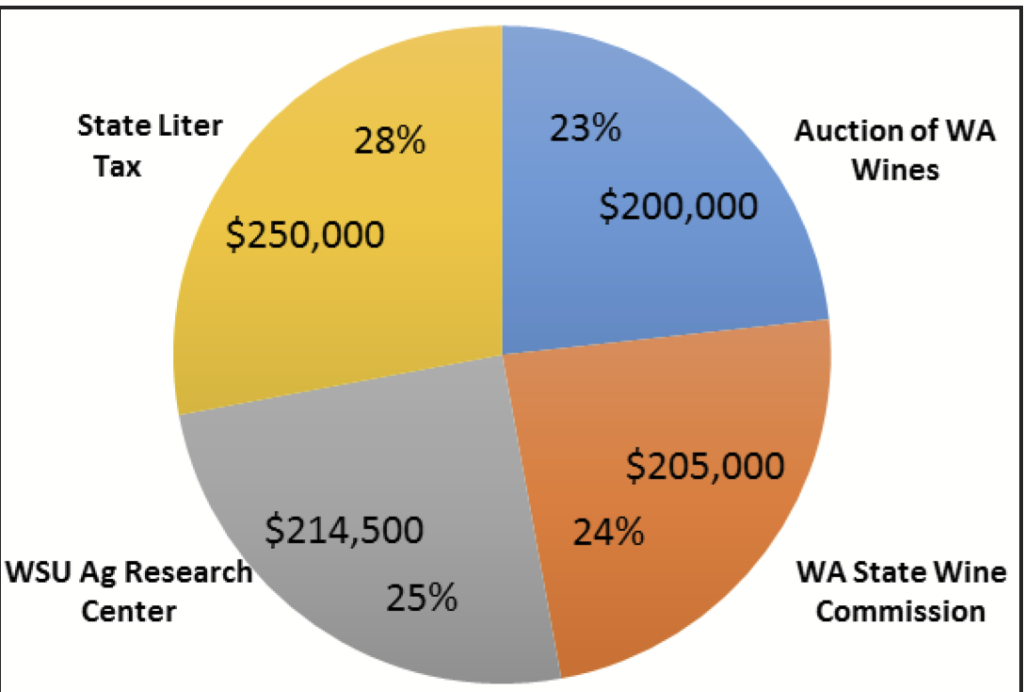
My hire and my office in the Wine Science Center signal the importance and need for daily attention to research. Nearly 25% of the Wine Commission’s more than $5 million annual budget is now spent on research, a number that includes over $200,000 to fund research projects and the Wine Science Center pledge.
History of V & E Research
WSU’s V&E research program, which has a long history in the state, laid the foundation for today’s premium quality wine industry. After Dr. Walter Clore joined WSU as a horticulturist in 1937, he began planting wine grape research trials throughout Washington to learn if vinifera grapes could survive Northwest winters. Dr. Chas Nagel, WSU research winemaker, turned the fruit from Clore’s trials into wine. Early funding of their research came from federal Department of Commerce grants, but those funds dwindled in the late 1960s.
A handful of industry visionaries, in an effort to secure a more stable funding source for research, helped push legislation through Olympia in the early 1980s that still sends 1/4 cent per liter of the sales tax collected from all wine sold in the state to WSU for V&E research. Today, that collection amounts to approximately $250,000 each year.
The legislation also stipulated that an industry committee advise WSU on expenditure of the research funds. For many years, this volunteer group operated on an ad hoc basis. In 1998, the Wine Research Advisory Committee—WRAC as it’s now called—became a subcommittee of the Wine Commission. Earlier this year, WRAC developed a mission statement and organizational structure to outline the process, duties and membership needs. WRAC is seeking new members to bring geographic diversity to the committee. It has simplified the application process to encourage broad representation from all wine production regions. (See Seven Ways to Get Involved, below.)
Funding and Process
The Washington State Grape and Wine Research Program is the umbrella grant program over viticulture and enology research and establishes the research grant parameters, protocols and issues the request for proposals. The grant program is open to principal investigators at all Washington State public institutions with the capabilities to address the research and outreach needs of the Washington viticulture and enology industry.
The V&E research grants are funded by a unique blend of public, private, and industry money. (See Figure 1.) The Washington State liter tax and WSU’s Agricultural Research Center represent public monies, as funds from the Wine Commission come from all growers and wineries to represent the industry, and private involvement comes from the Auction of Washington Wines, which has contributed over $1.5 million to research in the last ten years. The four sources of funding provide approximately 25% each of the total investment in V&E research.
The WRAC establishes research priorities with input from the industry, reviews research proposals submitted to the Washington Grape and Wine Research Program and makes funding recommendations to the Wine Commission’s board of directors. The Wine Commission’s Board approves research funding and forwards the recommendations to WSU, which administers and takes care of the accounting for Grape and Wine Research Program.
Thirteen V&E research projects totaling $870,000 are currently underway. Projects span a range of topics, from cultural, pest and disease management to wine spoilage and tannin management to irrigation and smoke taint in wine. Though $870,000 sounds like a lot of money, nearly $1.4 million in grant requests for research funding were submitted for the current funding cycle. The committee had a difficult time trying to stretch available money as far as possible.
Other industry trade groups are also involved in advancing V&E research. Organizations like the Washington Association of Wine Grape Growers, Washington State Grape Society, Washington Wine Technical Group, and Washington Wine Industry Foundation, help support research by providing platforms for research presentations and posters at annual meetings and field days and seeking grants for education and extension outreach activities that complement research.
Return on Investment (ROI)
Many successes of WSU research supported by industry have become such a part of everyday vineyard and winemaking practices that little thought (or credit) is given to their source or impact. Game-changing research has benefited growers and wineries across Washington State, including:
- IPM cutworm research – reduced pesticide usage by 80 percent and increased yields. ROI – estimated $30 million annually, based on 53,000 acres.
- IPM spider mite research – eliminated at least one miticide application. ROI – estimated $3.5 million for each saved spray.
- Deficit irrigation research on red wine grapes – limits canopy growth to improve fruit exposure to sunlight, reduce vegetative flavors, create small berries. ROI – up to 50 percent savings in water. ROI – improved wine quality estimated at $192 million ($1/bottle increase in value from improved quality).
- Powdery mildew research – better-timed control eliminates at least one fungicide annually. ROI – estimated $2.4 million saved for each saved fungicide application.
- Cold hardiness model – provides real-time information to help growers make frost/ cold temperature protection decisions. ROI – in Canada, the model and an alert system have saved the Ontario wine industry an estimated $40 million from winter damage, lost wine sales, and wind machine costs.
- Wine spoilage research has helped winemakers better understand how to control microorganisms like Brettanomyces. ROI – improved wine quality, reduced spoilage.
Research Vision
If this year’s wine grape harvest comes in near the estimated 250,000 tons, Washington’s wine industry will have doubled its size in a decade. Projections point towards continued growth of about 5 percent compound annual growth in the future. As the industry has grown, so has its need for scientific research to help equip growers with tools to manage threats from pests and diseases and provide the latest innovations to winemakers. Washington has unique climate and growing conditions that warrant research specific to the region.
A Strategic Plan for Research for the Washington Wine Industry was developed for the Wine Commission more than three years ago. The strategic plan recommended: 1) scaled up research; 2) a systematized process; 3) improved communications; and 4) a dedicated research enterprise be staffed.
The strategic plan, which serves as my roadmap, has five major goals of establishing the research process; defining the process; creating the research structure; sustainably funding research; and executing strategic communications.
It’s an ambitious plan. I am laying the foundation for the overall goal that when the Wine Science Center is paid off in 2018, the special Wine Science Center assessment of $2 per ton of grapes and 2 cents per gallon of wine being paid by all growers and wineries will be used to fund a robust, world-class research program.
Strategic Communications
A key part of laying the groundwork is raising industry awareness of the strategic importance of V&E research—making sure that growers and wineries are aware of the research being funded, know how to access it and put it to use. This requires using a variety of strategic communication methods and strategic messages to reach Washington’s diverse wine industry.
In this first year, great strides have been made to share research news.
For example, an industry survey was administered by the Wine Commission last spring to gather input for research priorities, but also learn how industry prefers to receive research information. The survey showed that growers and winemakers prefer multiple avenues to access research, from electronic newsletters and trade publications to internet searches and seminars.
Thus, the Wine Commission is submitting research articles to traditional news platforms of newspapers and trade publications, like the Good Fruit Grower. But we also use digital formats of electronic newsletters, Facebook and Twitter to share information.
For the first time, the Washington wine industry has a research web page developed by the Wine Commission to house archived research reports, current research funded, research articles and news, meeting dates and minutes of the Wine Research Advisory Committee, and other research information.
The Wine Commission used a seminar format to bring industry and researchers together at the inaugural WAVE (Washington Advancements in Viticulture and Enology), held at the Wine Science Center in July. The sell-out event, a partnership between WSU and the Wine Commission, was a success and will be repeated next year in a larger venue.
My work has just begun to implement this bold, strategic research plan. The plan tells how to plant the seeds for a robust, world-class research program, but it will be the strong partnership between the wine industry and WSU that will help nurture and grow the program.
7 Ways to Get Involved
If you are interested in learning more about viticulture and enology research or the Washington State Wine Commission’s research vision, here are some ways you can get involved:
- Serve as a member of the Wine Research Advisory Committee. The committee is looking for new members, especially from wine regions beyond the Yakima Valley. The committee’s organizational structure has information about desired qualifications of members, duties, and how to apply for membership.
- Attend the annual Research Review (January 18-19, 2017, Walter Clore Culinary and Wine Center, Prosser) to hear first-hand from researchers giving progress reports of current research and proposing new research.
- Read the Wine Commission’s monthly newsletter (research news is contained in each issue). Contact the Wine Commission to get on the list if you aren’t receiving it.
- Attend WAVE (Washington Advancements in Viticulture and Enology). Dates and registration information for the research-focused seminar in 2017 will be announced in early November. (Another reason to subscribe and read your Wine Commission newsletter.)
- Participate in the research priority setting survey that will be administered by the Washington State Wine Commission next March. (Yet another reason to subscribe and read the Wine Commission monthly newsletter!)
- Visit the Wine Commission’s research web page to read archived research reports and news articles about research.
- Contact Melissa Hansen, Washington State Wine Commission’s research program manager, to share comments, ideas about research, and find out how to learn more.
Winery Pesticide Licensing
Memo from the Washington State Department of Agriculture
There is a proposed change to the WSDA’s pesticide licensing categories. The WSDA is considering adding a new license classification in the General Pesticide Rules (WAC 16-228) called “Limited Specialty”. Current endorsements with low numbers of licensees would fall under this new classification. However, licenses and the database will still keep track of specific specialty as a sub-category. The WSDA is creating an endorsement for sulfur dioxide fumigation of wine barrels and corks.
For those that already have a pesticide license for use of sulfur dioxide gas on wine corks/barrels and are in a current recertification cycle, you WILL be grandfathered in and will NOT need to take the new exam. If this rule change is adopted, any new licensees or current licensees who do not get enough credits to recertify would need to take the new exam. For example, those who had taken Laws and Safety and the Fumigant category will NOT need to take the new category. The exam the WSDA is developing is short and based on a mock pesticide label. There is no required study manual. The WSDA recognizes that vineyards and wineries are set up in a variety of ways and therefore do not all obtain the same licensing. Those who hold the Private Applicator license would NOT need to take the new exam.
While this change would only have a small effect on you as a licensed applicator, it will have a large benefit to the WSDA’s efficiency. The “Limited Specialty” category will allow the WSDA to quickly implement new exams when industry develops new tools and methods for pest control. Currently, the WSDA has to go to rule –which takes several months – before it can develop or institute new exam categories or issue licenses in those new categories. The WSDA is in the process of creating an exam for treatment of post-harvest fruits and vegetables that will fall under the “Limited Specialty” category as well.
The WSDA still in the beginning stages of this potential rule change. A “pre-proposal” which states the WSDA’s intent to pursue a rule change has been submitted. The proposal that includes the actual language of the new rule will be posted in late September for public comments/suggestions.
Thank you for your patience and understanding during this process.