VEEN is curated by WSU Viticulture Extension. For questions on articles, or to request to submit an article in future issues, reach out to Michelle Moyer.
This issue of VEEN was originally published as a .PDF in September 2012, and posted online. Some content here will differ from that original issue. The issue is archived, but accessible on the VEEN Archive webpage.
A Note from the Editor
In some cases, being average is a good thing; especially when that average comes after a series of very non-average events.
The 2012 Vintage, while starting off with a shocking resemblance to 2011, finished off the season well: average heat accumulation, average cumulative precipitation, and only a few isolated destructive weather events. Despite late frosts, hail, and now smoke, harvest is looking optimistic (and on time!) in both juice and wine grapes.
In this issue of VEEN, we discuss some of the intricacies of dormant pest management, and aroma development in red wine, just to name a few. We hope you enjoy it.
Happy Harvest from WSU!
Michelle M. Moyer
Viticulture Extension Specialist
Assistant Professor of Viticulture
WSU Prosser IAREC
Table of Contents
Connect With Us
V&E Certificate Program
Dormant Lime Sulfur in Vineyard Management
By Michelle Moyer and David James, WSU Prosser
When it comes to pest management, there are many decisions that need to be balanced against potential outcomes. How these choices influence others will ultimately determine whether or not your management strategies will give you your desired outcomes, while still being profitable and environmentally conscious.
Using dormant lime sulfur applications in WA vineyards as a case study, let’s walk through the short and long-term implications of using certain products on management strategies in vineyard pest management.
Dormant Lime Sulfur for Powdery Mildew Management
Dormant lime sulfur is often “prescribed” for managing dormant levels of grapevine powdery mildew (PM). In light of the high disease pressure seen in 2010 and 2011, it is no wonder we have seen an increased recommendations and use of this product. The real question is, however, does this treatment actually work? In order to answer this question, we must understand why disease pressure was high, and how certain management strategies actually work.
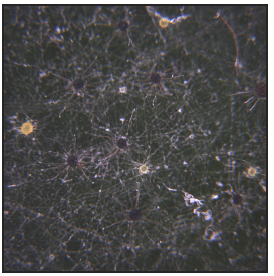
Why was disease pressure high? Most vineyards that lost control of PM in 2010 and 2011 did so because of the following reasons: 1) inappropriate product use and rates, 2) stretched spray intervals, and 3) poor spray coverage. This resulted in high levels of powdery mildew developing in the canopy (and on the fruit), which then lead to the early development of overwintering structures of this fungus (called “chasmothecia” or “cleistothecia”; Fig. 1). With early development of chasmotheica comes ample time for maturation, and an increased likelihood that the chasmothecia will be distributed to the bark of the trunk and cordon for overwintering.
High levels of chasmothecia ultimately translates into high levels of potential inoculum (source of disease), for the following growing season. Elevated levels of potential inoculum for the following growing season (in the case of 2010-2011), and very good conditions for disease development (think summer 2011), will result in a rapid and relentless spread of disease (as was the case in 2011), which only perpetuates the annual carry-over of PM.
How do management strategies work? Basically, there are three ways to break this cycle:
- ELIMINATE (completely) overwintering inoculum;
- DO NOT HAVE conducive weather/environmental conditions for disease development during the growing season; or
- REDUCE the amount of overwintering inoculum AND couple that with either a non-conducive growing season OR a rigid spray program.
The first method is impossible; the coverage necessary to get complete control is simply not a reality. The second method is entirely dependent on weather, which we cannot control or count on; the only thing a grower can do is use cultural strategies such as canopy management to reduce the internal canopy environmental favorability. The third method of the one-two punch is the only real means of regaining control of PM in a vineyard; this method is heavily dependent on a stringent in-season spray program.
Why do people use dormant lime sulfur? Past fungicide trials tests numerous cultural techniques and dormant-applied products, including lime sulfur, as a potential means of controlling a myriad of grape diseases. Unfortunately, most of these studies were focusing on the management of other diseases (such as Phomopsis and Black Rot), rather than on PM.
Conclusions from these trials were similar:
- There really isn’t a great product for killing chasmothecia;
- If a product was semi-effective, the sheer volume of water necessary to deliver the fungicide into the bark crevices and to sufficiently hydrate the chasmothecia so they would uptake the fungicide, is not practical; and
- If weather was conducive the following season, PM could still develop to commercially unacceptable levels if a rigid in-season management program was not used, thus negating any potential positive effects of dormant intervention.
If these were the results, why is it still used for PM control? Many of the recommendations for the use of dormant lime sulfur stem from a specific study done in New York State. Let’s take a closer look at this report, to understand what the authors actually say versus what people interpret:
New York Trial (Reference #3)
In this study, PM development was slowed, but not eliminated, when aqueous lime sulfur was applied at a rate of 33 gallons per acre (29% active ingredient), delivered in a total volume of 300 gallons per acre. These application rates are far beyond what is legally labeled for most products on the market, and the volume of water necessary for complete drenching would require approximately 3x more filling stops than what is typically necessary to complete a vineyard pass (assuming a normal 100 gal application). The main focus of this research was to identify a potential broad-spectrum fungicide that would aid in dormant management of the myriad of fungal diseases that can plague Northeast grape production: Phomopsis cane and leaf spot (Phomopsis viticola), powdery mildew (Erysiphe necator), and black rot (Guidnardia bidwellii). The authors openly admit in the paper (3) that the rates and water volume used was not practical in commercial production, given the control achieved, especially if the target was controlling PM.
…the extremely high rates of application required, and the volume of water delivered in over-the-trellis drenches weigh against the adoption of lime sulfur eradicant treatments in commercial viticulture.”
Gadoury, et. al. 1994. Plant Disease
The Take-Home Message
Can the use of dormant lime sulfur reduce overwintering powdery mildew chasmothecia? Yes—but consider the rates and the volume of water used for delivery, where those studies were conducted, and what the goals of those studies were.
Will this translate into improved powdery mildew control the following year? Not likely. In fact, if you use lime sulfur and then take a laid-back approach to disease management the following season, you are likely setting yourself up for failure.
Is it, economically and environmentally, a good choice to routinely incorporate dormant lime sulfur applications into grape powdery mildew control programs in WA? Not really. Economically, you are spending money that doesn’t need to be spent, on a product that is not likely to give you the results you expect. Environmental aspects are discussed later in this article.
If disease control is lost in one year, you are better off hitting the developing epidemic early and hard in the second year (in-season). Follow label rates, apply them at intervals that are reflective of disease pressure (short intervals during cool, humid, overcast weather; longer intervals during low humidity, high temperature, and high sunlight conditions), and use the rates that are reflective of disease pressure.
Impacts of Dormant Lime Sulfur Use on Beneficial Insects
Pest management in WA grapes has come a long way during the past decade or so. It has transformed from a broad-spectrum insecticide-based calendar spray program to a low-input IPM program based on conservation biological control and selective pesticides. Today the use of pesticides that kill beneficial insects as well as pests in our vineyards is very limited, so the trend towards using dormant lime sulfur is worrying.
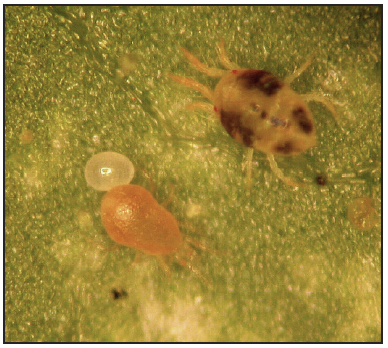
Lime sulfur is a broad-spectrum material: while it can be used to help control populations of problematic mite species, it does not discriminate between beneficial and problematic. Lime sulfur kills most beneficial insects and mites, from predatory mites (Fig. 2) to parasitic wasps (1, 4). Applying lime sulfur during winter might seem like a safe way of using a broad-spectrum material, but even a dormant vineyard is still home to beneficial insects and mites. For instance, we know that predatory mites overwinter in bark crevices, in addition to potentially other beneficial insects such as predatory beetles and parasitic wasps.
The development of a successful biological control program for mites in Australian vineyards in the 1990s was largely based on the removal of broad-spectrum insecticides AND lime sulfur (2). Populations of predatory mites in vineyards treated with lime sulfur during winter were substantially lower than in those that did not use this material. The Australian growers that used dormant lime sulfur at that time were also under the impression that it enhanced PM control. However, once they became aware that it was not the best approach for PM management and were shown that it improved conditions for beneficial insects, they were happy to stop spraying lime sulfur.
Clearly, in the case of beneficial insect management and enhancement, the use of dormant lime sulfur is not compatible with sustainable, low-input pest management.
Conclusion
When designing spray programs for the 2013 growing season, keep in mind the consequences and returns on your spray investment. If you find yourself needing to regain control of a disease or pest, instead of immediately reaching for a chemical answer, ask yourself why it was a problem this past year, and if there are other aspects of your management program that may need to be addressed first. Thinking “big picture” can help you improve your overall management success, economically and environmentally.
References
- James, D.G. and Rayner, M. 1995. Toxicity of viticultural pesticides to the predatory mites, Typhlodromus doreenae and Amblyseius victoriensis. Plant Protection Quarterly 10, 99-102.
- James, D.G. and Whitney, J. 1997. Biological control of mites (Eriophyidae, Tenuipalpidae) in Australian viticulture. Proceedings IX International Congress of Acarology, Columbus, Ohio. pp.207-209.
- Gadoury, D. M., Pearson, R. C., Riegel, D. G., Seem, R. C., Becker, C. M., and Pscheidt, J. W. 1994. Reduction of powdery mildew and other diseases by over-the-trellis applications to dormant grapevines. Plant Dis. 78:83-87.
- Thomson, L. J. and Hoffman, A. A. 2006. Field validation of laboratory-derived IOBC toxicity ratings for natural enemies in commercial vineyards. Biological Control: 39: 507-515.
Does Grapevine Leafroll Disease Impact Drought and Cold Tolerance?
By Matt Halldorson, Graduate Student, WSU Prosser
It is no secret that the wine grape industry has brought tremendous financial success to the state of Washington; it is of the utmost importance that we properly manage this investment by considering the factors which can compromise the production of quality grapes.
One such factor is grapevine leafroll disease (GLRD). While the best way to manage GLRD is to prevent its introduction into a vineyard, this is not always possible, and growers are often faced with managing existing infected vineyard blocks. But, what exactly, are we actually managing? In order to develop better approaches to dealing with infected vineyard blocks, we must understand the physiological impacts of GLRD.
Grapevine leafroll associated viruses, the causal agent of the GLRD complex, can compromise vine productivity (e.g., yield and quality), but it can also interact with other viral diseases and abiotic factors (e.g., cold and drought stress), for compounded problems.
The classic foliar symptoms of GLRD (premature coloring of leaves, or rolling or cupping of leaves) appear to mimic classic symptoms that are also associated with unbalanced vine growth. Premature coloration also mimics symptoms seen with a process called “inhibition of photosynthesis”, where the vine internally tells itself to stop photosynthesizing, which is the primary source of carbohydrates in the plant. Finally, the early reddening of leaves in red grape cultivars of Vitis vinifera also mimics nutrient deficiencies (magnesium or phosphorus), in addition to symptoms induced by girdling.
What are the impacts of GLRD? Based on these observations, we began to ask the following questions relating to the physiology behind GLRD symptom development: 1) If symptoms are similar to those induced by inhibition of photosynthesis, then this likely means that the plant is starting to shut down. When the plant starts to shut down, then there might be a reduction in the amount of water lost through the leaves. If the amount of water lost through leaves is reduced, would this mean that GLRD vines would be more drought tolerant?; and, 2) If symptoms mimic girdling, does GLRD cause phloem girdling? If the phloem is girdled, and sugar cannot efficiently move through the plant, could this indirectly impact vine cold hardiness by increasing the amount of pooled sugar in the above ground portion of the plant (similar to when salt is spread on ice during the winter)?
To answer these questions, we conducted a series of experiments in 2010 and 2011 on healthy and GLRD affected own-rooted Vitis vinifera ‘Merlot’ vines in a vineyard just north of Prosser, WA.
In this experiment, we measured net photosynthesis (ability to produce carbohydrates); stomatal conductance, transpiration, and water potential (all measures of water use and water stress); bud and cane cold-hardiness (2010/2011 and 2011/2012 dormant seasons); and carbohydrates (sugars).
Results
Photosynthesis, stomatal conductance, and transpiration were significantly lower in infected vines late in the growing season. Foliar carbohydrate content was found to be significantly higher in infected vines both before and after véraison, preceding the reduction of photosynthesis, stomatal conductance, and transpiration. Combined, these suggest that sugars must first accumulate before photosynthesis is slowed. Higher sugar content in the leaves of infected vines, might also be a reason why sugar levels in berries of those vines are lower than healthy vines; in infected vines, sugar is accumulating in the leaves rather than being delivered to the fruit.
Post-véraison transpiration and stomatal conductance (measures of water loss) were lower in infected vines; however, this wasn’t related to higher vine water potential (a measurement of water stress; Fig. 1), indicating that GLRD most likely does not cause the vine to be more drought tolerant.
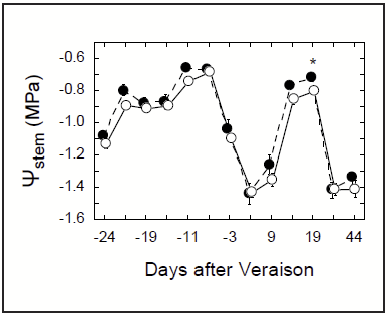
There was also no significant difference in mid-winter cold hardiness between infected and healthy vines, and there was no difference in carbohydrate accumulation in cane tissue.
Conclusion
From these two years of data, we found that vines infected with GLRD did not exhibit symptoms that would indicate they have different responses to drought or cold stress. Under eastern WA conditions, this is a good thing; while the documented impacts of GLRD are clear in that it impacts long-term vine productivity and fruit quality; in the short term, viticulture management techniques, as they relate to water and cold management, should not be significantly different when dealing with healthy or affected blocks.
Resources
Rayapati, N., S. O’Neal, and D. Walsh. 2008. Grapevine Leafroll Disease. WSU Extension Bulletin #EB2027E.
Rayapati, N. 2012. Major Grapevine Diseases: Fanleaf and Leafroll. WSU Extension Factsheet # FS074E.
Intelligent Robotic Grapevine Pruning
By Tony Koselka, Vision Robotics Corporation
Two USDA grants were recently awarded that were have partnerships with Vision Robotics to build upon previous work done by the company on automated pruning. These were Automation of Dormant Pruning of Specialty Crops (USDA-SCRI), and Loop Robotic Arm Control for Agricultural Applications (USDA-SBIR).
A presentation of their robotic pruning system will be given at the 2013 WAWGG Annual Meeting in February.
To date, mechanization of various tasks in specialty crops has been limited to operations that are relatively indiscriminant (i.e., do not require extensive decision making), such as harvesting. This is because completing tasks on the individual fruit, shoot, or vine basis has been beyond the capabilities of robotic systems.
What makes mechanization of these detailed operations so challenging? First, fields are complex environments. Vineyards are rarely uniform and the combinations of trellising and training techniques create almost infinite possibilities of potential vineyard design. In addition, the vines themselves are composed of complicated architecture, with unique branching, foliage and cluster placement on every plant. Weather conditions (including wind, sunlight, and shadows) and uneven terrain represent difficult operating conditions for robotic systems.
The second challenge is that moving robotic parts quickly, efficiently and delicately, is very challenging.
Are there other ways to approach this problem? What are logical vineyard processes that may be adaptable to additional mechanization? In viticulture, mechanization can go beyond harvesting, and already has in the example of pruning.
Currently, there are two methods to prune grapevines: manual pruning (i.e., hand) and indiscriminate mechanical pruning (i.e., hedging or skirting). Vision Robotics Corporation is developing a robotic system that will mechanically prune to the same quality and level as hand labor.
The Technology
Stereo vision (i.e., the use of two cameras positioned close to each other, much like two eyes), is the basis for the core technology enabling Vision Robotics to overcome these challenges. Machine stereo vision enables a system to see the world in 3D. From this, a 3D model of the vine can be created. Using software, this 3D model is translated into “actions” that are then executed by the robotic components of the system (i.e., mobile robotic pruning arms).
The Vision Robotics Grapevine Pruner
This is preliminary robotic system that incorporates stereo vision technology to allow “intelligent” pruning (Fig. 1). It is an over-the-row machine that is towed by a small tractor that has been modified to self steer and drive, only requiring a human operator to move the pruner between rows.
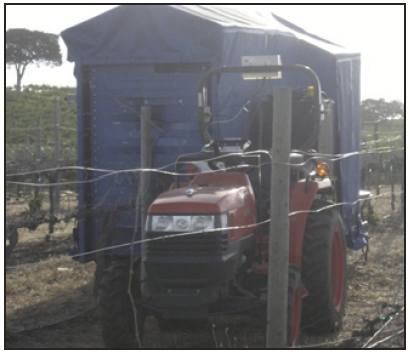
The pruner itself is an enclosed unit that covers several vines. This enclosure helps to protect the cameras, arms, clippers and electronics, as well as controls the lighting to aid in the 3D-modeling of the vine.
A stereo camera is located on each side of the vine at the front of the pruner, taking pictures approximately every 3/4 in. as the system moves down the row. These images are analyzed and used to make a 3D model of the vine (Fig. 2). The pruner then applies a set of pruning rules to determine where to cut each cane (Fig. 3). Different pruning rules may be used (e.g., 8 spur, 2 bud; even spacing; kicker cane; etc.) and there are no inherent limitations to the rule set.
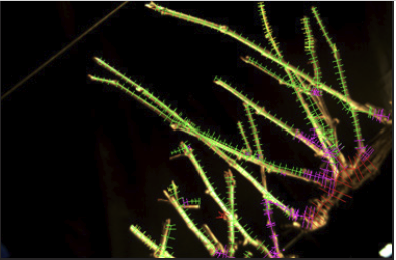
image.
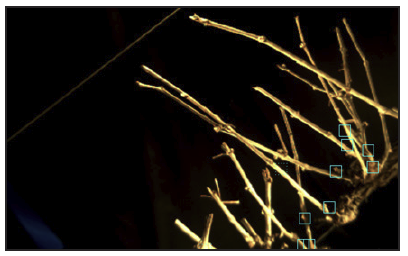
The cutting portion of the pruner is approximately 5 ft. behind the scanning section, so the entire cordon is modeled before the first cut is made. This pre-planning enables a pruning approach that is both fast and efficient. The cutting system includes a 3 ft. long arm on each side of the vine (Fig. 4).
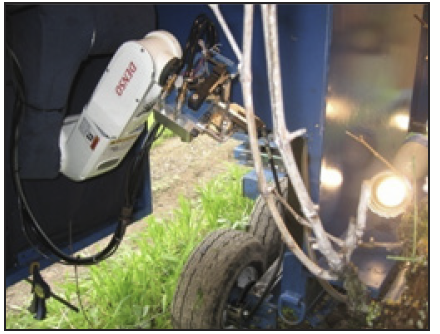
Each arm is equipped with a custom-designed pruner that includes a stereo camera and other sensors. Using these sensors, the pruner dynamically adjusts the pruner’s trajectory to accurately and delicately prune without damaging the vines (Fig. 5).
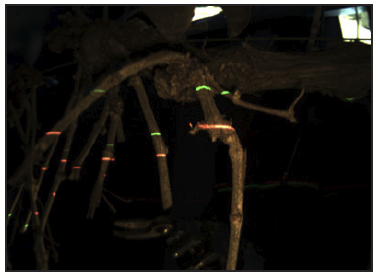
The system operates in a stop-and-go fashion, where it moves approximately 18 in. at a time. During each move, the front portion models the vines being imaged; each time it stops, the arms prune the sections of vines within their reach.
The Future
The first generation pruner spur prunes bilateral, cordon-trained grapevines with canopies trained to VSP; however, there are no inherent technical limitations preventing subsequent models that prune quadrilateral or even cane-pruned vines. In the cane-pruning system, however, vineyards would need to be pre-pruned to allow the arms to be positioned close to the vine and so that the cut canes will fall to the ground.
The current prototype has undergone field testing. It works in relatively flat vineyards and the performance is beginning to approach that required for production. In tests, 95% of the vine was correctly modeled (i.e., accurately identifying cordon, canes, and spur heads), and cuts are made approximately every 3 seconds per arm (which is about half of what the final speed will be).
The company is currently improving the accuracy of the cuts. In particular, cuts at the base of the cane are not yet at the quality of hand labor and some cuts are missed altogether. However, there are not any foreseeable technical hurdles preventing the system from reaching the quality of hand labor.
Vision Robotics is focused on creating technology to enable robots to autonomously and intelligently work in real world applications. The company has developed an extensive library of software, hardware and technology useful for the automation of many tasks. Depending on funding levels, the pruner could be in commercial production in as little as 18 months.
Maceration Part 3: Focus on Aroma
By Federico Casassa (PhD Student) and Jim Harbertson, WSU Prosser
This is the final installment of a three-part series on maceration and red winemaking. Please see past issues of VEEN for information on the extraction of phenolics (Fall 2011) and color (Spring 2012).
Human taste bud receptors can only perceive basic tastes (i.e., sour, sweet, bitter, salty and umami) and tactile sensations (e.g., astringency), all of which are sensations due to non-volatile compounds. However, the discriminating ability of the human olfactory receptors in the nose is much greater. It is estimated that the human olfactory system can discriminate approx. 10,000 different odors (1), although only a few hundred receptors are involved in the process.
While red wine has been reported to contain more than 600 different aromatic compounds, only a handful of them have an actual impact on wine aroma and flavor, a concept better illustrated by the concept of Odor Activity Values. Not surprisingly, the manner in which maceration is conducted (in conjunction with alcoholic fermentation) also plays a significant role in the chemical diversity, concentration and evolution of the aroma compounds that characterize red wine.
Odor Activity Values are defined as the concentration of the aroma compound divided by its detection threshold level. It is a useful indicator of the aromatics that a have a relative higher sensory impact in a given food matrix.
Berry skin contains the precursors of aroma compounds that define red wine aroma. Did you ever wonder why some wines such as Cabernet Sauvignon and Pinot Noir, share some aromatic traits that make them distinctly recognizable as varietals? For example, Cabernet Sauvignon wines are often defined with aromatic descriptors such as “vegetal” and “bell-pepper”, while Pinot noir is commonly described with terms such as “cherry”, “raspberry”, “earthy”, and so on. The compounds responsible for the vegetal character in Cabernet Sauvignon wines are part of a family of compounds known as pyrazines, while others such as ß-damascenone or the raspberry ketone, are known to contribute with aromas reminiscent to red berries and rose petal, respectively, of Pinot noir. Figure 1 is a depiction of chemical compounds that are important due to their relatively high odor activity values, meaning that they can be identified within the other aromas in the wine matrix.
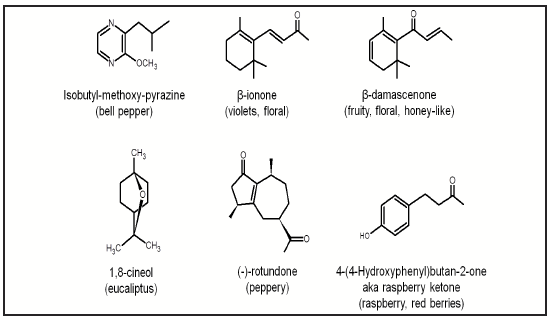
common aromatic descriptor associated with each molecule is shown in parenthesis.
The compounds in Figure 1 are also known as impact compounds and are mainly found on the vacuoles of the berry skins, thus explaining why, even in white winemaking, a minimum contact with the skins is needed in order to extract these varietal aromas.
An impact compound is a single compound that conveys the named flavor and is usually associated with the varietal character of the wine. They have very low (ng/L) sensory threshold, higher odor activity values and thus they readily impact the overall wine aroma.
With the exception of the pyrazines and some keto-based aromas, these compounds are glycosylated (i.e., with a glucose molecule attached) but they can also be found, albeit in lower concentrations, as free aromas (i.e., in volatile form) in the mesocarp or pulp of the berry. The sugar moiety attached to these aroma precursors plays a dual role: first, it makes the compound water-soluble, and thus, susceptible to extraction during maceration, but it also renders the molecule odorless. However, these glycosides can be hydrolyzed enzymatically and/or chemically during maceration and aging (2) to release the volatile moiety of the molecule with a potentially high sensory impact. In the case of ß-ionone and ß-damascenone, they can also be released as breakdown products of carotenoids, also found exclusively in the berry skins.
A minimum skin contact time is needed to extract the aroma precursors, but longer maceration does not necessarily mean greater aromas. With white wines, contact with the skins varies from a few hours, up to one or two days; the choice being contingent upon the style and grape variety. For red wines, observations suggest that at least six days are required to extract the precursors responsible for the varietal character; below this threshold, most of the aromatics are composed of esters from the metabolism of Saccharomyces cerevisiae.
Saccharomyces cerevisiae is a species of yeast responsible for the alcoholic fermentation during winemaking. This yeast can be found as commercial, previously selected strains and also as native species in the winery environment.
Going above this threshold, however, can be detrimental. Oxidation may occur and other compounds, such as acetaldehyde can mask fruity aromas (Fig. 2).
Acetaldehyde is derived from the chemical oxidation of ethanol, but it can also be the result of the metabolism by non-Saccharomyces yeast. At low concentrations, it can impart fruity, apple-like aromas, but when present in higher amounts, it imparts an oxidized, bruised-apple or sherry-like like aromas.
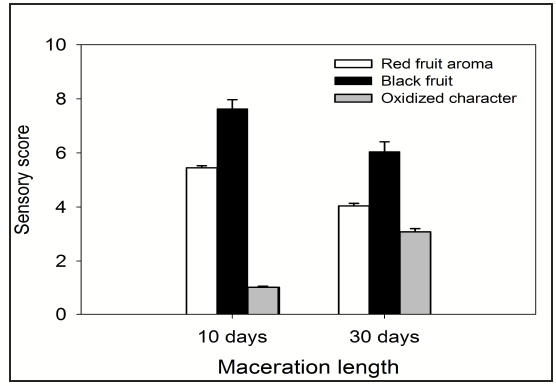
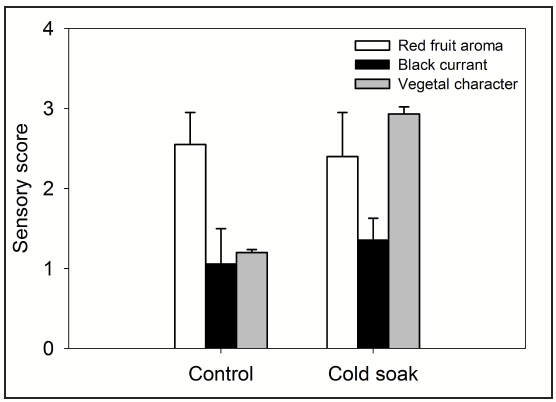
Moreover, skins can rebind some fruity compounds such as ß-damascenone (3), which might explain why the wines produced with extended maceration have less red fruit aroma (Fig. 2). Finally, musts subjected to cold soak treatments can favor the extraction of water soluble pyrazines, thus increasing the vegetal character of the wine (Fig. 3).
Conclusions
As with color and phenolics, there are a plethora of variables known to affect the formation of aromas during maceration and aging, ranging from the yeast strain selected, up to the level of toast and the origin of the barrel oak.
However, as with color and phenolics, arguably two major factors drive the extraction, formation, and evolution of aroma compounds during maceration and fermentation: 1) temperature, and 2) skin contact time. Temperature has a large effect on the metabolism of ester production of Saccharomyces cerevisiae, with these esters conveying generic aromas to the wine. On the other hand, skin contact time defines the varietal character of the product through the extraction and subsequent release of impact flavors.
Longer skin contact times do not necessarily lead to an enhanced extraction of aroma compounds. As recently suggested (3), skin contact time may have competing effects on the volatile composition depending on the rate of release from the tissues, formation of some compounds (such as acetaldehyde) and/or physical absorption or binding.
References
- Young, J.M. and Trask, B.J. 2002. The sense of smell: genomics of vertebrate odorant receptors. Hum. Mol. Genet., 11: 1153-1160.
- Marais J., 1983. Terpenes in the aroma of grapes and wines: a review. S. Afr. J. Enol. Vitic., 4, 49-58.
- Callejón, R.M., Margulies, B., Hirson, G.D. and S.E. Ebeler. 2012. Dynamic changes in volatile compounds during fermentation of Cabernet Sauvignon grapes with and without skins. Am. J. Enol. Vitic., 63: 301-312.
A Note on Atypical Aging in White Wine
By Thomas Henick-Kling, Director, WSU Viticulture & Enology Program
While we all welcomed summer after a cool and rainy spring, it unfortunately came with extended periods of heat and dry conditions during a critical period of fruit development: immediately before and after véraison. From work carried out in Europe and in New York State, when severe water stress occurs during this time period, it can lead to the development of the Atypical Aging flavor defect (ATA).
This flavor defect was first described in Germany in the early 1980s [called untypischer Alterungston, (UTA)], and is found in essentially all winegrowing areas of the world.
Early on, German scientists and winemakers recognized a correlation between drought stress and the occurrence of ATA. Wines from hot and dry growing seasons, and from dry vineyard sites, were prone to developing ATA, while wines from cooler seasons and sites without drought stress were not. Later on experience also showed that over-cropping and possibly nitrogen deficiency in the vineyard are also contributing factors.
I have found wines with this defect in every state in the USA (including WA), and in Germany, Austria, Switzerland, Italy, France, Spain, Portugal, New Zealand, and Australia. In WA, I have not seen a high percentage of wine with ATA; this is likely due to our control over vineyard water supply through irrigation.
ATA is found in most wines from white winegrape cultivars. Wines affected by ATA quickly lose their varietal aromas; often within one year. With this premature loss of varietal flavors, atypical flavors appear, and are described as candle wax, furniture varnish, and dirty dish cloth. The atypical aromas quickly dominate the flavor of the wines.
People who are not familiar with this flavor defect will often notice a problem in affected wines, but generally label it as “old” or “oxidized”. This flavor defect should not be confused with premature aging; with premature aging, wines still have recognizable varietal and regional flavor characteristics.
Mitigating ATA in the Vineyard
The first step in preventing ATA is to avoid extreme water stress on white winegrape cultivars, particularly around véraison. In addition, ensure that fruit is fully ripened before harvest, as delayed ripening can be a sign of water stress or over cropping, which are associated with the development of ATA as described above.
Mitigating ATA in the Winery
In the winery, ascorbic acid (100 – 150 mg/L) can be added to the wine after fermentation is complete and after the wine holds free SO2. It will not hurt the wine (as long as you have free SO2 present at the time you add the ascorbic acid).
Remember the presence of ascorbic acid interferes with SO2 analysis by the Ripper method. The distillation / titration method and the FOSS Fiastar methods for SO2 analysis are not affected by the presence of ascorbic acid. This addition of ascorbic acid can protect the wine from ATA for about two years.
Other Tips:
- Process drought stressed fruit gently; it tends to be more phenolic. Consider whole cluster pressing to minimize extraction of phenolics and potential ATA precursor. Fining may be necessary to remove the bitterness.
- Separate press fractions (over 1.5 bar), ferment and treat affected fruit separately.
- Some skin contact can help extract the small amount of fruit flavor from under-ripe fruit; 4 to 24 hours at 5°C (41°F) is likely enough. Carefully evaluate bitterness in this fruit.
- Add plenty of nutrients to the must before and during fermentation for yeast and bacteria. Use a combination of DAP (diammonium hydrogen phosphate) and complex yeast nutrients such as Go-Ferm, Fermaid K, or Yeast Superfood. For drought stressed fruit it is very important to maintain adequate nutrient levels (aim for a minimum of 150 mg/L of Yeast Available Nitrogen).
- Prolong contact with yeast lees and malolactic fermentation in white wines where appropriate. If necessary, add acidity back using tartaric acid.
- After alcoholic and malolactic fermentation are complete, sulfite the wine promptly. Make sure the wine holds free SO2; check the SO2 at least two times. When the wine holds SO2, add ascorbic acid as described above.
ATA Quick-Test
- Divide wine into two aliquots of 100 mL or more.
- Add 150 mg/L ascorbic acid to one of the aliquots, add nothing to the other.
- Pour each of the aliqouts into their own glass bottles, avoiding large headspace. Seal well.
- Place glass bottles into an oven set at 40°C (104°F). Keep bottles in the oven from 12 to 48 hours.
- Remove bottles from oven. Let the wines cool, and then taste both of the wines.
- If both wines (with and without ascorbic acid) taste the same, then the wine will not likely develop ATA. If the wine without the ascorbic acid tastes differently than the wine with ascorbic acid, then the wine will likely develop ATA.
Resources
Henick-Kling, T. et. al. (2008). “Studies on the origin and sensory aspects of atypical aging in white wines”.Proc. 15th Int‘l Enol. Sym., Trier, Germany.
A Note on Smoke Taint
By Jim Harbertson, Thomas Henick-Kling, Markus Keller and Michelle Moyer
Wide-spread fires in eastern Washington have filled the valleys with a lingering smoky haze. While warnings have been issued for many areas relating to air quality, there is also concern regarding how this smoke may affect grapes.
Smoke residue contains high concentrations of volatile phenols, such as guaiacol and eugenol. “Smoke taint” has been found in juice and wine made from grapes, as the glycosylated forms of these phenols tend to accumulate in the skin and mesocarp (pulp) of the berry. These compounds are released during alcoholic and malolactic fermentation (2,3), causing the wine to become unpleasantly ‘pharmaceutical’, ‘dirty’, ‘ash tray’, ‘medicinal’, ‘camp fire’, or ‘burnt’, and reduces the perception of varietal fruit aroma.
In the Vineyard
The timing and amount of smoke-exposure can influence the appearance of smoke taint in subsequent wine. For example, taint can develop from low levels of exposure early in the season (6 inch shoot growth to bloom); from variable levels of smoke exposure from pea-size berries to véraison; and from high levels of smoke exposure between véraison and harvest (5,6), with a peak sensitivity about one week after the onset of véraison (4,5). We currently do not know how these controlled levels of smoke exposure relate to natural levels and how long smoke from wildfires needs to be present in vineyards before smoke taint becomes a problem.
With the forecast growth and lack of containment of the 2012 WA wildfires, harvesting sooner rather than later is recommend. This will help to reduce fruit exposure to smoke and likelihood of development of smoke taint.
In the Winery
Because grape skins accumulate smoke-taint associated phenols, reducing skin contact time can help reduce the severity of smoke-taint in wines. This is less problematic for white wines because normally skin contact is limited. We recommend whole cluster pressing, using free-run juice and separating press juice, to minimize the potential for extracting smoke taint aromas. Clarifying white wine must rapidly and thoroughly should help reduce absorption of volatile phenolics into the wine. Yeast hulls can be used as clarifying aid and may even absorb some of the volatile phenols.
While skin contact time cannot be avoided, shortening it and avoiding pectinase or glycosidase enzymatic additions is recommended for red wines. Because anthocyanins are quickly extracted (4-5 days), a short maceration may only limit tannin extraction.
There is evidence (8) that some yeast strains may reduce smoke aromas and flavors without diminishing “fruit” aromas (AWRI 1503, ICV GRE, AWRI Fusion and SIHA active 3) while others exacerbate smoke aromas (AWRI 1176, ICV D254, BDX and S6U) and make higher amounts of volatile acidity (AWRI 1176, S6U). Some yeast strains may have higher amounts of enzymes that cleave smoke taint precursors, or have higher amounts of pectinase enzymes that break down the skin cell walls.
The addition oak chips and tannins has also been looked at, but the resulting wines were not less smoky, but in fact, were both oaky and smoky. This method was seen as adding complexity as opposed to removal of taint (8).
Glycosylated phenolics are hydrolyzed during winemaking and aging, causing a dramatic increase in the volatile phenolics over a 12 month period (1 µg/L to peak 388 µg/L) (5). Other research has shown that guaiacol and cresol (4-methylguaiacol) continued to increase over 3 years of bottle aging (7). As a result, methods of removal like reverse osmosis coupled with solid phase adsorption (1) or ultra-filtration will have limited success; smoke taint will return over time. Reverse osmosis with solid phase adsorption, and ultra-filtration are not specific treatments and they can also remove desirable aromas, color, and phenolics, resulting in neutral, but usable, wines (until the smoke taint returns).
Blending is an option, but can be difficult as the odor threshold for smoke taint compounds is low. However, it may work if the volume of smoke tainted wine used for blending is also low. In extreme cases, bottling affected wine as a separate label may be an alternative. Send in suspect fruit and wine samples for analysis. It is important to have an evaluation of both the volatile phenols and their corresponding glycosylated precursors.
Odor Thresholds
Odor Threshold (µg/L): guaiacol 95 (white wine), 75 (red wine); creosol 65 (white and red wine); 4-ethylguaicol 70 (white wine), 110-150 (red wine); 4-ethylphenol 1100 (white wine), 1200 (red wine). Adapted from (3).
References
- Fudge et al. 2011. Aus. J. Grape Wine Res. 17:S41-48
- Hayasaka, et. al. 2010. J. Agric. Food. Chem. 58:10898-10998
- Hennison, et. al. 2008. J. Agric. Food. Chem. 58:7379-7383
- Kennison, et. al. 2009. Aus. J. Grape Wine Res. 15:228-237
- Kennison, et. al. 2011. Aus. J. Grape Wine Res. 17:S5-S12
- Sheppard, et. al. 2009. Am. J. Enol. Vitic. 60: 98-103
- Singh, et al. 2011. Aus. J. Grape Wine Res. 17:S13-S21
- Ristic et al. 2011. Aus. J. Grape Wine Res. S29-S40