VEEN is curated by WSU Viticulture Extension. For questions on articles, or to request to submit an article in future issues, reach out to Michelle Moyer.
This issue of VEEN was originally published as a .PDF in April 2019, and posted online. Some content here will differ from that original issue. The issue is archived, but accessible on the VEEN Archive webpage.
A Note from the Editor
What started out as the winter that would not come, became the winter that would not leave. Above normal temperatures going into January gave us all a false sense of an early spring. We were snapped back to reality by the end of that month, with both snow and low temperatures. After the March melt-away, I think many were surprised at how quickly the vines continued in their push to spring (faster than we could dig out of the snow drifts?), and we are currently tracking to fairly long-term-average phenology. Why? Because all of that snow protected the soil from the sudden temperature changes, keeping the vine roots at above freezing.
If you can catch a breather from pruning, check out this issue of VEEN – lots of great stuff on pests, sprayers, and research!
Michelle M. Moyer
Viticulture Extension Specialist
Associate Professor of Viticulture
WSU Prosser IAREC
Table of Contents
Connect With Us
V&E Certificate Program
Buffalo Treehopper: A Potential Red Blotch Vector in Washington?
By Jonathan O’Hearn (Graduate Student), Peter Foorence, and Doug Walsh, WSU – Prosser
Insects in the treehopper family Membracidae are implicated as potential vectors of Grapevine Red Blotch associated Virus (GRBaV). Vines infected with GRBaV are seriously impacted with dramatic reductions in yield and fruit quality. A membracid insect, the three-cornered alfalfa hopper Spissistulus festinus, is confirmed to be a vector of GRBaV in California and Southern Oregon. Two other membracid species, Tortistilus wickhami and T. aldisporus, are suspected to be vectors in California and Oregon. Transmission assays have been completed but to date transmission of GRBaV by either of these 2 Tortistilus species has not been confirmed. Virologists in New York have determined that the latent period during which the titer of GRBaV in the vine remains below detectable levels can be greater than 2 years, adding to the challenges associated with these virus-vector transmission assays.
For a second year in 2018 we completed a comprehensive survey of multiple habitats in Washington State, including multiple vineyard sites, via the active use of: 1) sweepnet of ground cover, 2) beating trays under a shaken canopy, and 3) passive use of yellow insect sticky card traps.
Consistent with our results from 2017, we did not captured a membracid insect in a wine grape vineyard. However, we did capture a substantial number of another membracid, the buffalo treehopper, Stictocephala bisonia, in riparian habitats mostly associated with willows. Other sites we have captured buffalo treehoppers from include pear orchards, and alfalfa patches near pear orchards. We captured mostly adults and very few nymphs. Fortunately, we have no state record for the three-cornered alfalfa hopper in Washington State and we have never captured either of the Tortistilus species in our surveys.
Grapevine as a Host?
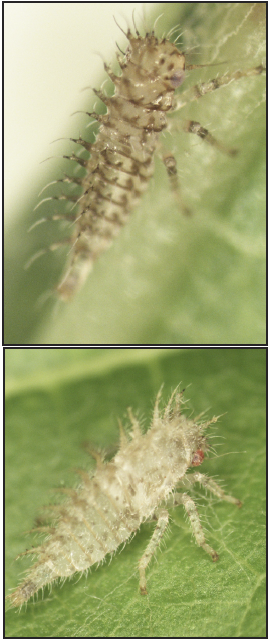
In summer 2018 we caged adult buffalo treehoppers on potted Merlot vines in the greenhouse and the adults persisted on these vines until the vines went dormant at which point the adult buffalo treehoppers died. This March (2019), as these vines broke dormancy we observed egg hatch and subsequently live nymphs on these grapevines. We are monitoring the development of these nymphs on the grapevines (see Fig. 1). While grape vines may not be a preferred host for the buffalo treehopper, they can persist on wine grapes. We will not know if grapevines are a complete host for buffalo treehopper until the nymphs on these vines develop into adults. In similar controlled laboratory studies in California, the three-cornered alfalfa hopper never persisted past its 2nd nymphal instar on grape vines. These California-based researchers are fairly confident that the three-cornered alfalfa hopper is unable to complete its development on grape vines.
Transmission Assays
Prior work in California determined that a single three-cornered alfalfa hopper per caged vine resulted in successful transmission of GRBaV at the rate of ~30%. Can we potentially expect this with the buffalo treehopper? In summer 2018, we conducted transmission assays in which we permitted adult buffalo treehoppers to feed on GRBaV infected vines for 1 week. Following this virus acquisition time, we placed 1, 5, or 10 infected buffalo treehoppers on “clean” vines in cages in the greenhouse. The buffalo treehopper adults were never removed from these cages and they died when the plants went dormant. Presently we are in a hurry up and wait mode to see if transmission is successful. We will run molecular-based PCR tests on these vines for the next several years to determine if the buffalo treehopper was a successful vector for GRBaV.
From communications with viticulturists over the past year, it appears that GRBaV is not spreading rapidly in Washington State. So for now we continue to live a charmed life here in Washington in regards to GRBaV compared to California and southern Oregon where the disease continues to spread.
Solid Set Canopy Delivery System for Washington Vineyards
By Lav Khot and Rajeev Sinha (Graduate Student), WSU – Prosser, Gwen-Alyn Hoheisel, WSU – Extension, and Matthew Grieshop, Michigan State University
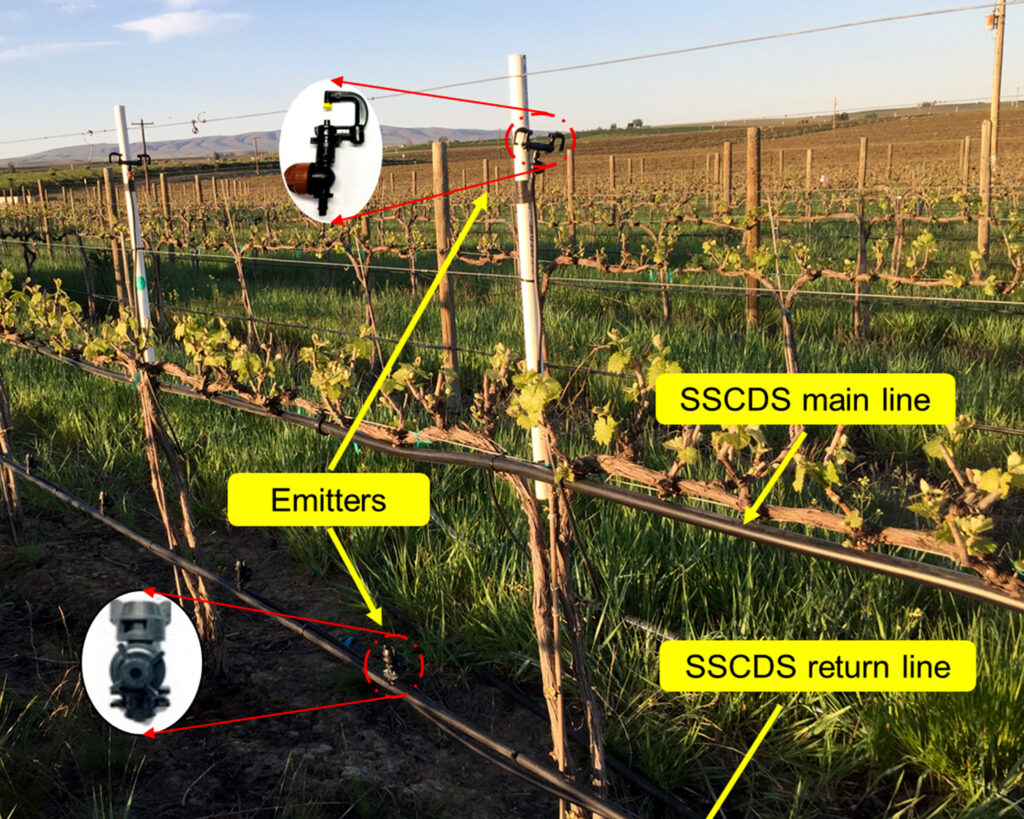
This article summarizes the on-going research efforts by our team to optimize a solid set canopy delivery system (SSCDS) for efficient chemical applications in Washington vineyards. A typical SSCDS comprises of fixed chemical delivery lines, similar to the irrigation lines, mounted onto an existing vineyard trellis. These lines are used to deliver chemical solutions through the optimally configured micro-emitters within the canopies (Fig. 1).
Spray lines are charged with a chemical solution at ~20 psi and subsequently sprayed at ~45 psi. This is achieved by connecting spray lines to an external spray tank and associated hardware (hydraulic pump, air compressor, etc.). Spraying is followed by recovery of residual spray mix from the spray lines as well as cleaning of the lines and emitters by pushing compressed air through the system at 20 and 45 psi, respectively.
Benefits
A better-optimized and configured SSCDS can be an alternative to existing air-assisted sprayers (1). SSCDS can minimize spray drift and chemical exposure issues that are typical to existing air-assisted sprayers. Configured SSCDS can spray an entire block when the local microclimate is conducive and help achieve proper application timings even under non-conducive ground conditions. As no machinery is moving within the row middles, it is expected to reduce on-farm fossil fuel use and soil compaction. Besides spraying chemicals (inclusive of nutrients and biologicals), the SSCDS can be used for various production management tasks such as the crop microclimate modification (1).
Current State of Research
Prior SSCDS research primarily focused on optimization for tree fruit. Variants of SSCDS configurations have been optimized for modern apple architectures. Success in those attempts at Michigan (2) and Washington (3) states in the USA, and in France (4) has encouraged a range of research teams to explore and optimize such systems for grapevines and other berry crops. Our WSU CPAAS team has experimented with several SSCDS configurations, emitter types and their within canopy placements in a modified vertical shoot position (VSP) vineyard (Vitis vinifera ‘Chardonnay’) located near Prosser, WA (5). Those variants have been progressively evolved with our 2017 and 2018 field season data driven system refinements
In 2017, we experimented with a couple of different 30 ft. SSCDS configurations in an effort to identify the emitters and their canopy placement for optimal spray deposition and coverage. Fluorescent tracer spray applications with such configurations at early, mid and late crop growth stages suggested that an optimal configuration would need to have emitters in both the upper and lower canopy – upper canopy emitters spraying downward and lower canopy emitters spraying up in to the canopy (Fig. 1).
Among the tested emitters, hollow-cone emitters mounted below the cordon had optimal spray deposition, more so in the bottom canopy zone (up to 1.5 ft. above cordon) and on either sides of leaf surfaces. Detailed results of the above study are in (5).
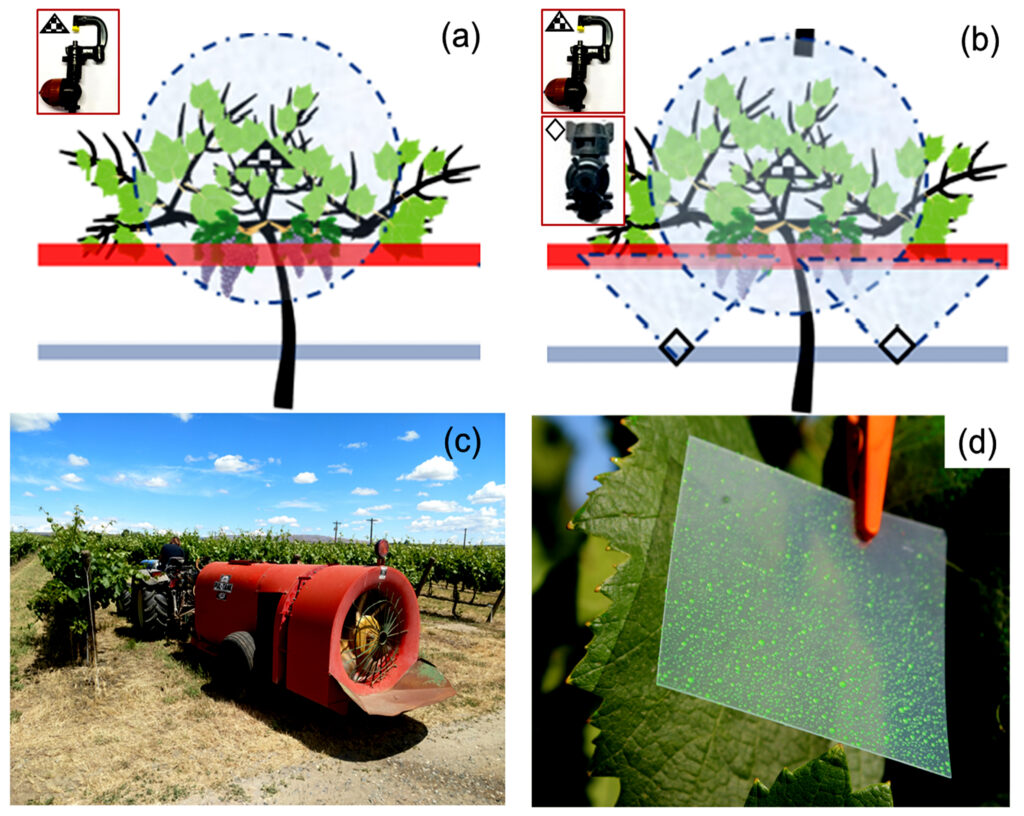
The identified simplest (CG1: Fig. 2a) and the most optimal configurations (CG2: Fig. 2b) were further evaluated in 2018 over a 300 ft. spray row length. CG1 had a pair of full circle emitters per grapevine installed in the upper canopy zone (1.5 ft. to 4.0 ft. above cordon), while CG2 had two hollow cone emitters per grapevine at 1.5 ft. above ground level in combination with emitters as in CG1.
Spray trials were conducted in a modified VSP Chardonnay vineyard. SSCDS spray performance was compared to an airblast sprayer (Fig. 2c). We evaluated deposition and off-target drift downwind to the spray row, using the same aforementioned fluorescent tracer. After spraying, the spray deposit samplers (mylar cards, Fig. 2d) that were placed within the canopy and downwind locations, were collected for laboratory analysis using fluorometry (5).
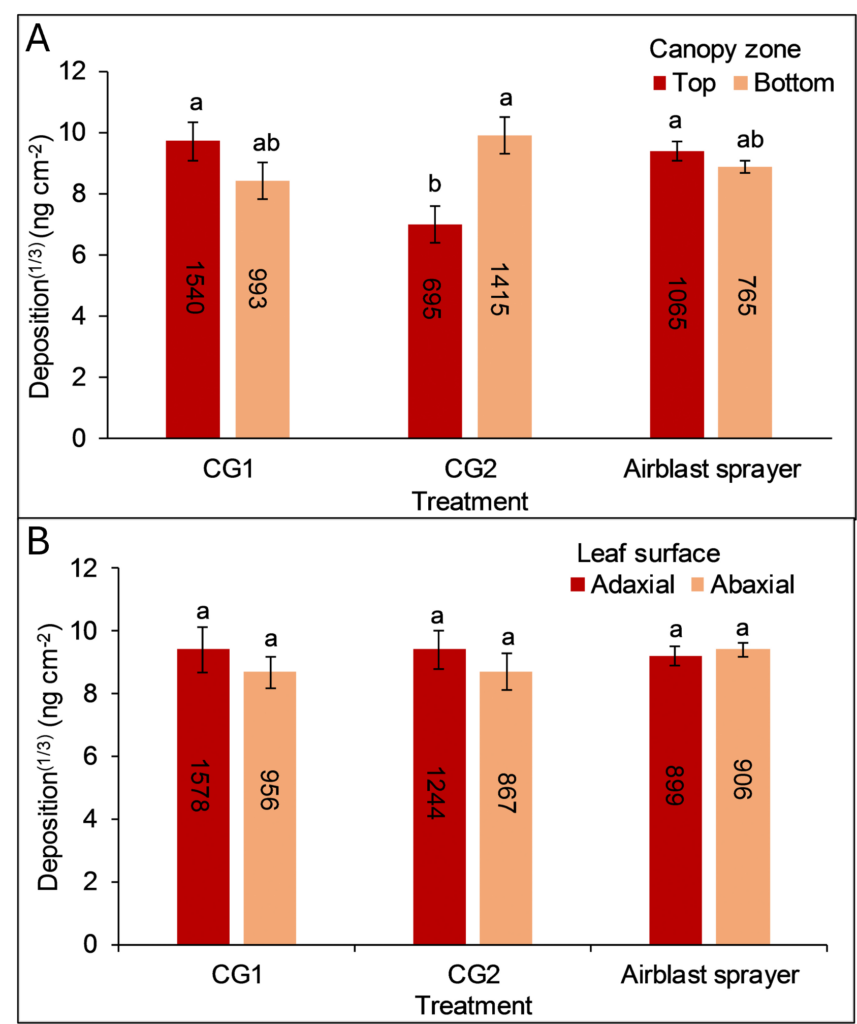
During 2018 season trials, the airblast sprayer and the SSCDS configurations had statistically similar within-canopy spray deposition (Fig. 3, top). The airblast sprayer and SSCDS – CG1 (upper emitters only) had higher deposition in the top canopy zone compared to the SSCDS – CG2 (upper and lower emitters) (Fig. 3, top).
All the sprayer systems under study provided adequate spray deposition on either surface of leaves (i.e., adaxial and abaxial) (Fig. 3, bottom). Achieving similar spray deposition on both the leaf surfaces is critical to an effective pest management strategy in vineyards, especially when contact pesticides are used.
The results from drift trials indicated significant differences in aerial as well as ground drift between the SSCDS configurations and the airblast sprayer. Overall, the airblast sprayer (82 ± 15 ng/cm2) had a significantly higher ground drift compared to the CG1 (4 ± 2 ng/cm2) and CG2 (4 ± 2 ng/cm2) configurations. Absence of air-assist in SSCDS might have limited the spray droplets’ movement beyond canopies. SSCDS configurations had trace amount of ground drift (< 2 ng/cm2) quantified at 15 ft. from the spray row. Drift losses to air were about 900 and 390 times higher for airblast sprayer compared to the studied SSCDS configurations at 6 ft. and 12 ft. downwind, respectively.
In summary, the results from 2017-2018 spray trials suggest that the optimized SSCDS may be a viable alternative to conventional airblast sprayers for vineyard spraying. Optimized SSCDS configurations can provide comparable within canopy deposition to an airblast sprayer with significantly reduced aerial and ground drift losses. Such systems can be automated to eliminate human operator presence in the spray area and thus, has the potential to mitigate pertinent exposure issues.
Future Research Direction
System scaling-up and automation for large acreage spray applications are on top of our team’s research priorities. Our team has developed and tested prototype automated system that has potential to actuate SSCDS from smart devices through wireless communications (6).
Scaling-up for large acreage applications needs further refinements to the system. Most of the experimented SSCDS prototypes are based on hydraulic spray delivery (HSD) of spray mix. The HSD systems tend to have hydraulic pressure reduction issues due to frictional losses in the spray lines. Such losses develop a negative gradient of operating pressure leading to a non-uniform spray application.
To overcome this issue, we have developed a reservoir based pneumatic spray delivery (PSD) subsystem. Such reservoirs can be integrated in the SSCDS spray line at specific intervals. The reservoir sub-system accumulates a precisely metered amount of spray mix prior to spraying. This approach allows spraying the same amount of spray material at all locations within a spray row, notwithstanding the drop in the system operating pressure.
Our team has successfully tested the PSD system variant of SSCDS in high-density apple orchards in 2018 season to have uniform spraying over a 300 ft. row. We will be optimizing and testing such variant for grapevines in 2019 season. We also plan to expand our evaluations beyond just deposition and drift, and will also look at the applications of real pesticides to see if this delivery mode alters the efficacy of standard pest management programs, or if the style of delivery needs to be considered when selecting different pesticides.
Acknowledgments
This research was funded in part by the USDA-NIFA Specialty Crop Research Initiative and WNP00745 projects.
References
- Grieshop, M., Brunner, J., Agnello, A. (2014). Michigan State University, Organic Pest Management Laboratory. Retrieved from: www.canopydelivery.msu.edu/wpcontent/ uploads/2014/07/2013_SCRI–Report.pdf
- Owen–Smith, P. (2017). Pest management efficacy and spray characteristics of a solid set canopy delivery system in high density apples. [Master’s thesis]. Michigan State University; 2017.
- Sharda, A., Karkee, M., Zhang, Q., Ewlanow, I., Adameit, U., Brunner, J. (2015). Computer & Electronics in Agriculture, 112, 184–192.
- Verpont, F., Favareille, J., Zavagli, F. (2015). 13th Workshop on Spray Application Techniques in Fruit Growing, Lindau (Germany), pp. 53–54.
- Sinha, R., Khot, L.R., Hoheisel, G., Grieshop, M.J., & Bahlol, H. (2019). Biosystems Engineering, 179, 59–70.
- Ranjan, R., Shi, G., Sinha, R., Khot, L.R., Hoheisel, G., Grieshop, M.J. (2019). Transactions of the ASABE. doi: 10.13031/trans.13258.
Avoiding Selection of Fungicide Resistance
By Charlotte Oliver, FRAME Project Manager, WSU – Prosser
In 2016 and 2017, the research team behind the FRAME Network for Wine, Table, and Raisin Grapes began widespread sampling in OR, WA, and CA vineyards to look for resistance to different fungicides in grape powdery mildew.
Unfortunately, resistance to a few classes of fungicides was found in mildew populations in many California, Oregon, and Washington vineyards. While resistance has been reported for multiple years in other states, no one suspected that the majority of isolates to be completely resistant to two commonly used fungicides [1,2].
In fact, many of our best-practices for managing fungicide resistance development have been based on what has, and hasn’t, worked in other parts of the country.
But since we have adopted those practices, why are we seeing fungicide resistance in powdery mildew out west? Simple. Resistance, in general, is something that occurs in the pathogen itself. Users of pest management products drive the selection and / or build up of resistant individuals in the overall population. Rotation or tank mixing different fungicide classes are good first steps in avoiding the development of field-level fungicide resistance, but it does not eliminate the selection of resistant individuals. In order to do that, every application would need to be perfectly timed, with perfect coverage, and kill all individuals in the population. That simply does not happen, even for the best grower.
How Resistance Develops
Fungicide resistance naturally exists within a pathogen population, just at a low frequency [3]. Continued selection pressure is what causes the population to shift to become overwhelming resistant resulting in the loss of fungicide efficacy on a field-scale. That’s how evolution operates. In most cases, you would not notice a randomly-resistant individual. However, it would become noticeable if a population had a majority of it’s individuals that were resistant. So how would that happen? How does a population go from having 1 resistant individual, which might not be a management concern, to being mostly made up of resistant individuals, resulting in a particular fungicide no longer being effective against that population?
The scenario below is an example of how an individual can select a random resistance mutation and it builds up in the field population.
Hoping to save a little money, the vineyard manager applies one early season fungicide application at 6 inches of shoot growth, but delays the next one beyond the recommended spray interval.
Unfortunately, during that stretched spray interval, highly conducive weather occurred for mildew development (high humidity, moderate temperatures), and the vine canopy rapidly developed creating a high density of young, mildew-susceptible grape tissue.
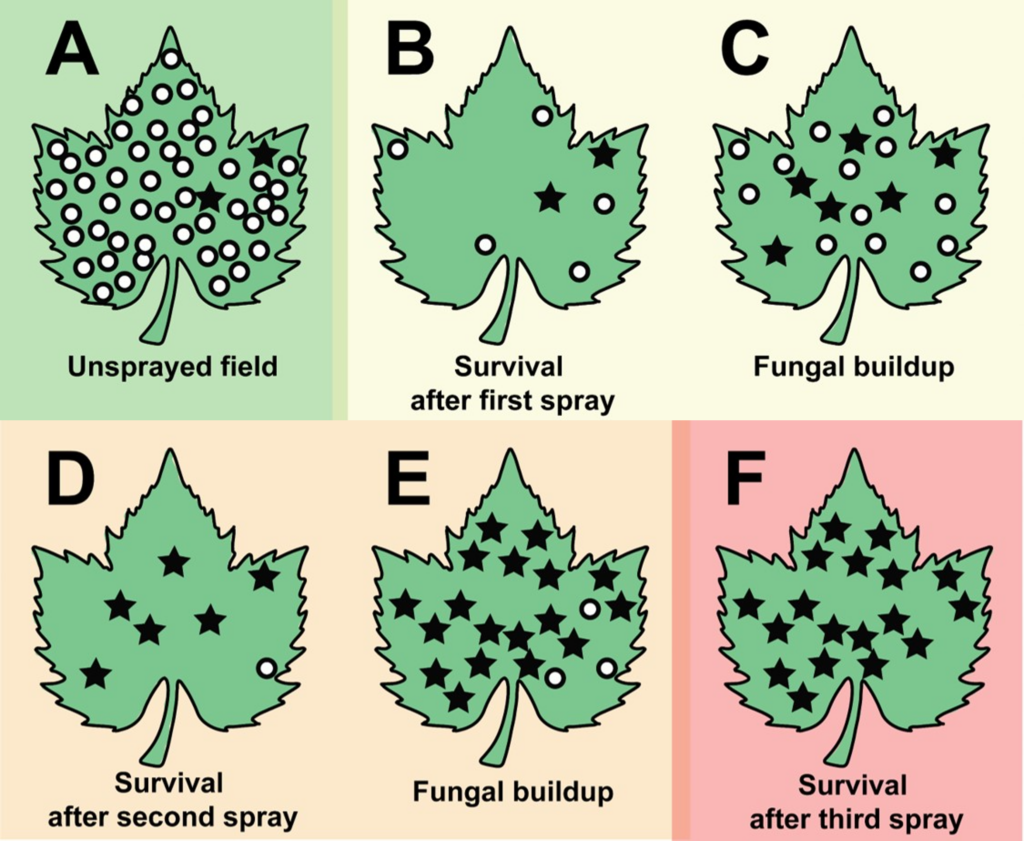
The vineyard manager notices a mildew outbreak (Fig. 1, Leaf A). What they can not see is that the outbreak is a mix of fungicide – sensitive and fungicide – resistant individuals. In response to the outbreak, an application of the same fungicide that was applied previously was made to the block. The application works (Fig. 1, Leaf B) against the sensitive powdery mildew in the field, but the resistant colonies remain and reproduce (Fig. 1, Leaf C). Now, the mix of fungi in the field is mostly resistant (Fig. 1, Leaves D, E) and if the same spray is used again, more and more resistant individuals survive, resulting in the visible loss of spray efficacy (Fig. 1, Leaf F). Sometimes, this loss of product efficacy can happen quickly (within a season), but in most cases, it happens over multiple years.
After resistance has developed in a pathogen population, such as the grape powdery mildew fungus, there are many factors that sustain the resistant populations. This can include the repeated use of the same product that resistance has developed to, or some change in fitness that allows the resistant individuals to grow better than the fungicide sensitive individuals even in the absence of the fungicide in question. Rotating FRAC groups, and taking mixing with multi-site fungicides (e.g., sulfur, oil, potassium bicarbonate) helps to delay the onset of field-level resistance, but does not eliminate the risk of resistance.
Spray Application Practices
As indicated above, spray application practices influence the selection of fungicide-resistant individuals. Spray timing, and coverage, are often the biggest influences:
- Poor timing. When a product is sprayed on existing mildew, you increase the risk of selecting for resistant individuals.
- Poor coverage. Not killing all of the mildew increases the chance of a resistant individual surviving or exposes other individuals to sub-lethal levels of fungicides.
Timing of fungicide applications is critical given that most fungicides, particularly ones that are at high risk for the development of fungicide resistance, are only effective at preventing infection. Spraying a high-risk fungicide on visible mildew increases the selection of resistant individuals. Visible mildew means a large population, and the potential that naturally-occurring resistant individuals exist. Stretching spray intervals can also increase the chance a fungicide is applied to existing (but maybe not yet visible), mildew. Stretching spray intervals can occur in two ways: extending the interval between sprays beyond what is recommended on the label, or by using product at its lowest rate during a period of fast vine growth or high disease pressure. In the latter situation, the product concentration may be diluted beyond the effective dose both in and on the vine tissue.
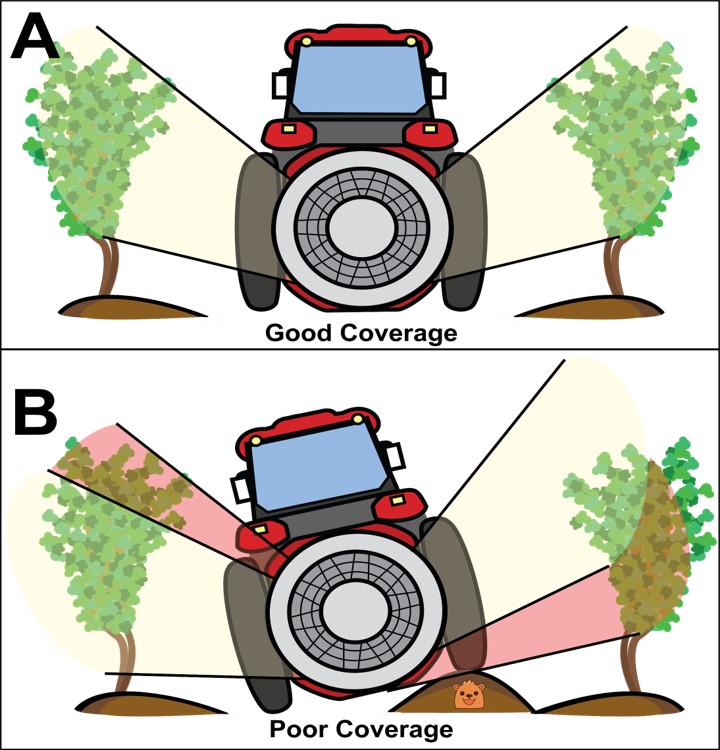
Poor spray coverage is a slightly different scenario. In this situation, resistant individuals can build up in a population because they were exposed to sublethal levels of fungicides (Fig. 2). While mildew elsewhere in the vineyard was controlled, accidentally skipping a row or a vine while spraying, using insufficient water for adequate product delivery, or poor canopy management that results in dense foliage that is impenetrable to sprays, provides “safe havens” for mildew to continue to develop. In these situations, if the resistant individuals are not as fit as sensitive ones, the sensitive populations will likely always remain as the majority of the population, so if coverage is improved, disease management is regained. But if there is not a fitness cost, the resistant and sensitive populations can build, and management may not be regained if coverage is improved.
Avoiding the Selection of Fungicide Resistance
There are many steps involved in regaining disease control once a resistant population has majority establishment in the vineyard. The best first step is to avoid activities that increase selection pressure.
- Rotate or tank mix fungicides diligently within a seasonal spray program and use multi-site fungicides when possible.. Use FRAC codes to help determine rotations.
- Spray on-time, and follow appropriate intervals for the product and vine development.
- Use cultural practices to improve spray coverage.
- Make sure your sprayer is working properly. Sprayer maintenance, calibration, and optimization is the first step in improving spray coverage.
References
- Frenkel, O., Cadle-Davidson, L., Wilcox, W. F., & Milgroom, M. G. 2014. Phytopathology, 105(3), 370–377.
- Gubler WD. 1996. Plant Disease. 80(8), 902-909.
- FRAC. (2019). Retrieved from http://www.frac.info/resistance-overview/what-is-resistance

The Tale of Two Rots: Sour Rot and Botrytis Bunch Rot
By Megan Hall, Assistant Research Professor, University of Missouri
It has only been a few years since we have been able to fully understand and distinguish major differences between sour rot and Botrytis bunch rot. Both diseases develop at approximately the same time in the vineyard and both turn grape berries a very distinct tan-reddish color. This makes the two diseases difficult to distinguish, until the tell-tale sour rot signs emerge. Sour rot is characterized by two main components: loss of berry integrity and accumulation of acetic acid in the grape. In other words: sour rot results in the berry falling apart, releasing vinegar-filled pulp onto the berries around it.
The Differences in the Rots
Botrytis is caused by a filamentous fungus, and in the right conditions, fuzzy grey conidiophores develop on the fruit (Fig. 1). Sour rot is the result of a complex interaction between wound sites on a ripening grape cluster, yeast, acetic acid bacteria and fruit flies (Fig. 2). The only fungal structures you see on sour rot-affected fruit are those of secondary colonizers like Aspergillus, which sometimes move in to take advantage of the rotting, wounded grapes.
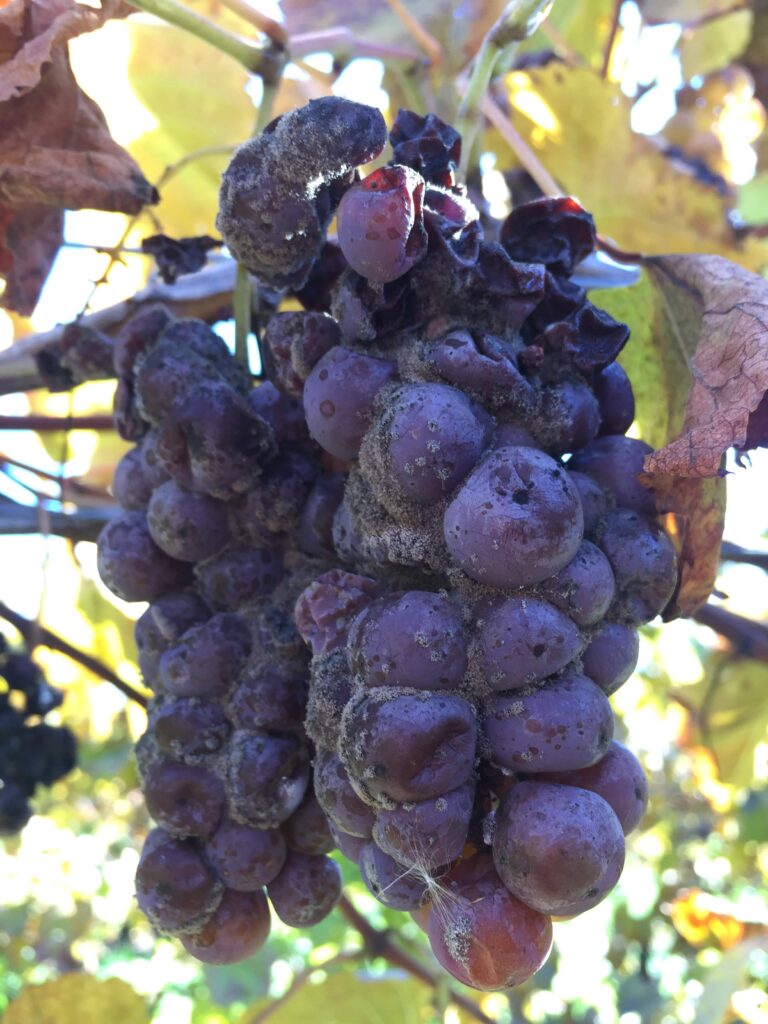
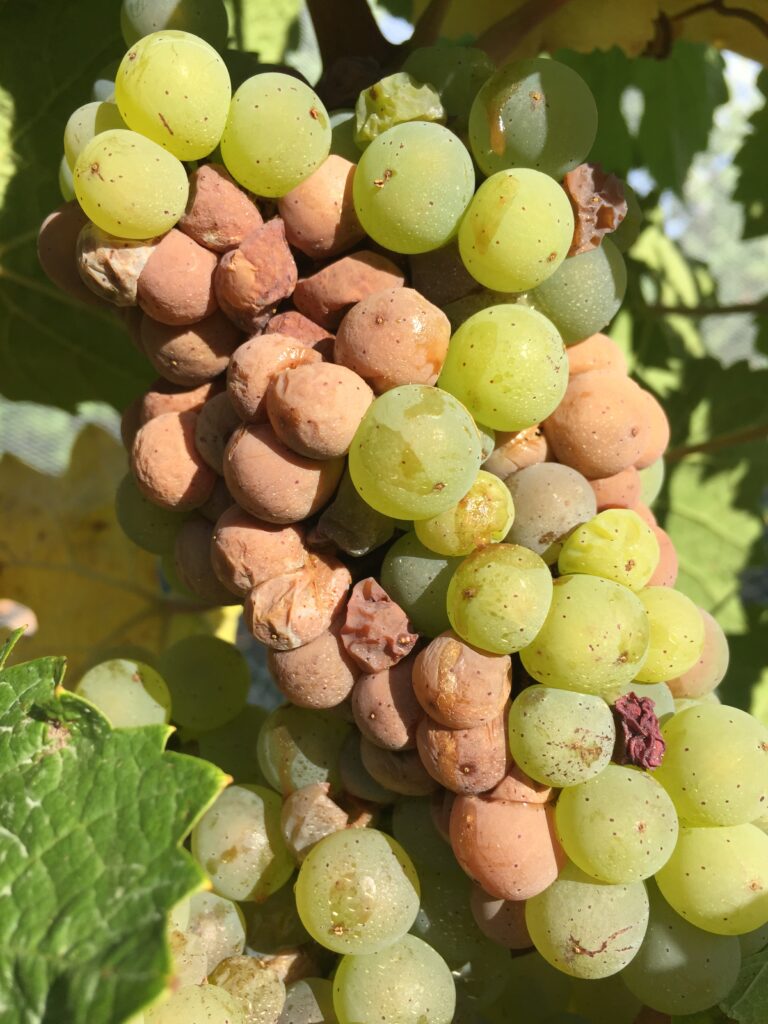
The causal agents of sour rot are ubiquitous organisms found in healthy and diseased berries alike. The yeast begins to ferment the sugars within the ripening grape berry, a wound site transforms the berry into an aerobic environment, the acetic acid bacteria produce acetic acid and fruit flies can deposit their eggs.
The fruit fly connection is an interesting one, and current research we are doing at University of Missouri is focusing on the true role of the fruit fly in the development of sour rot. Simply inoculating clusters with the yeast and bacteria does not result in sour rot; the fly is somehow a necessary component.
The Interaction of the Rots
Botrytis and sour rot are often found on the same clusters and appear to compete for the same spaces on a cluster. Botrytis infections do not continue to advance on clusters that also have sour rot, while sour rot will continue advance on clusters with Botrytis. When either disease is on a cluster that comes in contact with a healthy, they can both spread quickly to that healthy cluster. When an infected cluster is placed next to another infected cluster of the other disease, the rate of spread to the other cluster is slowed significantly.
How Rots Form in the Vineyard
The spores of the Botrytis fungus can enter into the grape berry, so while a wound site often spreads up the infection process, it is not necessary. The sour rot organisms, however, require a wound. Common wound-inducers include: yellow jackets feeding, berry splitting, and general detachment of the berry from the pedicel.
Botrytis generally requires moisture for symptoms to develop. The environmental conditions for sour rot are less clear. Wet conditions near harvest tend to lead to more berry splitting, increasing wound site potential. Anecdotally, once sour rot symptoms are seen in the vineyard, rains can result in rapid disease spread.
Managing the Rots
To manage sour rot, you need to manage both the microbial communities (yeast, bacteria), and the fruit fly. We know that applying an antimicrobial alone does not offer much (if any) control of sour rot. In previous studies I conducted at Cornell University in the Finger Lakes of upstate New York, the most effective treatment strategy was a combination of an antimicrobial and an insecticide. Specifically, we used Oxidate 2.0 (antimicrobial) and Mustang Maxx (insecticide) sprayed weekly starting before symptoms developed (12-13 Brix). In 2018, unfortunately, there was confirmation of Mustang Maxx, Assail, and Malathion-resistant Drosophila melanogaster (fruit flies) in a Finger Lakes vineyard. When using insecticides as a part of a sour rot management program, please be sure to alternate insecticides from different IRAC groups to help reduce the risk of insecticide resistance development.
I’ve continued sour rot management research here at the University of Missouri. We were particularly interested in seeing if we could “clean up” sour rot symptoms, if management intervention occurred after the onset of visible symptoms.
his past fall, we demonstrated that there was no significant difference in the ability to eradicate sour rot, whether two or five antimicrobial + insecticide applications were made after symptom development. In other words, once symptoms were present, more sprays did not improve the situation.
The same thing holds true for Botrytis bunch rot. Preventative fungicides work best, post-symptom fungicide applications generally cannot effectively clean up the problem, and rotation of fungicide modes of action are critical for reducing the risk of fungicide resistance development.
Future Research Direction
We know a lot more about sour rot now than we did six years ago, but still have work to do. Our current focus is on IPM strategies and understanding how environmental conditions influence in incidence and severity of sour rot, as well as how they influence fruit fly biology.
By understanding biology, we can effectively develop cultural and chemical management strategies. We continue to look to Botrytis management for ideas on how to manage sour rot, so we can simultaneously manage both.
Disclaimer: No endorsement is intended for products mentioned, nor is lack of endorsement meant for products not mentioned. The author and Washington State University assume no liability resulting from the use of pesticide applications detailed in this report. Application of a pesticide to a crop or site that is not on the label is a violation of pesticide law and may subject the applicator to civil penalties up to $7,500. In addition, such an application may also result in illegal residues that could subject the crop to seizure or embargo action by WSDA and/or the U.S. Food and Drug Administration. It is your responsibility to check the label before using the product to ensure lawful use and obtain all necessary permits in advance
Washington State Wine Allocates $1M for Research Projects
By Melissa Hansen, Research Program Director, Washington State Wine Commission
The Washington State Grape and Wine Research Program will award approximately $1 million in research grants this fiscal year (July 2019 – June 2020). This is the third year in a row the program has hit the million-dollar milestone, thanks to strong financial support from the Auction of Washington Wines and the Washington State Wine Commission.
The Washington State Wine Commission approved the funding recommendations of its subcommittee, the Wine Research Advisory Committee, to award 18 grants through the Washington State Grape and Wine Research Program.
The research program’s funding has grown about 20 percent in the last five years, covering a diverse range of vineyard and winery issues. Vineyard projects deal with a new leaffolder moth that can defoliate Washington grapevines, powdery mildew fungicide resistance, grapevine diseases and insects that transmit the diseases, nematodes, crown gall, irrigation management and vine heat stress. Winery research projects include controlling wine spoilage, impact of pH on wine microbial ecology, tannin management, potential impacts on grapes and wine from smoke exposure, and sensory characteristics of wine.
Mechanization Projects
Mechanization to address labor shortages is also a top research concern. Work to develop a precise mechanical solution for shoot thinning is on track and the two-year project will be completed by June 2020. A one-year mechanization economics project, funded last year by the Wine Commission and Oregon’s Erath Foundation, is nearly complete. Information on the costs and payback of mechanizing, developed for the Oregon and Washington wine industries, will be shared during a webinar in June.
A new mechanization project will be launched this year to develop a smartphone application to help growers estimate crop load. This project received seed money last year to learn if the app was feasible.
New Research Projects
Soil sustainability. Optimize the impact of mycorrhizal fungi inoculations on wine grape production in Washington and learn if commercially-available mycorrhizal inoculants are effective in Washington vineyards. Arbuscular mycorrhizal fungi are soil borne microorganisms that could help reduce vineyard inputs by improving nutrient and water uptake by roots
Smoke exposure. First three years of study completed; focus now is to develop analytical methods for smoke-exposed fruit and mitigate smoke taint in wine.
Fruit freeze exposure. Identify the causal agents for atypical aromas in Cabernet Sauvignon wines made from grapes exposed to freezing temperatures before harvest and investigate strategies to mitigate potential problems.
Grapevines under heat stress and deficit irrigation. Help growers optimize canopy management and irrigation practices for different varieties to mitigate decrease of acidity in wines from heat waves.
Insecticide resistance – Grape mealybug. Learn if grape mealybug (insect that transmits grapevine leafroll disease) is developing resistance to insecticide imidacloprid; also learn if buffalo treehopper (possible vector of grapevine red blotch disease) is susceptible to imidacloprid.
The state research program, a competitive grant program administered by Washington State University, has a unique funding partnership unlike any in the nation. The program combines public, private and industry monies to support viticulture and enology research at WSU. The four entities that fund the statewide program are: the Wine Commission; State wine liter tax (1/4 cent per liter of all wine sold); WSU’s Agriculture Research Center; and the Auction of Washington Wines, an annual event held to raise awareness about Washington wine.
The Wine Commission dedicates about 25 percent of its $5 million budget to fund research projects and pay its WSU Wine Science Center construction pledge. The statewide research is industry driven and guided, with the research results accessible to all involved in the Washington wine industry—from large to small growers and wineries. Past research outcomes have benefited all in the industry, from reduced pesticide applications and conserved irrigation water to control of wine spoilage and improved overall wine quality.
| WSU Researcher | Project Title (Bold denotes new project) |
|---|---|
| Cheeke, Tanya | Effect of Mycorrhizal Inoculants on Grapevine Growth and Nutrient Uptake |
| Collins, Tom | Assessment of Smoke Exposure Grape Risk and Mitigation of Smoke-Affected Wines |
| Edwards, Charles | Microbiology and Chemistry of WA Wines |
| Harbertson, Jim | Management of Phenolic Compounds in Vineyard and Winery, Mechanical Pruning, and Grape Maturity |
| Harbertson, Jim | Evaluation of Cabernet Sauvignon Grapes Exposed to Freeze and Potential Wine Impact |
| Harbertson, Jim | Research Winemaking |
| James, David | Leaf-rollers: Identifying the Threat and Solutions |
| Karkee, Manoj | Smartphone-based Crop Estimation Tool |
| Keller, Markus | Grape Ripening Under a Double Whammy of Heat Stress and Water Deficit |
| Keller, Markus | Influence of Cultivar, Environment and Management on Grape Yield Components and Quality |
| Moyer, Michelle | Impact and Management of Plant-Parasitic Nematodes in Washington Wine Grape Vineyards |
| Moyer, Michelle | Monitoring and Mapping Grape Powdery Mildew Fungicide Resistance and Crown Gall Incidence |
| Piao, Hailan | Impact of pH on Wine Microbial Ecology and Wine Quality |
| Rayapati, Naidu | Epidemiology and Management of Viral Diseases in WA vineyards |
| Ross, Carolyn | Sensory Characteristics and Consumer Acceptance of WA Wines |
| Salazar, Melba | Influence of Climate Variability on Grapevine Phenology |
| Walsh, Doug | Monitoring Mealybugs for Potential Imidicloprid Resistance and Buffalo Treehoppers for Imidicloprid Susceptibility |
| Zhang, Qin | Precise Mechanical Solution for Vineyard Shoot Thinning |
To learn more about the Washington wine industry’s research program and access previous research reports, visit the Washington Wine Commission Research Innovation webpage.
Contact Melissa Hansen if you have any questions about the survey or research program.
PICOL Gets a Refresh
By Michelle Moyer, WSU – Prosser
Anyone who has ever worked with agricultural pesticides knows that keeping up-to-date on product registrations and label changes can be a daunting task. The Pesticide Information Center Online (PICOL) is a database designed to assist with that task. But as many users know, the old PICOL was not without its challenges. Searches were cumbersome, you needed exact spelling to find a pest or a product, and often multiple names of the same pesticide would be present. The PICOL curators heard these cries for help, and answered with an update of this great resource. While it is still in beta form (under development) there are many features that are available for use.
Useful Features
Make an account. The site allows you to make an account that is specific to you! It will allow you to save common search parameters , so there will be no more having to redo a search every time you visit PICOL! This “Save Search” function is not yet live, but the ability to make an account and profile is.
Look up keywords. One of the biggest challenges in the old PICOL site, was understanding what keywords were used to tag different labels (“aphid” or “aphids”). One misspelling or use of a plural when it was coded as a singular word meant a return of “no results found.” Unfortunately, the search function is still extremely sensitive, but the “Lookup” feature in the left navigation bar allows you to search for what terms are in the PICOL dictionary, to help you refine your search language.
User-friendly searches The new “Quick” and “Advanced” search functions are much more intuitive that the original, and make searching for crops, products, and general label lists much faster.
Label sorting. Once a search is complete, you can sort through the table of labels by adding additional keywords. No more having to start a search over again.
Label information page. The labels are still available for direct download, but a website summary is also presented. This summary is useful – listing the crops, the pests, and any potential restrictions that you might need to be aware of. As a note of caution — you are still responsible for reading the entire label before using any pesticide product, and the information on the label is the legally-binding language for use.