VEEN is curated by WSU Viticulture Extension. For questions on articles, or to request to submit an article in future issues, reach out to Michelle Moyer.
This issue of VEEN was originally published as a .PDF in April 2015, and posted online. Some content here will differ from that original issue. The issue is archived, but accessible on the VEEN Archive webpage.
A Note from the Editor
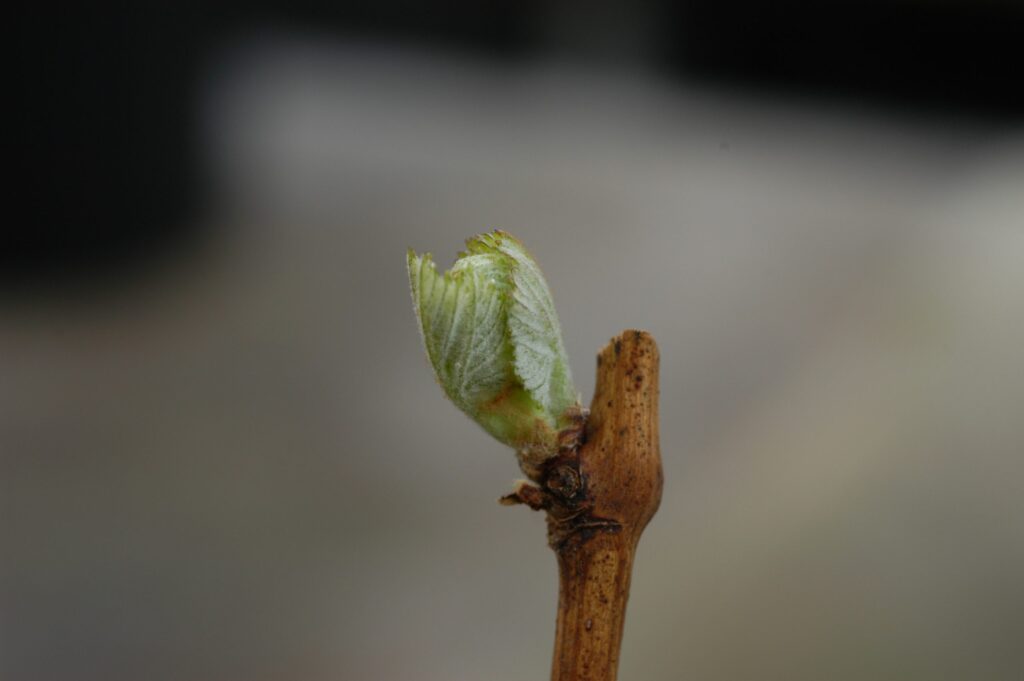
If the recent warm weather has not reminded you of spring, then the greening of the valley might have alluded to it: the growing season has started! Estimates rolling in from across the state place vine development between 14 and 21 days ahead of the long-term average; 2014 was early, but not as early as this. Unfortunately, early budbreak does come with risks in climates like Washington. There is still a month standing between us and the regional last day of frost. Once the risk of frost is gone, and if temperatures hold (and it looks like they will), Washington will likely have another warm, sunny, and early season overall.
While not as dire as our neighbors to the far south, a drought advisory was declared for major production regions in Washington in March due to low snow pack. While spring rains have been plentiful, it is the lack of water storage (in the form of slow-melting snow), that has the agricultural community concerned. Those with senior water rights will likely not feel the impact this season; those with junior water rights are expected to receive about 75% of their normal water allocations. This water allocation will likely change, so please check out our irrigation page for more information.
Michelle M. Moyer
Viticulture Extension Specialist
Assistant Professor of Viticulture
WSU Prosser IAREC
Table of Contents
Connect With Us
V&E Certificate Program
Winter Injury to Vine Phloem
By Michelle Moyer, WSU Prosser
Winter injury to grapevines in the Pacific Northwest is nothing new. While the region has not suffered from the deep freezes that our eastern USA counterparts have recently contended with, the past few winters have seen periods of rapid temperature fluctuations in the late fall. These rapid temperature changes occur during a period of vine cold acclimation, and thus, can be very damaging (Fig. 1). One such event was the case during the week of 10 November 2014, when overnight low temperatures changed from 29.0 °F to 11.2 °F (AgWeatherNet; WSU-HQ Station) in a matter of a few days.
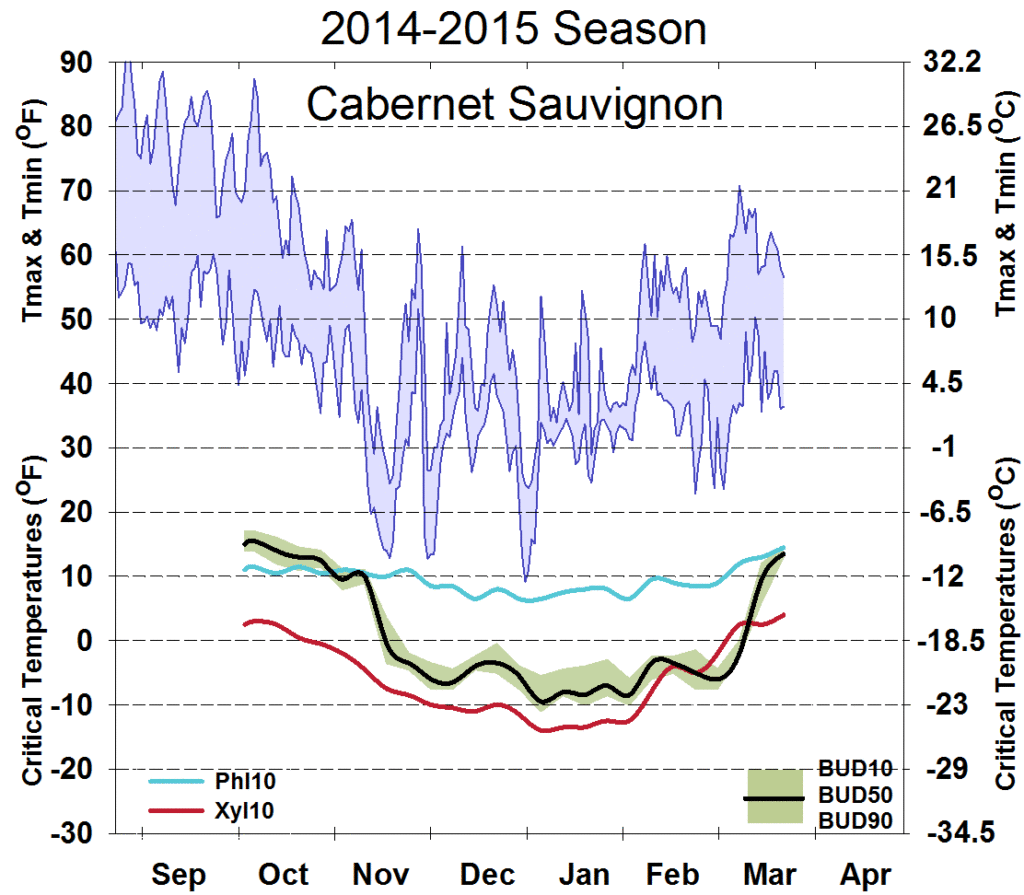
To the relief of most, very little bud damage was seen after this event. However, in some cases, severe phloem browning (i.e., death) was seen in cane tissue. While pruning strategies based on bud damage are well known (Moyer et al. 2011), there is less formal documentation on how to handle a situation when buds have survived a cold event, but phloem is left damaged. Fortunately, it is a situation that is not as dire as some may believe.
In fact, damage to grapevine phloem occurs every year. Why? Because phloem is cold sensitive (Fig. 2); and in most cases, is more cold-sensitive than buds. Compound buds are a complex organization of tissue, whose formation occurs prior to the dormant season. When buds are damaged, they cannot regenerate in time for the follow season.
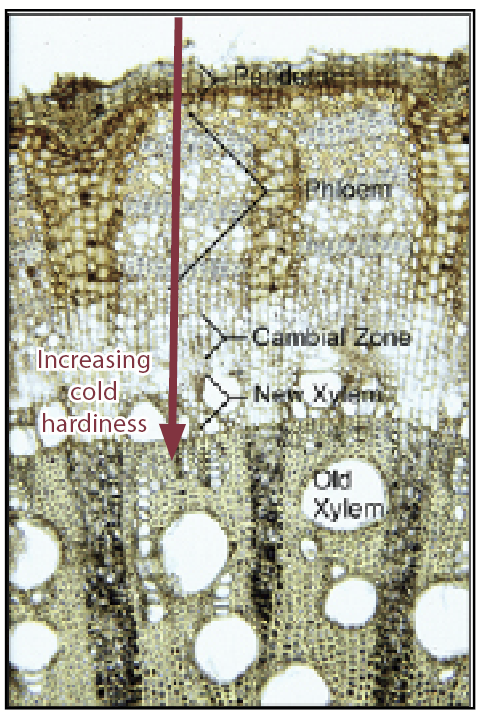
Xylem is similarly complex. While much of the xylem vessels are actually comprised of dead cells (and thus, cannot be killed), it can be rendered dysfunctional if it freezes. If there is water in the xylem vessels at the time of cold temperatures, it can freeze, causing the cell walls to burst, This results in the loss of ability to effectively conduct water. However, new xylem is formed annually from the cambium layer (Fig. 2), and this new xylem can remain functional for several years (Goffinet 2004). This formation of new xylem occurs after cambium reactivation in the spring. The cambium is reactivated from a dormant state as a result of the combination of warming air and soil temperatures, soil moisture, and cytokinin (plant hormone) that are produced as a part of new shoot and root growth.
Without cambium cells, new xylem cells cannot be formed (and thus, replacement xylem cannot be made). When a few of the cambium cells are killed, they can be replaced by re-organization of living, nearby cambium cells. However, in years where winter temperatures reach levels that damage xylem, it also indicates that temperatures were cold enough to kill most, if not all, of the cambium (Fig. 2). If there is no cambium, then no new xylem or phloem can be formed, and thus, the plant will likely dieback to the ground.
Grapevine phloem is formed in a similar fashion to xylem. An activated cambium produces new phloem cells, but this only occurs after it has produced new xylem cells. This delay in development makes sense as phloem is not needed until the developing leaves transition from sink to source; photosynthate transportation vessels are not needed until photosynthates are being produced. If some cambium cells are killed, and thus, reorganization is necessary, this process is typically completed by the time new phloem is needed. When temperatures reach potential damaging levels for phloem, but not levels that are damaging to xylem, this typically indicates that it has not been cold enough to freeze all of the cambium tissue. As long as some cambium cells remain alive, both phloem and xylem can be repaired.
So what does this mean when assessing cane or trunk damage in the field? If the phloem is brown, but the xylem is either faintly green or a lighter milk-white, then vine recovery is expected. This is because it was not cold enough to freeze trunk tissue all the way through the cambium, and thus, cambium reactivation and reorganization can be expected.
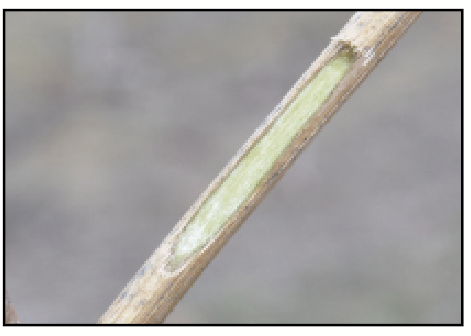
When assessing phloem browning, the question of “how much phloem damage is acceptable?” often arises. As long as the xylem tissue remains healthy, that is an indirect indication that the cambium layer also likely survived, and thus, new phloem will develop. If only patchy phloem damage is seen (e.g., brown streaks, but otherwise, the phloem is healthy), then consider that relatively normal for vines grown in climates with a distinct winter. If 100% of the phloem is dead, carefully look at the color of the xylem. If it is dirty white or brown, which would indicate damage, then temperatures were likely cold enough to have also killed the cambium tissue. If it is green and healthy (Fig. 3), then the vine should be able to fully recover.
There are some management considerations, however, when one sees high levels of phloem damage in vines. In order to reorganize, the cambium has to be reactivated. In order to be reactivated, the vine needs adequate sap flow to promote budbreak. In order to get adequate sap flow and budbreak, sufficient soil moisture is needed. If spring soils are dry, budbreak may be delayed or uneven, thus slowing or preventing cambium recovery, and thus the development of new xylem and phloem.
While the 2014-2015 winter was a relatively mild overall, the quick temperature drop seen in November did highlight how the different tissues in the grapevine have different temperature thresholds for damage. As with all management practices, it reinforces the need to check buds and canes prior to pruning and when devising spring irrigation management, to ensure all potentially necessary cold-damage mitigation strategies that may be necessary, are properly deployed.
References and Resources:
- Goffinet, M. 2004. Anatomy of Winter Injury and Recovery. Cornell University.
- Moyer, M.M., L.M. Mills, G.A. Hoheisel, and M. Keller. 2011. Assessing and Managing Cold Damage in Washington Vineyards. WSU Extension Publication #EM042e. Washington State University.
Washington Grapevine Trunk Disease Survey
By Leslie Holland, WSU Graduate Student; Dean Glawe, WSU Pullman; and Gary Grove, WSU Prosser
Trunk diseases are some of the world’s most destructive diseases of grapevines. Major trunk diseases include Eutypa dieback, Botryosphaeria dieback, and the Esca disease complex. The fungi that cause these diseases generally infect through pruning wounds where they grow into the trunk, eventually producing a canker (Fig. 1). The cankers enlarge over time and can kill the trunk by girdling it. Fruit quality and yield often slowly decline before the trunk is finally killed. Trunk diseases are more commonly observed in older vineyards as symptom expression may take years to develop; latent periods for the disease can be as long as a decade.
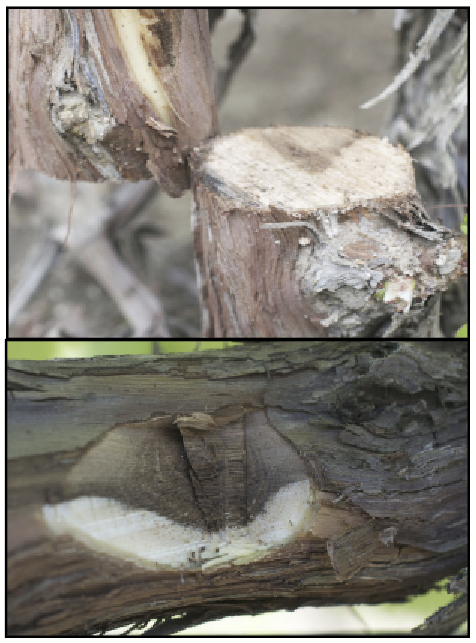
Cankers are best detected by cutting into the infected trunk or cordon to examine the characteristic discolored wood. Foliar symptoms (Fig. 2) often accompany the trunk discoloration, but can vary between seasons and cultivars. These symptoms are the result of the mycotoxins produce by the fungi living in the cankers. The toxins are transported in the xylem to foliar tissue where they interfere with plant cell metabolism.
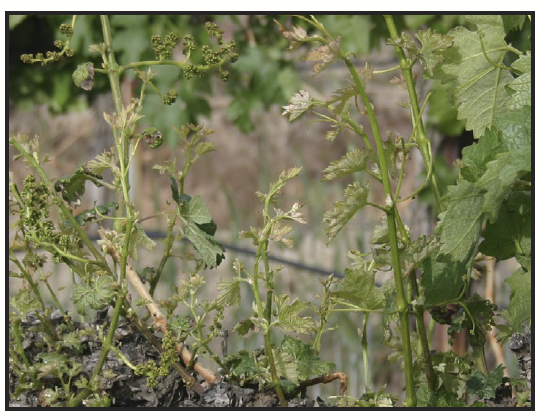
a common trunk disease symptom. Photo by
Michelle Moyer.
With Washington vineyards starting to age to the point where trunk diseases may become an issue, a statewide survey was conducted to determine how prevalent the various diseases were, and what fungi were commonly associated. The survey was conducted in 7 vineyards in the Yakima Valley and Horse Heaven Hills AVAs in the summer of 2014. Wood samples were selected from symptomatic vines of multiple varieties. Fungi were isolated from diseased tissue and identified on the basis of morphological features and gene sequence analysis.
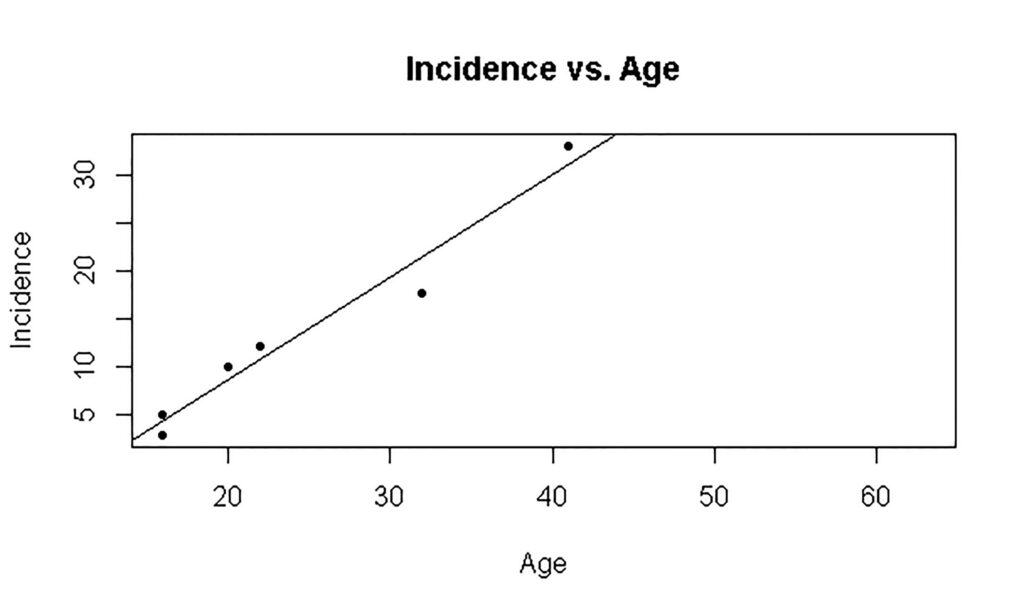
Symptom incidence across all vineyards surveyed ranged from 2.8 to 33% (Table 1). Vineyard age was positively correlated with disease incidence (Fig. 3). The results show that Eutypa lata and Eutypa laevata were the most commonly-isolated fungi known to cause trunk diseases; these two species accounted for 73% of the implicated canker fungi that were isolated. The remaining fungi represent several species of plant-pathogenic fungi previously determined to cause cankers on grapevine (Diplodia seriata, D. mutila, Cryptosphaeria pullmanensis, Diatrype whitmanensis, Diaprthe eres) or other woody species (Cytospora rhodophila, C. chrysosperma, Discostroma fuscellum).
| Vineyard | 1 | 2 | 3 | 4 | 5 | 7 | 8 |
|---|---|---|---|---|---|---|---|
| Age (years) | 30-34 | 60-65 | 22 | 40-42 | 20 | 16-17 | 16-17 |
| Location (AVA) | Horse Heaven Hills | Yakima Valley | Horse Heaven Hills | Yakima Valley | Yakima Valley | Horse Heaven Hills | Yakima Valley |
| Total acreage | > 2000 | 8.66 | 559 | 230 | 3 | 170 | 830 |
| Incidence | 17.70% | n/a | 12% | 33% | 10% | 2.80% | < 5% |
The biological diversity of these pathogens suggests that effective management of trunk diseases may require different approaches that account for different fungi behavior. For example, some of the fungi are known to occur on Populus spp. suggesting that poplar trees used as windbreaks could be a source of inoculum.
Fortunately, the WA wine grape industry is still relatively young. Since the incidence of these diseases become more prevalent with age (Fig. 3), there may be sufficient time to develop proactive trunk disease management strategies before these diseases become widespread (see the Fall 2014 issue of VEEN).
Current management practices can be found in the Pest Management Guide for Grapes in Washington and the Field Guide for Integrated Pest Management in Pacific Northwest Vineyards.
Vineyards: Sanctuaries for Native Plants & Butterflies
By David James, WSU Prosser
The title of this article would make no sense to anyone 15 years ago; how would wildflowers and butterflies survive in an intensively managed monoculture like wine grapes? Butterflies are notoriously sensitive to chemicals and habitat disruption, and the very idea that they could somehow live and breed amongst grapevines would have been preposterous back in the 1990s.
Eastern Washington vineyards have come a long way, as described in a recent article published in the Journal of Insect Conservation (contact the author for a free PDF). The article presented the results of a 2-year study comparing the diversity and abundance of native plants and butterflies in and around 8 Washington wine grape vineyards spread over 4 viticultural appellations (Columbia Gorge, Walla Walla Valley, Yakima Valley, Wahluke Slope).
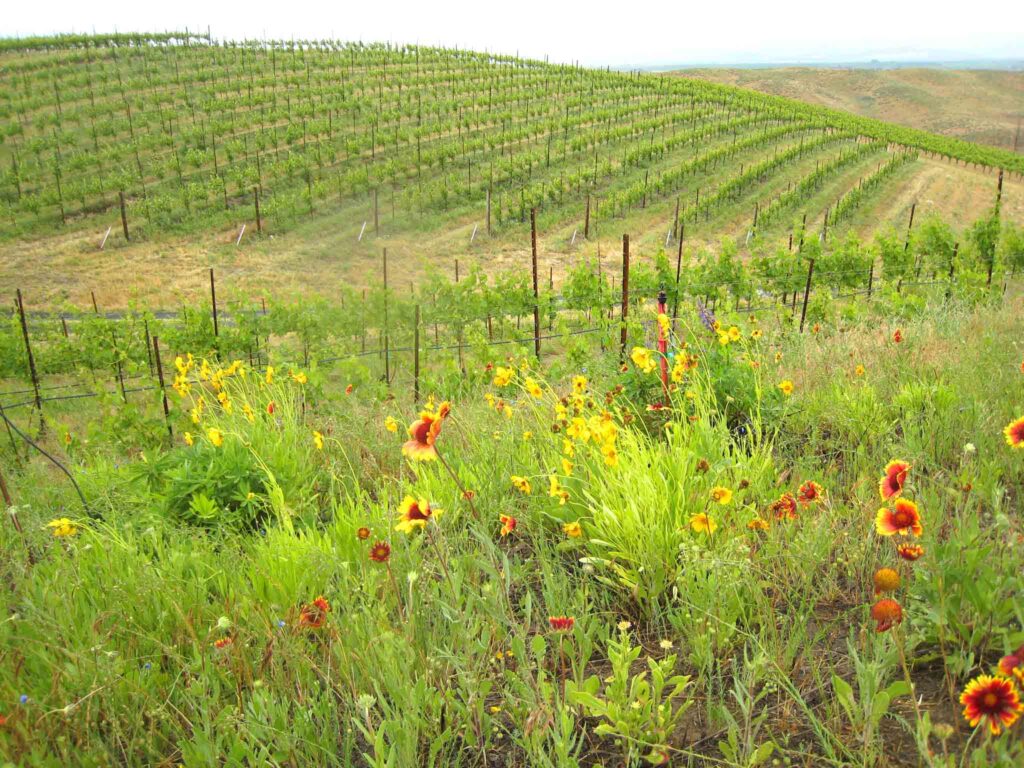
Four of the vineyards had some measure of habitat restoration with the owners encouraging the growth of native plants around the vineyard. Each ‘habitat-enhanced’ vineyard (native plants located within 100 yards of the vineyard) was paired with a nearby ‘conventional’ vineyard that did not feature habitat restoration. All vineyards were visited at 2- week intervals from May-September in 2012 and 2013, and inventories were compiled of the plants and butterflies seen.
Overall, there were 4X as many plants in and around the habitat-enhanced vineyards (119) than in conventional vineyards (29). Twenty-nine species of butterflies were recorded in the habitat-enhanced vineyards, but only 9 species were seen in the conventional vineyards. On a vineyard basis, there was an average of 5.6 species in habitat-enhanced vineyards compared to 2.7 in conventional vineyards. The abundance of butterflies (numbers of individuals of all species) was significantly greater in habitat-enhanced vineyards (mean average: 20.4/visit) compared to conventional vineyards (5.5/visit).
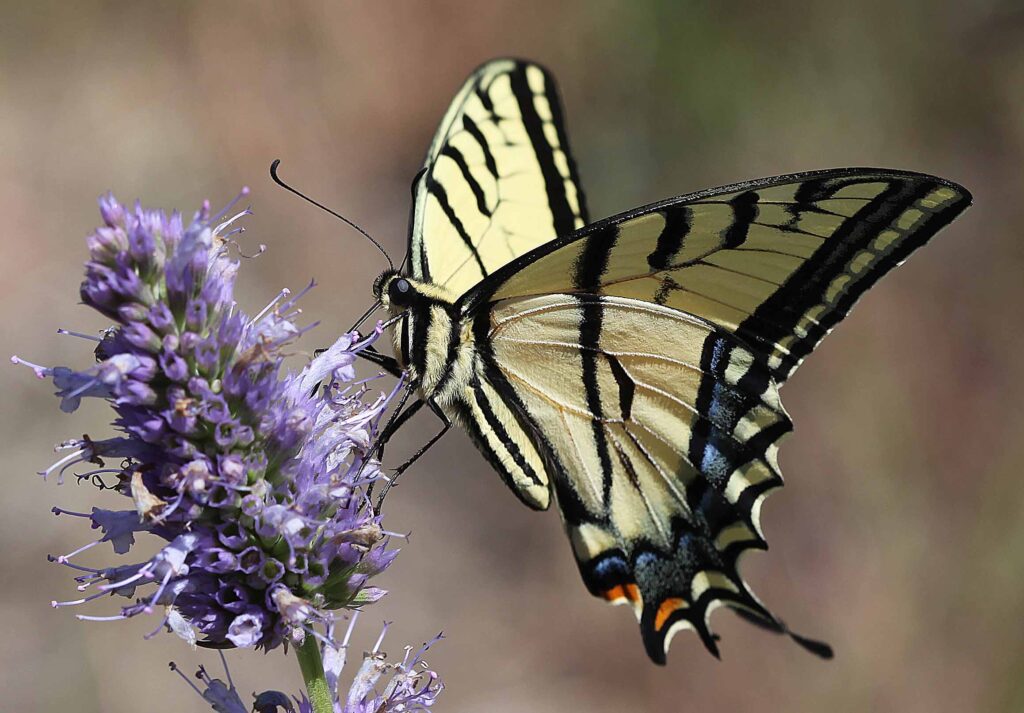
These data suggest that butterflies may be found in any Washington vineyard today presumably because of the limited number of pesticides (primarily insecticides) that are applied. But clearly there is a big difference in the diversity and abundance of vineyard butterflies depending on the extent that native plant resources are present. Butterflies are common in vineyards that have plenty of native plants in them. All of our native butterflies depend upon native plants for their development and survival both as hosts for their caterpillars and as sources of nectar. By encouraging native plants, it appears that wine grape vineyards have the potential to become veritable oases for butterflies!
The plants and butterflies are beautiful but are there other benefits from habitat restoration for the grape grower? Well, nearly all of the native plants important for butterflies also attract predators and parasitoids of grape pests and therefore may improve vineyard pest management. This aspect of our research has been featured in these pages before (Spring 2013) and will be again. Suffice to say that restoring native flora and habitat to vineyards (naturescaping) has benefits on many levels, some of which we have yet to document (e.g., weed control?).
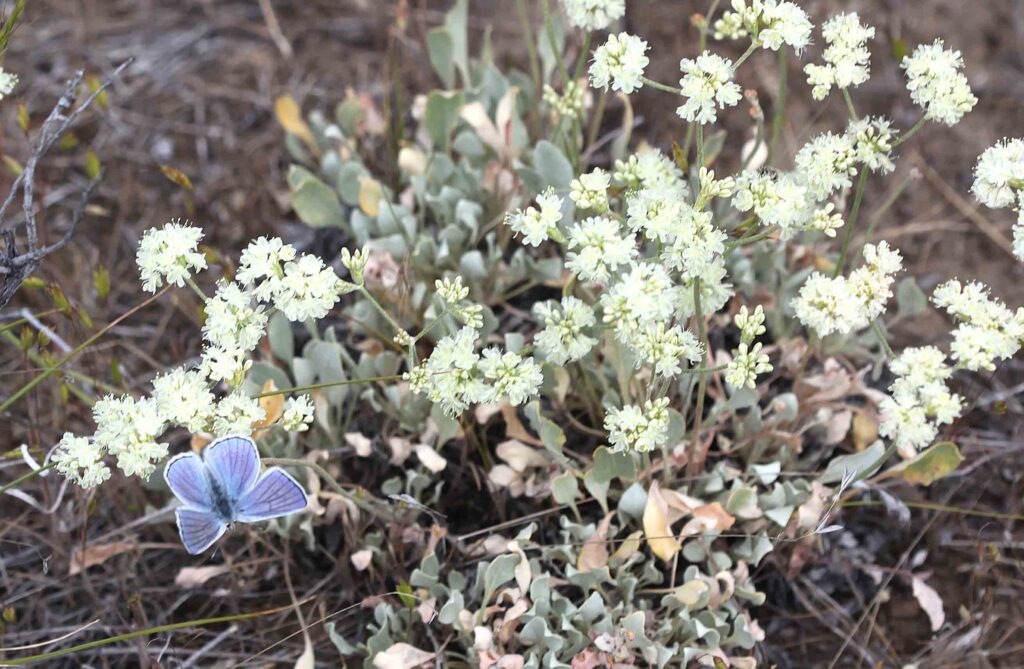
But if you are excited by the prospect of seeing butterflies, the potential of butterflies living in your vineyard is good news and it will certainly improve the aesthetics of your viticultural landscape. Perhaps it also has the potential of enhancing the promotion and marketing of your wine? What better symbol is there than a butterfly to represent the sustainable nature of your grape growing enterprise?
Author contact: david.james@wsu.edu
Drought Advisory – Grapes (Update to EM4831)
By Gwen Hoheisel, WSU Extension, and Michelle Moyer, WSU Prosser
This is the pre-print update to WSU Extension publication EM4831.
The severity of impact that drought conditions will cause in a short-water year will depend on a number of factors that are specific to individual vineyards. Timing of water delivery; amount of water available; timing, intensity, and duration of hot spells during the summer; soil depth and method of irrigation will all influence a grower’s ability to manage severe water stress.
The information presented here, along with other advisories on irrigation management and efficiency, outline the management concerns and possible solutions for growers during periods of inadequate water availability.
Grapevine Water Use
Grapevines can adapt to both low and high water availability in the surrounding soil. Vitis labruscana ‘Concord’ is native to the eastern United States and adapted to higher water availability. Wine grapes (Vitis vinifera) have evolved under drier conditions, and are more efficient with their water use.
Regardless of plant origin, a basic level of water is needed for vine survival; in order to reach optimized yield and crop quality, more water than the “absolute minimum” is needed. This effectively means that vines can survive droughts, depending on the severity and duration of the drought, but they may not produce fruit.
Extreme water stress in vines is most damaging when it occurs between bloom to pea-size berries (i.e., late spring to early summer), when shoots are rapidly growing and fertilization and cell division occurs in the flowers / berries. Water stress during this time will result in poor berry set and small berries. Water stress-induced damage can also occur between the period of pea-size or larger berries to véraison (i.e., mid to late summer), when cell expansion in the berry is taking place.
Severe water stress during this late summer ripening stage can reduce berry size and may delay, or under very severe conditions, prevent fruit maturation (Moyer et al. 2013). In some cases, the vines will also pull water from the developing fruit to maintain shoot health, resulting in premature berry dehydration. For additional information on the influence of water on vine development, see Irrigation Basics for Eastern Washington Vineyards (Moyer et al. 2013).
In newly planted vineyards, water management is critical for proper vine establishment. Without sufficient root growth, which is driven by the supply of adequate moisture, vines will struggle with establishment and winter survival. Under drought advisories, if water restrictions are substantial enough to prevent proper irrigation regimes, growers may consider delaying the establishment of new vineyards until irrigation forecasts have improved.
Cultural Practices
Consider the following cultural practices to provide the most efficient use of water:
Fertilize lightly, prune and shoot-thin heavily, and crop-thin early to reduced canopy growth and yields.
Reduce weed growth and active cover crop maintenance (i.e., watering) in the vineyard to avoid competition with vines for limited water supplies. See the annually-updated Pest Management Guide for Grapes in Washington for more information.
Periods of drought provide opportunities to evaluate the efficiency of a water delivery method, and the chance to upgrade or improve existing systems so water is applied as efficiently as possible.
Irrigation Delivery Strategies
Drought conditions require the efficient use of available water. Growers should constantly monitor soil moisture (see Online Resources) and apply water only when needed or at strategic times during the delivery period. Using an irrigation scheduler may increase water savings and avoid over-watering (see Irrigation Scheduler on AgWeatherNet). For additional irrigation strategies see Irrigation Basics for Eastern Washington Vineyards (Moyer et al. 2013).
Timing
Irrigate early (as soon as water is available) to fill the soil profile if winter precipitation was not adequate. However, do not over-irrigate during this time (filling beyond soil water-holding capacity), as that can result in inadequate iron and zinc uptake by the vine, leaf chlorosis, and fertilizer leaching. If possible, at the end of the growing season be sure the soil moisture level is at or near field capacity before the irrigation cutoff date. This allows you to prepare for the following growing season, and reduce the negative impacts of low winter precipitation.
Delivery Method
Drip irrigation systems are most appropriate if water levels are predicted to be low for an extensive part of the growing season. This is because drip irrigation is the most efficient method of water application. If, under drought conditions, 100% of the normal supply is available for short periods, rill or sprinkler irrigation systems would allow application of large quantities of water over this short period. To achieve this effect in drip-irrigated systems, the duration of a single application would need to be extended (i.e., on the order of days rather than hours).
Alternative Water Sources
Consider alternative sources of water, or means to store water such as storage ponds and reservoirs. The use of wells (i.e., ground water) to irrigate vineyards is restricted and not practical for large operations. Contact your local irrigation district or Department of Ecology office for more information on regulations and permits; additional information can be found in The Groundwater Permit Exemption (Department of Ecology 2013). The large investment needed to obtain alternate sources of water may be justified, as water reservoirs may be depleted again in future irrigation seasons.
References
- AgWeatherNet. 2015. Washington State University.
- Department of Ecology. 2013. Focus on Groundwater Permitting – The Groundwater Permit Exemption. Washington State.
- Hoheisel, G.A. and M.M. Moyer. (eds). Pest Management Guide for Grapes in Washington. (Updated Annually). WSU Extension Publication #EB0762. Washington State University.
- Moyer, M.M., R.T. Peters, and R. Hamman. 2013. Irrigation Basics for Eastern Washington Vineyards.WSU Extension Publication #EM061e. Washington State University.
Online Resources
Weather
By Nic Loyd and Gerrit Hoogenboom, AgWeatherNet, WSU Prosser
If you blinked during the last several months, you might have missed Washington’s 2014/2015 winter season. Consistently mild and snow-free weather has been the rule since late November. Aside from brief cold spells around 1 December and 1 January, most of the winter featured above normal temperatures.
In fact, warm conditions in early February sent temperatures into the upper 60s (˚F) in places like the Tri-Cities; Prosser, WA’s mean February high was nearly seven degrees above normal! Overall, February 2015 was the mildest on record, and the observed monthly low was higher than the typical March value. The winter season (December to February) trailed only 1991/1992 for warmest on record, with a mean temperature anomaly of +3.5˚F.
In order to place the warmth of February 2015 into historical context and perspective, consider the following:
The last time that any calendar month was so far above normal at Prosser was January 1990. Over 300 months have passed since the previous occurrence of such a warm month (relative to normal).
The last time that any monthly high, low, or mean was as far above normal as the February 2015 mean high temperature was June 1992 .
The last time that any calendar month was as far removed from normal (negative in this case) was December 2009.
In terms of precipitation, occasional wet periods were interspersed with prolonged dry spells, especially since the New Year. A mismatch of conditions meant that most of the precipitation fell as rain, since stormy periods were almost exclusively warm. Beyond the weather in the lowlands, the mountain snowpack is in poor shape due to low snowfall and excessive melting, which may spell trouble for water supplies later in the summer.
There were various temperature extremes and notable rainfall events to highlight the 2014/2015 winter. The Tri-Cities recorded a balmy low of 47 ˚F on 21 December. Walla Walla experienced nearly an inch of rain on 12 December. On one of the few chilly days of the winter, Prosser reported a high and low of just 26 and 10˚F, respectively, on 31 December. Unbeknownst to many, an impressive streak was underway at Walla Walla during early February. For a duration of nearly three weeks from 28 January to 15 February, the site did not drop below 32 ˚F. During the unusual warmth of early February, WSU-TC (AWN Weather Station) soared to 68˚F the 7th.
March 2015 was another record warm month for Prosser. For those still keeping track, March becomes the 5th record warm month in the last nine months since July 2014. The mean temperature in March at Prosser (WSU IAREC) was 50.5˚F, which is 4.9˚F (2.2 standard deviations) above average, and the warmest on record by more than one degree. The monthly mean high temperature was 62.9˚F, which is 6.1˚F (2.0 standard deviations) above average, and the warmest on record. The mean low temperature was 38.4˚F, which is 3.9˚F (2.2 standard deviations) above average, and the warmest on record. The warmest temperature of the month was 79.4˚F on the 27th, while the coldest temperature was 22.9˚F on March 4th. The 27th was a remarkably warm early spring day, as several locations in south central Washington recorded all-time March record high temperatures.
This mild early 2015 weather comes on the heels of a record warm 2014. Last July was Prosser’s all-time hottest month, while monthly records occurred again in August and October. The Tri-Cities reached 109˚F on 16 July 2014, and Wahluke Slope fell to only 84 ˚F for a low on 13 July 2014. Mabton East reached 92 ˚F on 6 October 2014. Last year’s overall record warmth was briefly punctuated by arctic cold outbreaks in early February and mid-November. On 7 February 2014, some locations in eastern Washington reached only the mid-teens for highs, while sub-zeros lows were recorded in the coldest areas. The early 2014 arctic outbreak caused Prosser’s coldest absolute February minimum and coldest February mean temperature since 1996. During early November 2014, high temperatures declined rapidly from the 60s and low 70s to the upper 20s and 30s, while lows dipped from the 30s and 40s to the single digits and teens in only a few days. In fact, high temperatures in parts of central Washington plunged to below freezing just a couple of days after their first frost of the autumn.
Much like the weather that Washington has observed since early 2014, anomalously warm and dry conditions are favored for the remainder of 2015. If the current meteorological trajectory holds, we could be facing another long, hot summer.
Further details about Washington’s weather and climate are available at AgWeatherNet.
If you blinked during the last several months, you might have missed Washington’s 2014/2015 winter season. Consistently mild and snow-free weather has been the rule since late November. Aside from brief cold spells around 1 December and 1 January, most of the winter featured above normal temperatures.
In fact, warm conditions in early February sent temperatures into the upper 60s (˚F) in places like the Tri-Cities; Prosser, WA’s mean February high was nearly seven degrees above normal! Overall, February 2015 was the mildest on record, and the observed monthly low was higher than the typical March value. The winter season (December to February) trailed only 1991/1992 for warmest on record, with a mean temperature anomaly of +3.5˚F.
In order to place the warmth of February 2015 into historical context and perspective, consider the following:
The last time that any calendar month was so far above normal at Prosser was January 1990. Over 300 months have passed since the previous occurrence of such a warm month (relative to normal).
The last time that any monthly high, low, or mean was as far above normal as the February 2015 mean high temperature was June 1992 .
The last time that any calendar month was as far removed from normal (negative in this case) was December 2009.
In terms of precipitation, occasional wet periods were interspersed with prolonged dry spells, especially since the New Year. A mismatch of conditions meant that most of the precipitation fell as rain, since stormy periods were almost exclusively warm. Beyond the weather in the lowlands, the mountain snowpack is in poor shape due to low snowfall and excessive melting, which may spell trouble for water supplies later in the summer.
There were various temperature extremes and notable rainfall events to highlight the 2014/2015 winter. The Tri-Cities recorded a balmy low of 47 ˚F on 21 December. Walla Walla experienced nearly an inch of rain on 12 December. On one of the few chilly days of the winter, Prosser reported a high and low of just 26 and 10˚F, respectively, on 31 December. Unbeknownst to many, an impressive streak was underway at Walla Walla during early February. For a duration of nearly three weeks from 28 January to 15 February, the site did not drop below 32 ˚F. During the unusual warmth of early February, WSU-TC (AWN Weather Station) soared to 68˚F the 7th.
March 2015 was another record warm month for Prosser. For those still keeping track, March becomes the 5th record warm month in the last nine months since July 2014. The mean temperature in March at Prosser (WSU IAREC) was 50.5˚F, which is 4.9˚F (2.2 standard deviations) above average, and the warmest on record by more than one degree. The monthly mean high temperature was 62.9˚F, which is 6.1˚F (2.0 standard deviations) above average, and the warmest on record. The mean low temperature was 38.4˚F, which is 3.9˚F (2.2 standard deviations) above average, and the warmest on record. The warmest temperature of the month was 79.4˚F on the 27th, while the coldest temperature was 22.9˚F on March 4th. The 27th was a remarkably warm early spring day, as several locations in south central Washington recorded all-time March record high temperatures.
This mild early 2015 weather comes on the heels of a record warm 2014. Last July was Prosser’s all-time hottest month, while monthly records occurred again in August and October. The Tri-Cities reached 109˚F on 16 July 2014, and Wahluke Slope fell to only 84 ˚F for a low on 13 July 2014. Mabton East reached 92 ˚F on 6 October 2014. Last year’s overall record warmth was briefly punctuated by arctic cold outbreaks in early February and mid-November. On 7 February 2014, some locations in eastern Washington reached only the mid-teens for highs, while sub-zeros lows were recorded in the coldest areas. The early 2014 arctic outbreak caused Prosser’s coldest absolute February minimum and coldest February mean temperature since 1996. During early November 2014, high temperatures declined rapidly from the 60s and low 70s to the upper 20s and 30s, while lows dipped from the 30s and 40s to the single digits and teens in only a few days. In fact, high temperatures in parts of central Washington plunged to below freezing just a couple of days after their first frost of the autumn.
Much like the weather that Washington has observed since early 2014, anomalously warm and dry conditions are favored for the remainder of 2015. If the current meteorological trajectory holds, we could be facing another long, hot summer.
Further details about Washington’s weather and climate are available at AgWeatherNet.
Wine Microbiology Lab Update
By Charlie Edwards, WSU Pullman
Two issues of concern to Washington winemakers are being examined in our laboratory; (a) wine spoilage by Brettanomyces and (b) potential use of certain species of non-Saccharomyces yeasts to alter wine quality.
Brettanomyces survival in winery waste such as pomace, as well as methods to eradicate the yeast from oak staves, is currently being investigated by Zach Cartwright (Ph.D. student). Cartwright’s research found that Brettanomyces survived in grape pomace stored at 0°C for up to 10 weeks. In addition, the yeast grew better in previously autoclaved grape pomace possibly due to better nutrient availability and/or limited microbial competition. Cartwright is also investigating physical methods (heat, cold, and ultrasonic) as means to eradicate Brettanomyces from oak barrel staves. Finally, Nick Hogrefe-O’Regan (M.S. student) is determining nutritional requirements for the yeast including vitamins. A better understanding of the nutrient requirements of Brettanomyces may allow its control by limiting additions before fermentation or by developing methods to selectively remove trace nutrients after fermentation.
In a study of yeast microflora on Chardonnay and Riesling grapes from Washington State, a former graduate student isolated >50 different species, including Hanseniaspora uvarum, Metschnikowia pulcherrima, and Pichia membranifaciens and are well known to occur on grapes and/or be present in wines. Additional species that were found were Candida asiatica, C. californica, C. oleophila, C. railenensis, C. saitoana, Metschnikowia chrysoperlae, Mt. pulcherrima, Meyerozyma caribbica, My. guilliermondii, Pichia kluyveri, Wickerhamomyces anomalus, and Yamadazyma mexicana, which are rarely (if ever) found on wine grapes. Their impact on wine quality, if any, remains unknown but recent work by a graduate student (Kim White, M.S. student) indicated that some of these species could have commercial potential given their growth and metabolism in Chardonnay musts. Current research by Jesse Aplin (Ph.D. student) is examining the ability of these yeasts to reduce potential alcohol in wines from a given amount of sugar as well as overall impacts on wine quality.
Other research projects include unusual, soil-borne bacteria isolated from wine (Hogrefe-O’Regan) and impacts of Pediococcus spp. on wine quality (Megan Wade, new M.S. student).
Publications
- Zuehlke, J.M., D.A. Glawe, and C.G. Edwards. Efficacy of dimethyl dicarbonate against yeasts associated with Washington State grapes and wines. J. Food Proc. Pres. (DOI: b10.1111/jfpp.12315, 2014). Childs, B.C. J.C.
- Bohlscheid and C.G. Edwards. Impact of available nitrogen and sugar concentration in musts on alcoholic fermentation and subsequent wine spoilage by Brettanomyces. Food Microbiol. 46: 604-609 (2015).